Pundayschool · Episode 23 companion
The Chair of Judgement: a devotional on the verdict that swivels back
A quick devotional for busy people: 3 to 5 minutes, start to finish. Read it or listen to it, whichever fits your morning: a coffee break, a commute, or the two minutes before the rest of the house wakes up. When you reach the bottom, you have done today's devotional.
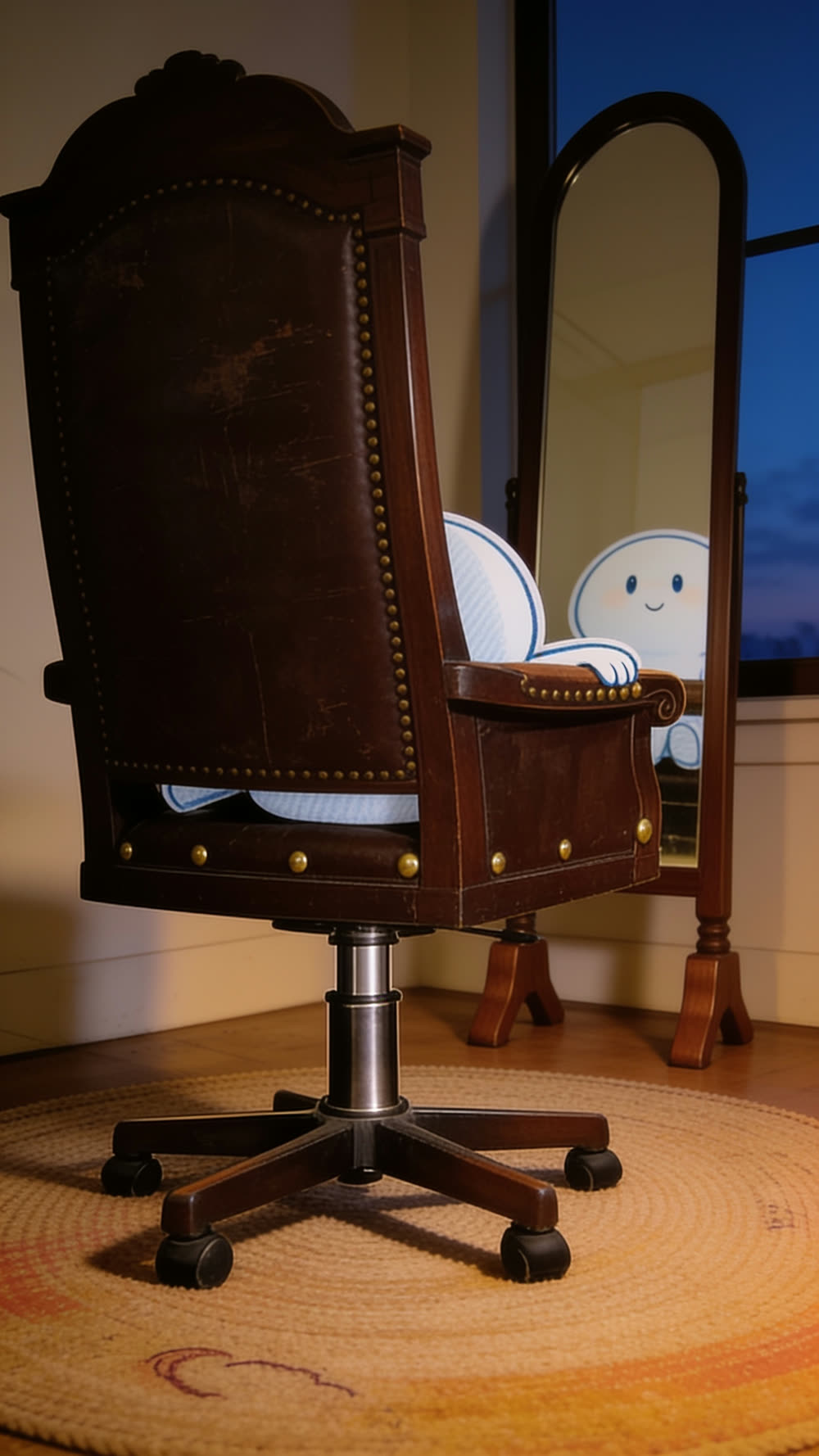
This devotional, from Pundayschool Episode 23, "The Chair of Judgement," is about the court we hold in our own head over other people's tiny offences, without ever bringing ourselves to the stand. Its verse is John 8:7: "Let any one of you who is without sin be the first to throw a stone at her" (NIV). Jesus said it to a crowd holding real stones over a real woman's real sin, and the accusers put the stones down, one by one, the oldest first. The verdict we hand out so quickly has a way of swivelling back around to face us, the moment we finally look.
Before we start: watch the short
Pundayschool · EP 23 · 95 seconds
The Chair of Judgement
An enormous judge's chair, one small victory spin, and a mirror that was standing behind the bench the whole episode.
Coming soon
The short has not posted yet. The day it goes live at @pundayschool, the video will play right here. The devotional below stands on its own, so read on.
Coming to YouTube · TikTok · Instagram · Facebook
Reading John 8:7
"Let any one of you who is without sin be the first to throw a stone at her."
John 8:7, NIV
Prefer to listen?
John 8:7, read aloud in the King James Version. About 10 seconds.
Some of us hold court every single day. No robe. No law degree. Just a chair and a strong opinion. Someone parked across two spaces. Guilty. Someone's phone rang during the silent prayer. Guilty. Someone took the last cookie and left the empty plate out. Guilty. Justice is swift, when it is aimed away from us.

Here is the part we never plan for: the docket clears, and we allow ourselves one small victory spin, the kind anyone in a rolling chair gives themselves when they are pleased. The chair keeps going. It slows, creak by creak, and stops facing a mirror that was standing behind the bench the whole time. Court is adjourned due to personal relevance. That is the trouble with a swivel: our verdicts come back around to face us.
This is not a new problem. In John's Gospel, a crowd once dragged a woman caught in adultery in front of Jesus and demanded a verdict, using her more as a trap for him than as a person standing in front of him. Jesus did not argue the law. He knelt down, wrote in the dust, then straightened up and said one sentence that emptied the crowd's hands: "Let any one of you who is without sin be the first to throw a stone at her." One by one, the accusers left, the oldest first, until the only one in the crowd actually qualified to throw a stone had never picked one up.
Court is adjourned
due to personal relevance.
Three honest questions
No guilt trip here. Just three quiet questions, between us and God.

- We judge quickly, not because we are cruel, but because a verdict takes a second and mercy takes longer to prepare. Where in my life have I been handing out a fast verdict instead of preparing a slower mercy?
- The accusers in John 8 put their stones down oldest first, the ones who had lived long enough to know their own record best. What would change about my own verdicts if I let my own history cross-examine me before I speak?
- So keep the footstool within reach. What would it actually look like, this week, to climb down from my own chair before I say the verdict out loud?
A short prayer
Pray it slowly, in these words or your own.
Father, thank you that you have never once needed a verdict from me to keep loving anyone, including me. Forgive me for the chair I climb into without noticing, the strong opinions I hand down at people who are not even in the room. Forgive me for how quickly a verdict comes and how slowly I let mercy get prepared. Teach me to keep the footstool within reach, to climb down before I speak, and to look in the mirror first. Thank you that the only one who was ever truly qualified to throw a stone at me never picked one up. Help me trade my next verdict for one honest prayer, today, out loud. Amen.
One step for today
Think of the last person you handed a fast verdict to, out loud or just in your own head. You do not need to tell them. You just need to notice the chair you were sitting in.
The next time a verdict rises up in you this week, hold it. Look in the mirror first. Then trade the verdict for one honest prayer.
Grace has read your whole file. And it is still on your side.
That is the whole devotional
No extra reading, no follow-up task, nothing to sign up for. If one line stuck with you, say it back to God once more before the day picks up speed. That counts. You have done today's devotional.
Questions people ask
What does John 8:7 mean?
John 8:7 is Jesus' answer to religious leaders who dragged a woman caught in adultery in front of him and demanded she be stoned, as the law of Moses required. Rather than argue the law, Jesus said: "Let any one of you who is without sin be the first to throw a stone at her." Since none of the accusers could honestly claim to be without sin, the verdict they arrived so confident to deliver quietly fell apart in their own hands.
What is the story behind John 8:7?
John 8:1-11 tells of a woman caught in adultery brought before Jesus while he was teaching in the temple courts. The religious leaders were using her as a trap: if Jesus said not to stone her, he would contradict the law of Moses; if he said to stone her, he would contradict his own message of mercy. Jesus knelt and wrote in the dust, then gave the answer in John 8:7. The accusers left one by one, beginning with the oldest, and Jesus told the woman, "Then neither do I condemn you. Go now and leave your life of sin" (John 8:11), holding both her real sin and real mercy at once.
What does "the chair of judgement" mean in this episode?
It is a small, physical picture of a real habit: an enormous judge's chair we climb into every day to pass quick verdicts on other people's small offences, then push off in one small victory spin when the docket clears. The chair keeps turning, past where we meant it to stop, until it faces a mirror that was standing behind the bench the whole time. The episode's own line for this: "that is the trouble with a swivel. Our verdicts come back around to face us."
Is this episode saying we should never judge anything?
No. John 8:7 is not against every kind of moral judgment, it is against the particular habit of judging others quickly while quietly exempting ourselves, the same habit Jesus names elsewhere as noticing the speck in someone else's eye while ignoring the plank in our own (Matthew 7:3-5). The episode's invitation is not "stop noticing wrong," it is "climb down from the chair before you pronounce the verdict."
Where can I watch The Chair of Judgement?
Episode 23 goes live soon at @pundayschool on YouTube, TikTok, Instagram, and Facebook, and the video will be embedded at the top of this page the day it posts. Bookmark this page or follow @pundayschool to catch it first.