Pundayschool · Episode 28 companion
The Generosity Timer: a devotional for anyone counting the minutes
A quick devotional for busy people: 3 to 5 minutes, start to finish. Read it or listen to it, whichever fits your morning: a coffee break, a commute, or the two minutes before the rest of the house wakes up. When you reach the bottom, you have done today's devotional.
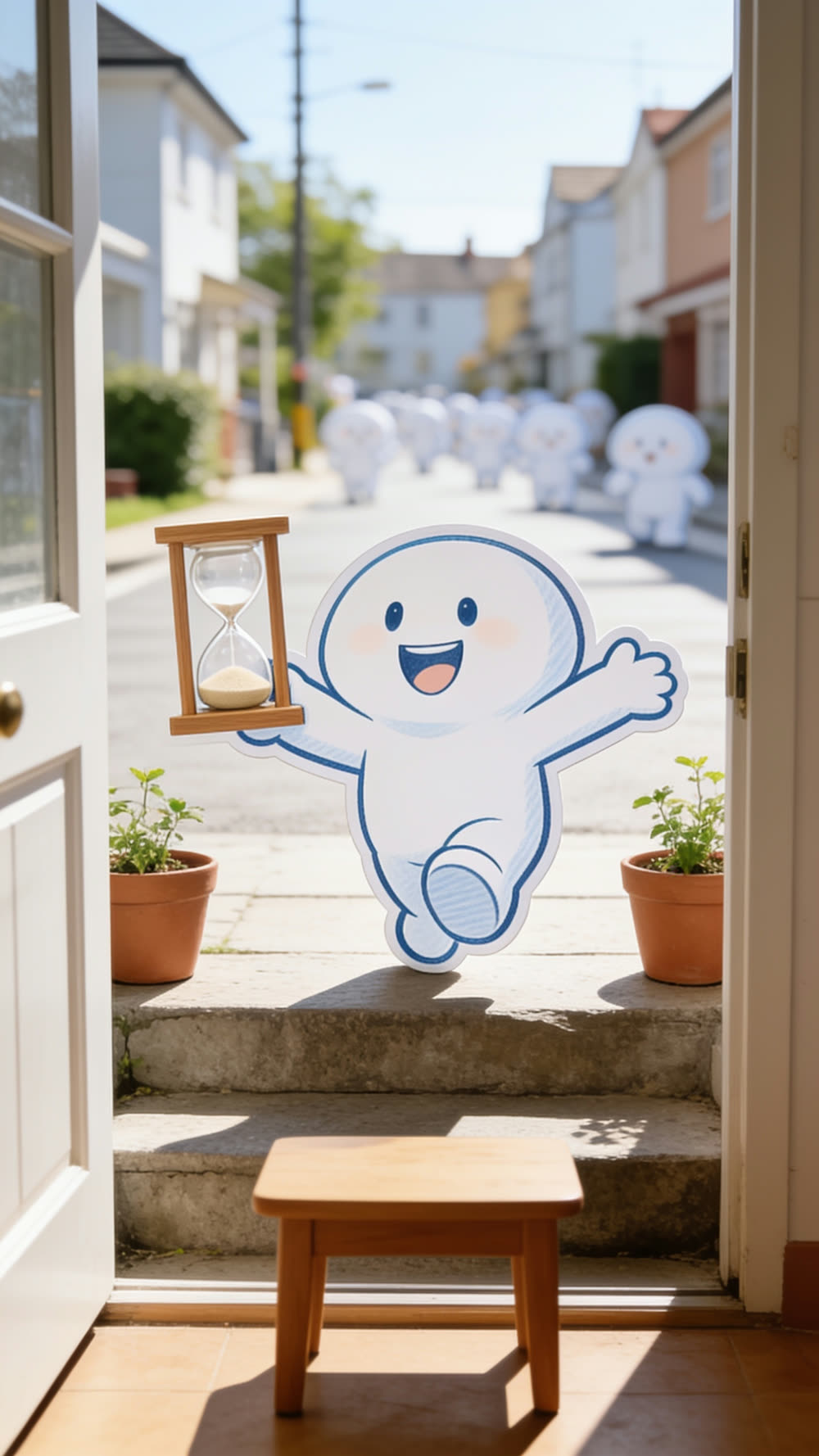
2 Corinthians 9:7 says, "Each of you should give what you have decided in your heart to give, not reluctantly or under compulsion, for God loves a cheerful giver." It means real generosity starts as a decision made in the heart, not a grudging minimum worked out in advance. This devotional, from Pundayschool Episode 28, "The Generosity Timer," follows a mascot who plans every act of kindness down to the minute, complete with polite signals when the help is officially over, then meets someone who never once checks the clock. The invitation is simple: keep deciding to give. Just stop timing it.
Press play: watch the short
"The Generosity Timer" is on its way to YouTube, TikTok, Instagram, and Facebook at @pundayschool. Check back soon, or follow along there so you do not miss it.
Starting the clock: reading 2 Corinthians 9:7
"Each of you should give what you have decided in your heart to give, not reluctantly or under compulsion, for God loves a cheerful giver."
2 Corinthians 9:7, NIV
Prefer to listen?
2 Corinthians 9:7, read aloud in the King James Version. About 15 seconds.
We decided to be generous this week. We even prayed about it first, which felt like the responsible thing to do. Then we decided how much. Before anyone asked. Before we knew what would actually be needed.
In our episode, that decision comes with a prop: a small sand timer, carried like a badge. A friend calls, and the timer gets flipped in the same motion that lifts the phone. The help that follows is warm and completely real, right up until the last grain lands.
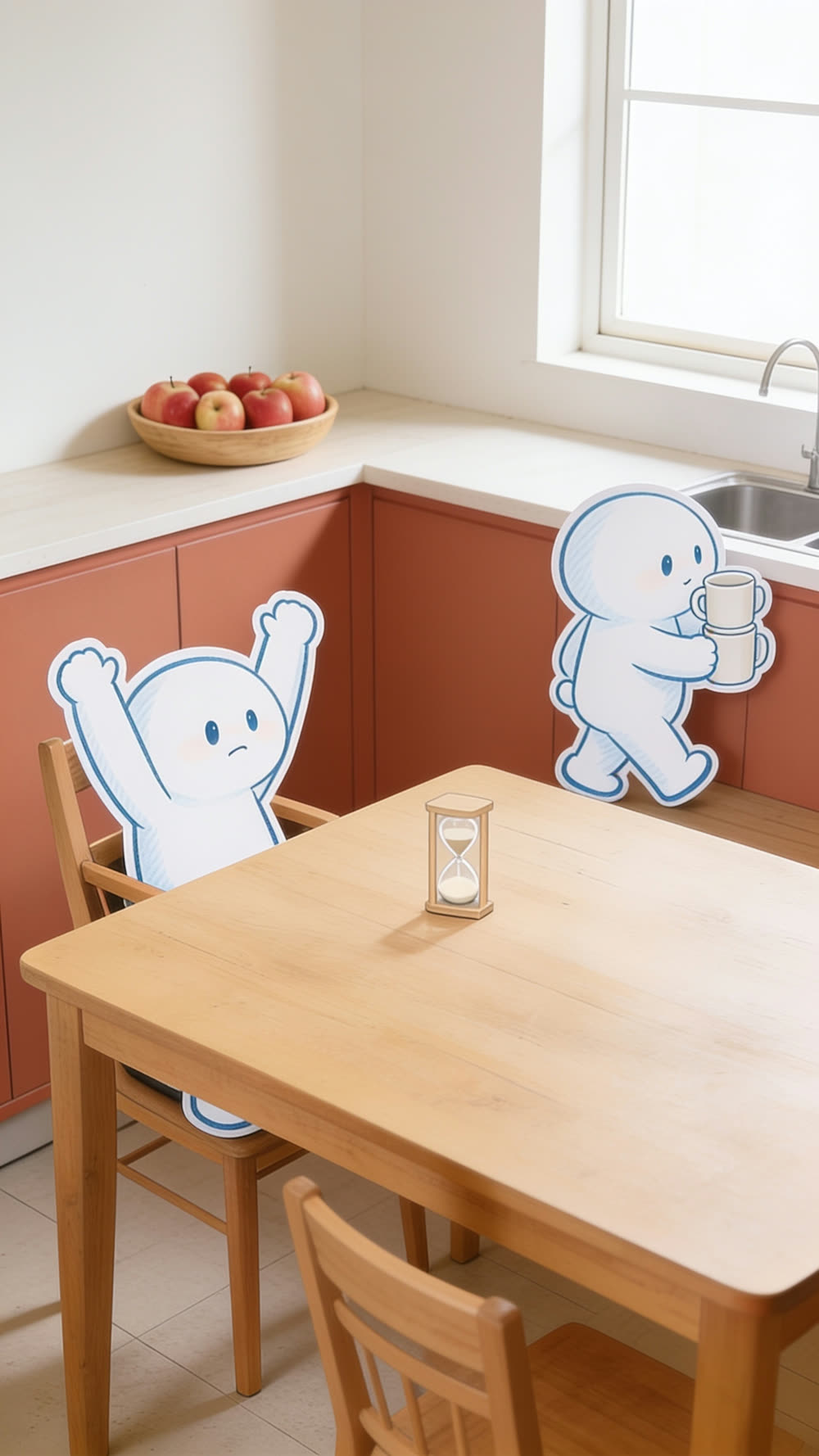
Then the sounds begin. The slow breath. The chair easing a few degrees off square. The small, polite machinery of a kindness reaching the end of its allotment, while the friend's voice keeps going, still mid-story. They needed twenty minutes. We had budgeted twelve.
The same arithmetic runs through the whole day. We will give someone a lift, but only to the station, not the airport. We will bring something to the meal, but we check what everyone else is bringing first, and bring slightly less than the most. Straight down the lens, the alibi lands: "I said generous. Not reckless."
Then someone else shows up. They give without checking the amount, or asking how long it will take. They stay until the job is finished, then a bit longer, and they never mention it. We are left standing there, holding our twelve minutes.
2 Corinthians 9:7 says, "Each of you should give what you have decided in your heart to give, not reluctantly or under compulsion, for God loves a cheerful giver."
Notice what the verse does not say. It does not scold us for deciding in advance. Deciding in the heart is exactly what it asks for. The trouble starts when that decision hardens into a ceiling we defend instead of a floor we are free to go past, when planning becomes rationing. We love open hands, as long as we hold the wrist. We call it wisdom. It is really control wearing an apron.
Control wearing an apron.
When the sand runs out: honest questions
So what do we do with our own sounds? Not shame. Shame just makes us grip the timer tighter. Just three quiet questions, between us and God.
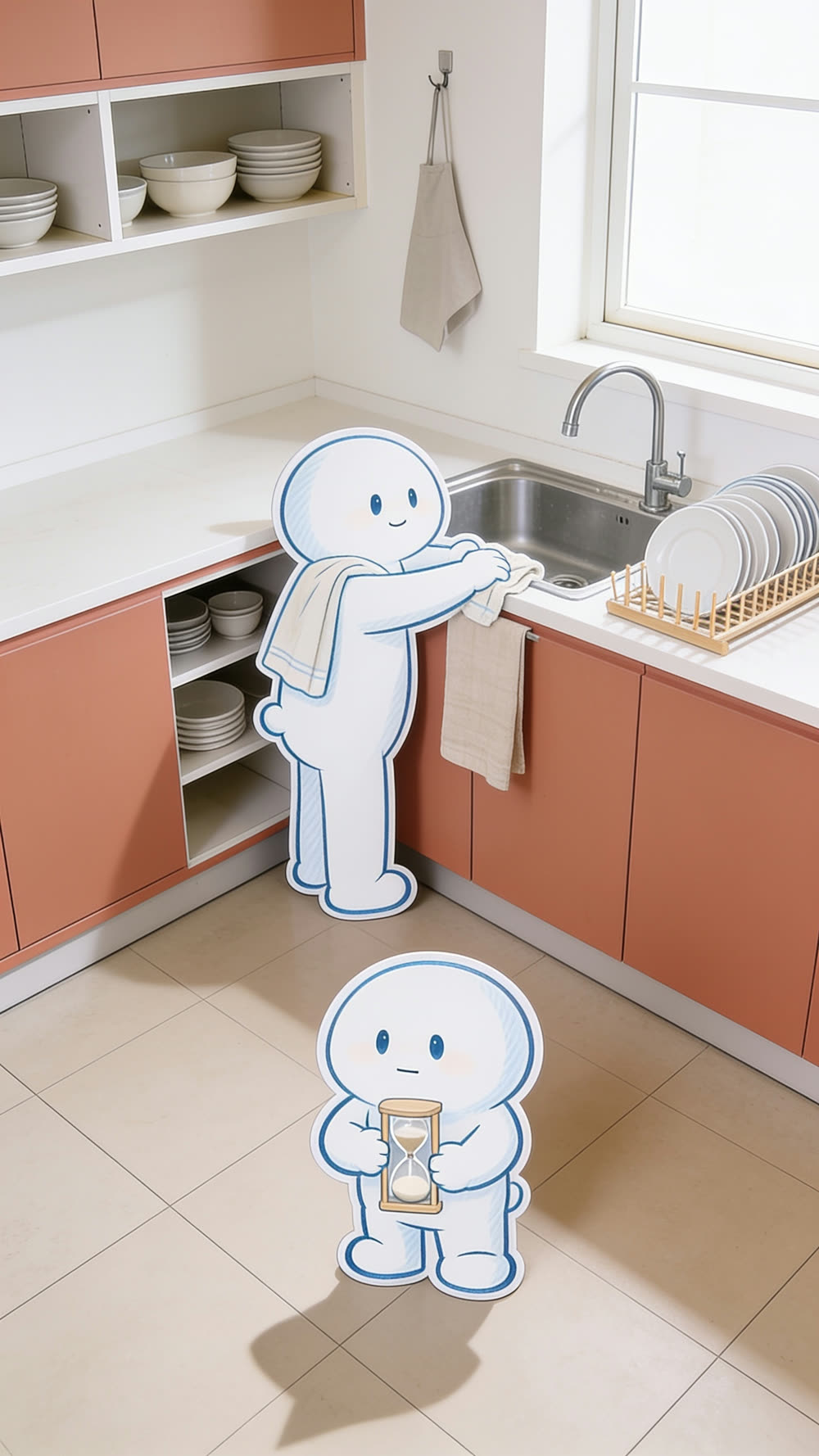
- What is the one kindness you already have a ceiling on, the point where you know you will start easing toward the door?
- Which of the sounds is yours: the slow breath, the shifted chair, the "sorry, I really have to go"? What is that sound actually protecting?
- Think of someone who has helped you without ever checking the clock. What did that feel like to receive, and could you offer it to someone else this week?
Laying the timer down: a short prayer
Pray it slowly, in these words or your own.
God, You gave everything without measuring it first. Thank You that You have never once checked how kind is kind enough. Forgive me for turning open hands into a held wrist, for calling my caution wisdom when it was really control in an apron. Teach me to decide to give, and then let go of deciding what it should cost. Make me a cheerful giver, not just a careful one. Amen.
Press play again: one step for today
The episode ends with one small change: the timer laid down on its side, so the sand cannot fall through it at all, and the mascot settling back into the chair for as long as it takes.
Pick one act of kindness you would normally budget, and give it without deciding the size first. Let a phone call run past when you meant to end it. Bring the whole dish, not the smaller bowl. Say yes to the further favor, not just the convenient one.
When the old sounds start, the slow breath, the urge to check the time, notice them, and stay in the chair anyway.
The end
That is the whole thing. No sign up, no series to binge. Just a timer, finally allowed to lie down.
More questions
What does 2 Corinthians 9:7 mean?
It means giving should come from a decision made in the heart, not from guilt or pressure, and it should be done cheerfully, because that is the kind of giver God loves. The verse is about the attitude behind the gift as much as the gift itself.
Is it wrong to plan how much I give?
No. Deciding in advance, the way the episode's mascot decides with its timer, is not the problem. The problem is when the plan becomes a ceiling we defend rather than a floor we are free to go past. Decide to give, then hold the amount loosely.
How do I become a more cheerful giver?
Start by noticing your own "sounds," the polite signals you give when help is about to end, and let one of them go unused this week. Cheerfulness grows the same way caution did, one small choice at a time.
Why does the verse say "not reluctantly or under compulsion"?
Because those are the two ways generosity turns joyless: giving out of guilt, and giving out of rules or pressure. Paul is pointing to a third way, a gift that flows from a settled decision of the heart rather than either one.
Where can I watch The Generosity Timer?
Right at the top of this page once it is live, or on YouTube, TikTok, Instagram, and Facebook at @pundayschool.