Pundayschool · Episode 12 companion
The Invisible Load: a devotional for whatever you're still carrying
A quick devotional for busy people: 3 to 5 minutes, start to finish. Read it or listen to it, whichever fits your morning: a coffee break, a commute, or the two minutes before the rest of the house wakes up. When you reach the bottom, you have done today's devotional.

This devotional, from Pundayschool Episode 12, "The Invisible Load", teaches that Jesus never asked us to get good at looking unburdened. Its verse is Matthew 11:28: "Come to me, all you who are weary and burdened, and I will give you rest" (NIV). We answer "fine" to protect other people from our weight, but rest does not begin with sorting yourself out first or making the load look manageable. It begins with one honest answer.
First, watch the short
Pundayschool · EP 12 · about 80 seconds
The Invisible Load
Every "fine" adds another bag. By the car park, we're carrying a tower.
Coming soon
The short has not posted yet. The day it goes live at @pundayschool, the video will play right here. The devotional below stands on its own, so read on.
Coming to YouTube · TikTok · Instagram · Facebook
Reading Matthew 11:28
"Come to me, all you who are weary and burdened, and I will give you rest."
Matthew 11:28, NIV
Prefer to listen?
The wider passage, Matthew 11:28 to 30, read aloud in the King James Version. Under a minute.
Ask anyone at church how they're doing, and there's one answer that has survived every denomination, every generation, and apparently every personal crisis. "Fine." Work is chaos. Fine. The marriage feels heavy. Fine. We haven't slept properly in weeks. Fine.
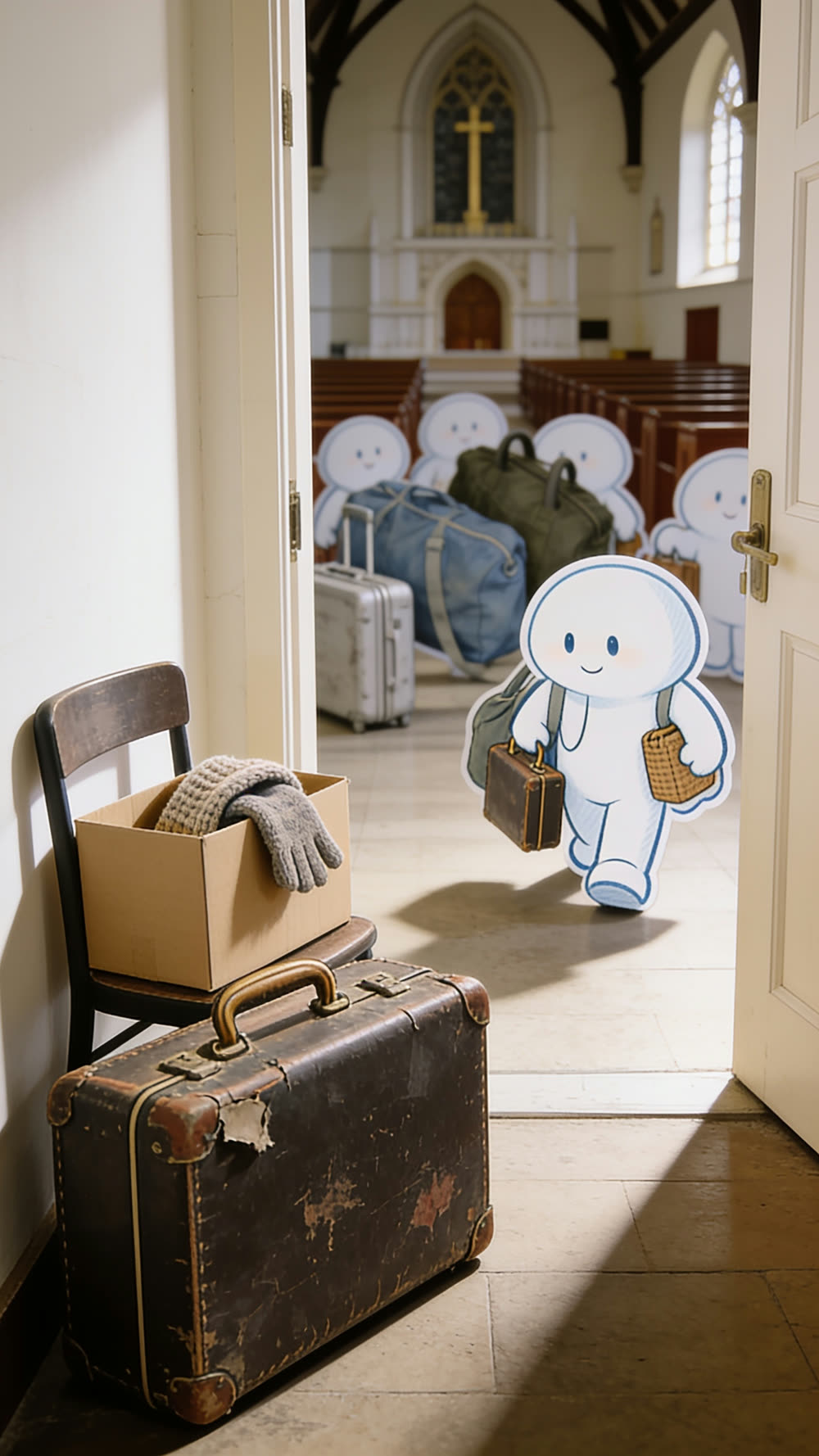
Here's what nobody tells us about "fine": it's not a lie exactly, it's a transaction. Every time we say it, we quietly agree to carry the thing alone a little longer. One more bag. Then another. By the end of an ordinary week we're hauling a tower of luggage nobody else can see, still smiling, still serving, still saying we're blessed and highly compressed.
We can get remarkably good at this. Good enough that the people closest to us never find out we're tired. But Jesus never once asked anybody to get good at looking unburdened. Come to me, he says, all who are weary and burdened. Not: sort yourself out first. Not: make it look manageable. Come weary. Come burdened. That is the actual invitation, addressed to us exactly as we are when we're not performing "fine."
Rest, in this verse, is not something we earn by finally getting our act together. It's something offered to the tired, by name, before any of that happens.
Come weary. Come burdened.
An honest minute: three questions
No performance needed here, just us and God. Sit with these for a minute before moving on.

- What's the bag we're still carrying that we said we'd "leave with God" a while ago, and somehow brought home again?
- Who in our life would be surprised to learn we're not actually fine? What does that tell us about how well we've hidden it, or how safe we've made it to ask?
- If rest doesn't require us to sort ourselves out first, what's actually stopping us from setting one thing down today?
A short prayer
Pray it slowly, in these words or your own.
Lord, thank you that you never asked me to look unburdened before I could come to you. Forgive me for the "fine"s that weren't true, and for how good I've gotten at carrying things alone. You already know what's in the bag I keep picking back up. Today, I set it down, here, honestly, in front of you. Give me the rest you promised, not the performance of rest, the real thing. Amen.

One step for today
You don't have to unload the whole suitcase today. Just one bag.
Next time someone genuinely asks how you're doing, try one honest sentence instead of "fine." It doesn't need to be dramatic. "Honestly, it's been a heavy week" is plenty. Watch what happens when you stop pretending the bag isn't there.
And if you're the one who asked someone else "how are you" today, stay a second longer than usual for the answer. You might be the place a bag finally gets set down.
That's it
That is the whole devotional. No extra reading, no follow-up task, nothing to sign up for. If one line stuck with you, say it back to God once more before the day picks up speed. That counts. You have done today's devotional.
Questions people ask
What does Matthew 11:28 mean?
Jesus is speaking to a crowd worn down by religious performance and everyday exhaustion. He offers rest not as a reward for getting everything sorted, but as an invitation to come exactly as tired and burdened as we already are. The verse rules out the idea that we have to earn or perform our way toward rest first.
Why do we say "fine" when we're not?
Usually to protect other people from our weight, or to avoid the vulnerability of an honest answer. It feels safer and faster. The cost is that nobody around us ever learns we need help carrying something, because we've gotten so good at sounding strong.
What does it mean to be "weary and burdened" in the Bible?
In Matthew 11:28, it describes anyone worn out by carrying more than they were built to carry alone, whether that's religious obligation, daily labor, or ordinary life weight. Jesus addresses the invitation directly to that condition, not to people who have already resolved it.
How do I actually "give my burdens to God"?
Start smaller than a whole life reorganization. Name one specific thing, out loud or in a prayer, that you've been carrying alone and pretending is fine. Naming it honestly, even just to yourself and God, is the "setting it down" this devotional is pointing at.
Where can I watch The Invisible Load?
Episode 12 goes live soon at @pundayschool on YouTube, TikTok, Instagram, and Facebook, and the video will be embedded at the top of this page the day it posts. Bookmark this page or follow @pundayschool to catch it first.