Pundayschool episode 30 companion · Please Say Fine
Love One Another, Not Just Greet Efficiently: a 1 John 4:11 study guide
The fuller meal behind our 90 second short. Built for a small group evening or a personal half hour with a journal. About 35 minutes together, 15 on your own, no seminary required.
- Passage
- 1 John 4:11
- Time
- About 35 minutes with a group, 15 solo
- You need
- A Bible, this page, something to write with
- Works for
- Small groups, youth groups, or one honest person and a journal
The short answer
1 John 4:11 says, "Dear friends, since God so loved us, we also ought to love one another" (NIV). It means our love for other people is not a separate decision we get to opt out of; it is the natural, obligated response to having been loved by God first. The verse does not describe a suggestion. It describes a debt already paid that we are now free, and expected, to pass on.
Press play · 2 min
First, the 90 second version
"Please Say Fine" is on its way. Once Episode 30 is posted, it will play right here. In the meantime, find Pundayschool on YouTube, TikTok, Instagram, and Facebook at @pundayschool.
The setup · 2 min
Why a church foyer
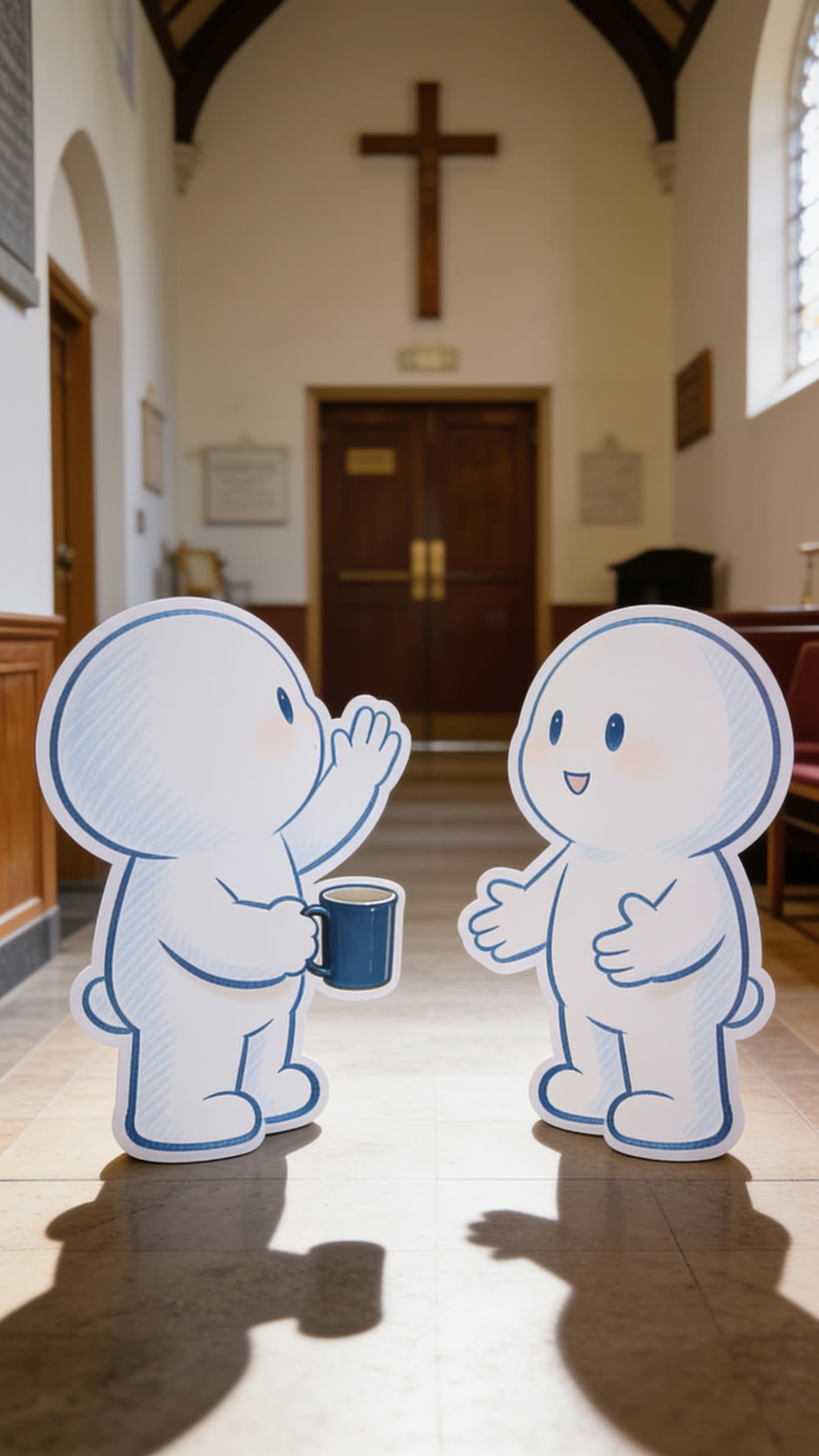
The short pictures the most ordinary ritual in church life: "How are you?" answered with "Fine, thanks." Our mascot asks, expecting exactly that, tea in hand, smile fully prepared. Instead the other mascot answers honestly. A hard week. A difficult phone call. A problem at home.
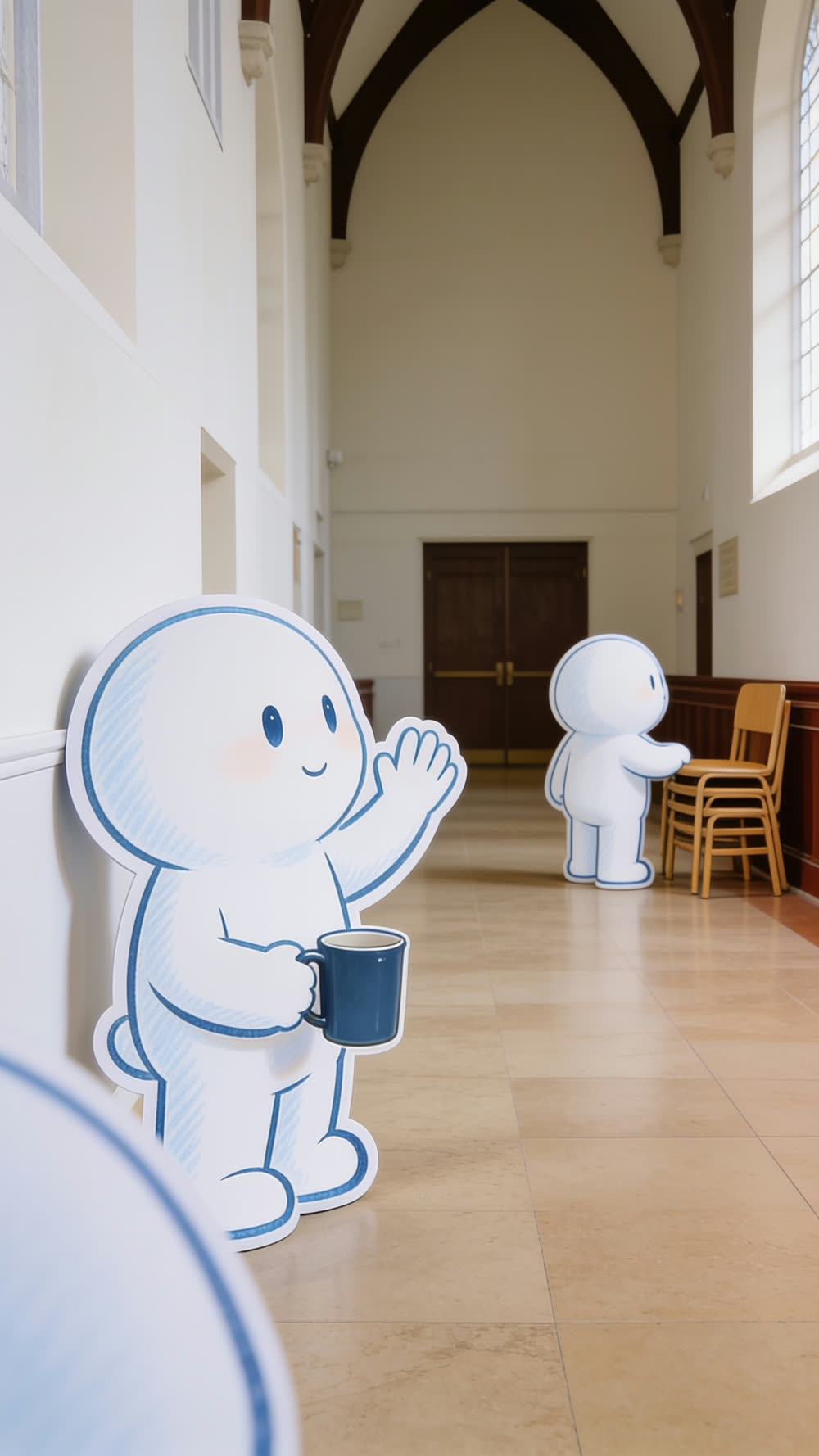
While the honest mascot talks, our mascot's attention starts drifting: the clock, the door, someone else across the room who apparently needs them more urgently. Caught mid-glance, wave hand half raised, the joke lands: we asked how they were, and did not expect an answer. Then the head comes home, and the episode ends with both of them settled on a bench together, the doors open and completely ignored. 1 John 4:11 is the verse underneath the whole thing.
Background · 5 min
Where this verse comes from
1 John is a short letter written by the apostle John, likely late in his life, to churches he knew well. Its purpose was pastoral: to give real assurance to genuine believers and to correct a group who had left the church while denying core truths about who Jesus is and what it means to actually know God.
John's answer to "how do we know we truly know God" is not a theological exam. It is love. Chapter 4 builds a tight argument: God is love (4:8), God showed that love by sending His Son (4:9-10), and therefore, since God so loved us, we also ought to love one another (4:11). Each step depends on the one before it. Nobody gets to skip to the command without first passing through the gift.
That order matters for how we read the whole letter. 1 John never treats love as a personality trait some Christians happen to have and others do not. It treats love as the visible evidence of an invisible reality: "No one has ever seen God; but if we love one another, God lives in us and his love is made complete in us" (4:12, the very next verse).
Read · 3 min
Read the verse: 1 John 4:11
Have one person read the verse aloud twice, slowly. Then use this map to walk back through its two halves.
- Half one"Dear friends, since God so loved us." This half is the foundation, not the instruction. It states a completed fact: God has already loved us, fully and first. Nothing that follows makes sense without this half standing firm underneath it.
- Half two"We also ought to love one another." The word "ought" carries real weight in the Greek; it is a moral debt, not a polite suggestion. Because we were loved first, we are now obligated, not merely encouraged, to love others the same way.
The tension worth sitting with: this is not a transaction where we pay God back. It is an overflow. Once you have genuinely received a love this large, holding it in becomes the strange, unnatural choice. Loving one another is simply what a person who has truly received God's love ends up doing.
"Dear friends, since God so loved us, we also ought to love one another."
1 John 4:11, NIV
Discuss · 15 min
Discussion questions

Warm up
keep it light, five minutes- Think of the last time someone asked "how are you" and you actually told them the truth. How did they respond?
Into the text
read 1 John 4:8-12 together before question 3- Read 1 John 4:8-12 together. How does verse 11's command depend on verses 9-10? What happens if you try to obey verse 11 without believing verses 9-10 first?
- In the episode, every wandering glance happens while the honest mascot is still talking, completely unaware. When has your own attention drifted away from someone mid-conversation? What were you drifting toward?
The mirror
let the silence sit on question 5- What is the real difference between greeting someone efficiently and actually loving them? Where is that line for you personally?
- Who in your life gave you a real answer recently that cost you something to actually receive? What would "staying" have looked like, or did look like?
Go deeper · 4 min
Where else the Bible says this
John 13:34-35
The same command from the same author, years earlier, straight from Jesus: "A new command I give you: Love one another. As I have loved you, so you must love one another. By this everyone will know that you are my disciples, if you love one another" (NIV). Love is the identifying mark, not an optional accessory.
Romans 12:15
What actually listening looks like in practice: "Rejoice with those who rejoice; mourn with those who mourn" (NIV). Both halves require staying present long enough to know which one the moment calls for.
James 1:19
The practical skill behind loving one another well: "Everyone should be quick to listen, slow to speak and slow to become angry" (NIV). Quick to listen is the opposite of the wandering attention this episode confesses.
1 Corinthians 13:4-7
Paul's fuller picture of what this love actually does: patient, kind, not self-seeking, and it "always protects, always trusts, always hopes, always perseveres" (NIV). Staying through a hard conversation is a small, real instance of that perseverance.
Apply · 5 min
Put it into practice this week
The short ends with two people sitting down together, doors open and ignored. Here is that same choice, with legs on it.
1. Ask the real question, once
This week, ask one person "how are you" and then wait a full three extra seconds after they say "fine." Often a genuine pause invites a truer answer. Write down what happened:
2. Notice where your attention goes
Next time someone tells you something hard, notice the first thing your mind reaches for, whether it is the clock, your phone, or a reason you need to go. Naming it honestly, even just to yourself, is the first step to staying anyway.
3. Follow up on purpose
Pick one honest answer someone gave you recently and follow up on it this week, even briefly. A single "I have been thinking about what you told me" does more than a dozen efficient greetings.
To close
God, thank You that You loved us first, before we had anything to offer back. Teach us to love one another the same way: not efficiently, but really. Give us the grace to stay in the conversations that cost us something. Amen.
The end
That's the guide
Print this, photocopy it, or read it again with a friend. Nothing to sign up for, nothing to remember. When the next episode drops, its study guide will sit right next to this one at pundayschool.com.
Extra time
Questions people ask about 1 John 4:11
Does 1 John 4:11 mean love is a command, not a feeling?
It means love is at least a command, whatever else it also is. John is not describing warm feelings; he is describing an obligation that flows directly from having been loved by God first. Feelings often follow obedience here rather than the other way around.
How is this different from just being a nice, friendly person?
Niceness can stay comfortable and efficient. The love 1 John 4:11 describes is grounded in God's own costly love toward us, so it is willing to stay when staying is inconvenient. It is measured by presence and cost, not just pleasant tone.
Can I use this study guide on my own?
Yes. Read the background, read the verse slowly, and treat the discussion questions as journal prompts. On your own the study takes about 15 minutes, and the write-in lines in the application section are there for exactly that.
Where can I watch Please Say Fine?
Right at the top of this page once it is live, or on YouTube, TikTok, Instagram, and Facebook at @pundayschool.