Pundayschool episode 18 companion · The Hand-Raise Calibration
The LORD Looks at the Heart: a 1 Samuel 16:7 study guide
The fuller meal behind our 81 second short. Built for a small group evening or a personal hour with a journal. About 40 minutes together, 20 on your own, no seminary required.
- Passage
- 1 Samuel 16:1-13, key verse 16:7
- Time
- About 40 minutes with a group, 20 solo
- You need
- A Bible, this page, something to write with
- Works for
- Small groups, youth groups, or one honest person and a journal
The short answer
1 Samuel 16:7 records God correcting Samuel, who was about to judge Jesse's son Eliab fit to be king by his height and appearance: "Do not consider his appearance or his height, for I have rejected him. The LORD does not look at the things people look at. People look at the outward appearance, but the LORD looks at the heart" (NIV). The verse redirects the whole search away from the obvious candidate and toward David, the youngest son, still out with the sheep. What people can measure by sight is never the measure God is using.
Cold open · 1 min
First, the 81 second version
Pundayschool · EP 18 · 81 seconds
The Hand-Raise Calibration
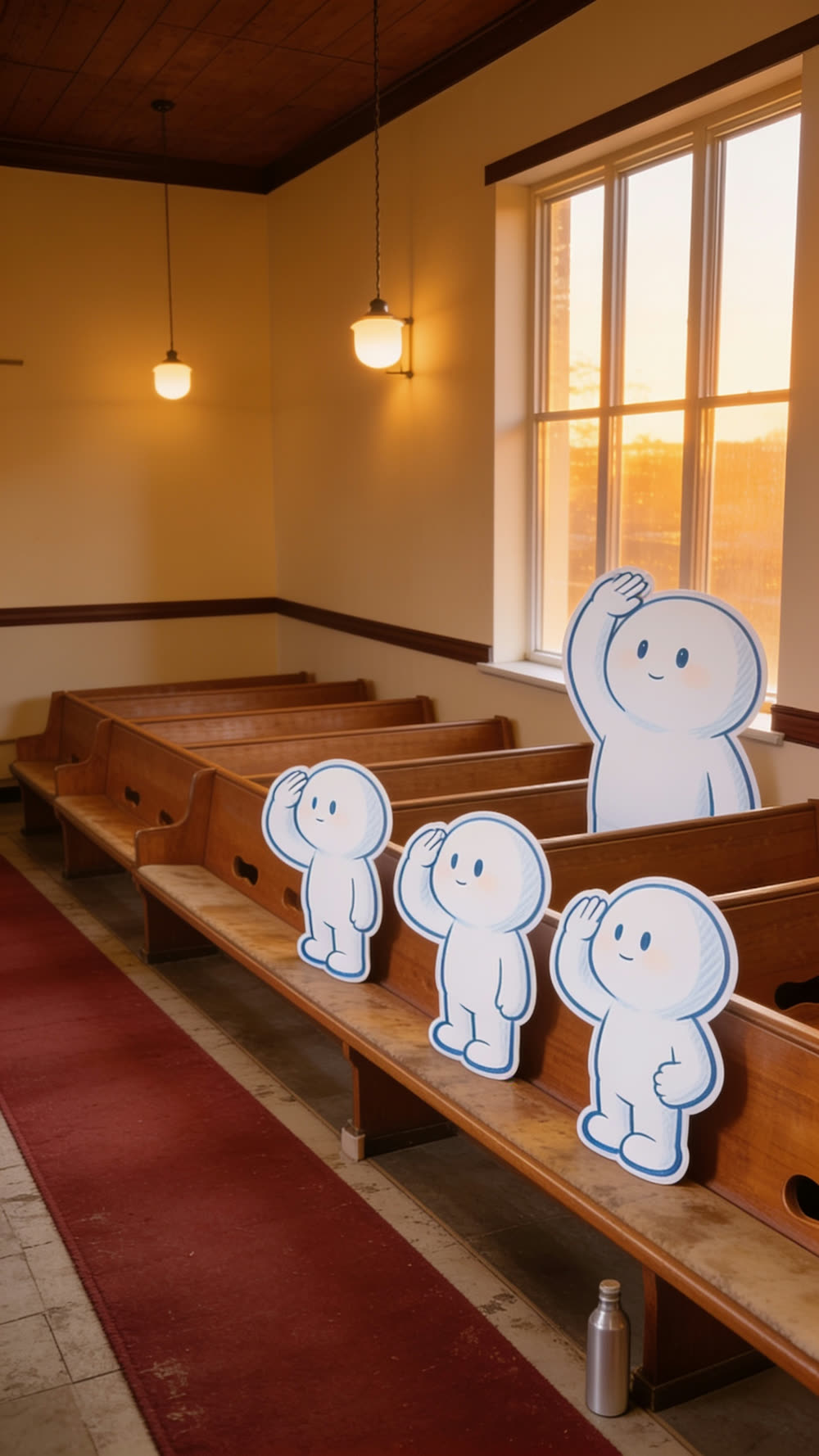
Waist, shoulder, ear, halfway: a whole song spent reading the row instead of singing it.
Coming soon
Episode 18 has not posted yet. The short lands soon at @pundayschool on YouTube, TikTok, Instagram and Facebook, and the video will be embedded at the top of this page the day it posts. This study stands on its own, so feel free to start without it.
Coming to YouTube · TikTok · Instagram · Facebook
The premise · 2 min
Why a row of raised hands
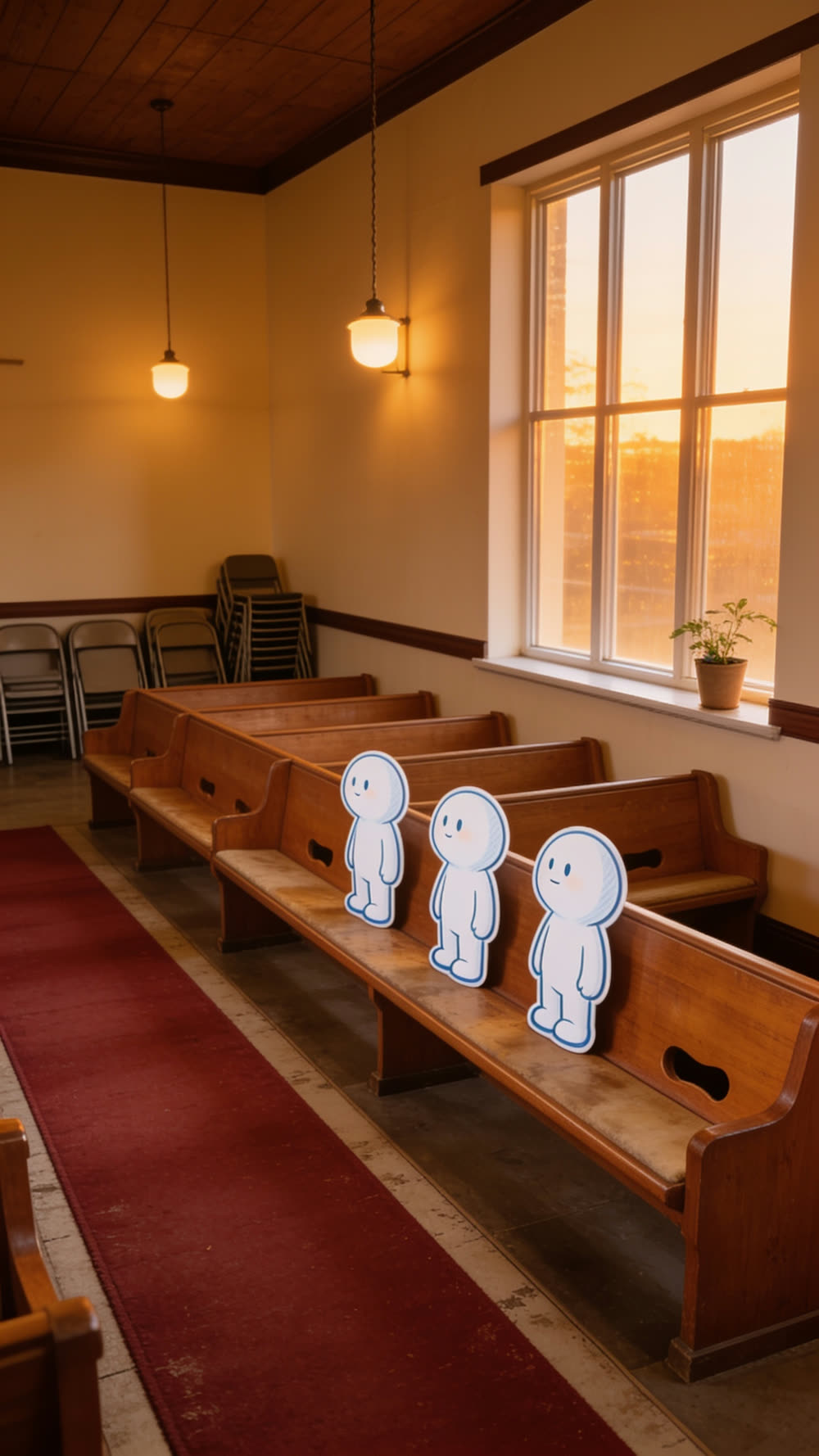
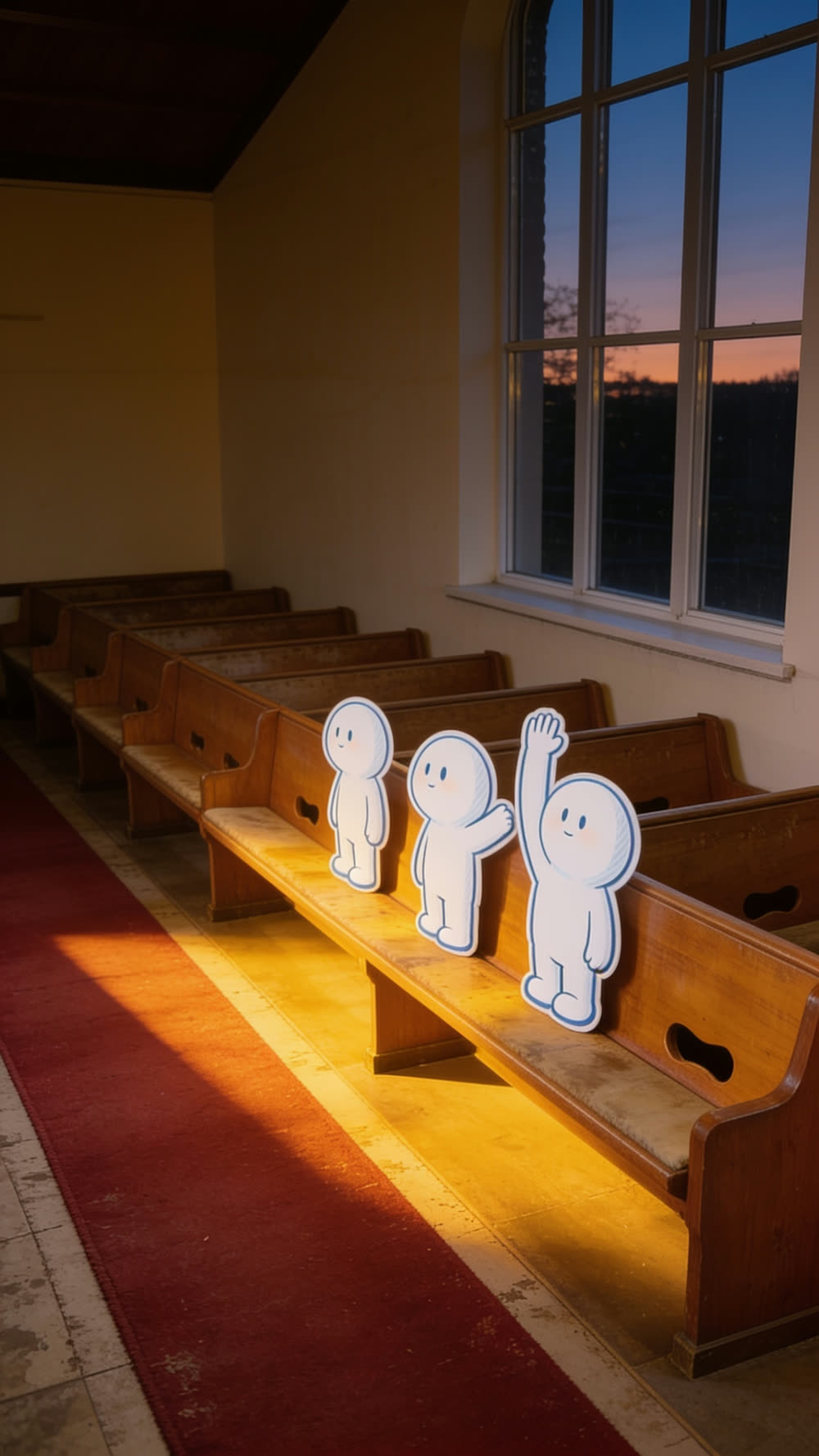
The short imagines an ordinary evening worship service: three figures standing in the front pew, facing the windows, a song underway. Two are genuinely worshipping. One is quietly running an instrument panel: a small turn of the head toward the neighbor, a reading of their hand height, a careful match. Waist height. Shoulder height. Ear height, matched to the centimeter.
Then the neighbor on the other side goes full stretch, and with two conflicting readings, the mascot does the only rigorous thing left: holds its hand exactly halfway between them. "Perfect. Nobody will notice us at all." The joke is the precision of it, all spent in service of blending in. The theology is not a joke at all: 1 Samuel 16:7 lands right on the detail the mascot forgot to check. The row was never grading it. The only audience that mattered was never looking at its arm.
Background · 5 min
What was going on at Jesse's house
1 Samuel 16 opens in grief. Saul, Israel's first king, has been rejected by God for repeated disobedience (1 Samuel 15), and Samuel is still mourning him when the LORD interrupts: "How long will you mourn for Saul, since I have rejected him as king over Israel? Fill your horn with oil and be on your way; I am sending you to Jesse of Bethlehem. I have chosen one of his sons to be king" (16:1). It is a dangerous errand. Saul is still on the throne, and Samuel is afraid Saul will hear of it and kill him (16:2), so he goes under cover of a sacrifice.
Worth noticing: this is not Samuel's first time picking a king by appearance. Years earlier he anointed Saul partly because Saul stood "a head taller than any of the others" (9:2), and that king had just failed spectacularly. So when Jesse's household lines up and Samuel sees Eliab, the eldest, tall and impressive, his instinct fires again: "Surely the LORD's anointed stands here before the LORD" (16:6). Even having lived through exactly this mistake once, Samuel reaches for the same measure. Verse 7 is God stopping him mid-reach, and it is aimed at a habit, not just a moment.
Seven of Jesse's sons pass in front of Samuel. None is the one. It is only when Samuel asks if there are more that Jesse mentions the youngest, out tending sheep, not even considered worth calling in for the lineup (16:11). That is the son God has already chosen.
Read · 5 min
Read the passage: 1 Samuel 16:1-13
Have one person read the whole passage aloud while everyone else just listens. Then use this map to walk back through it.
- v1-3God tells Samuel to stop mourning Saul and go anoint a new king from among Jesse's sons in Bethlehem, a dangerous errand carried out under cover of a sacrifice.
- v4-5Samuel arrives, the elders tremble, and he has Jesse and his sons consecrated for the sacrifice and the search.
- v6-7Samuel sees Eliab, tall and impressive, and assumes he is the one. God corrects him: do not consider appearance or height, for the LORD looks at the heart. The hinge verse.
- v8-10Six more of Jesse's sons pass before Samuel. The LORD has not chosen any of them.
- v11-13Jesse's youngest, still out with the sheep, is sent for and anointed on the spot. The Spirit of the LORD comes powerfully upon David from that day on.
"People look at the outward appearance, but the LORD looks at the heart."
1 Samuel 16:7, NIV
Discuss · 20 min
Discussion questions
Warm up
keep it light, five minutes- Tell the group about a time you caught yourself matching the room, an energy level, a tone, a posture, instead of just being honest about where you actually were. What gave it away?
- The short's mascot never actually stops worship to do its calibrating; it happens in the same breath as everything looking fine from the outside. Why is a quiet, invisible habit like that often harder to notice in ourselves than a loud, obvious one?
Into the text
give question 4 sixty seconds of quiet first- Read verses 6 and 7 again. Samuel had already watched a king chosen for his height fail. Why is it significant that he reaches for the exact same measure again anyway?
- Verse 7 says people look at the outward appearance, but the LORD looks at the heart. What does it mean, practically, that God's evaluation runs on a completely different axis than everyone else's?
- David was not even called in for the first lineup (v11). What does it cost us when we, like Jesse, quietly rule someone out before God has even weighed in?
The mirror
let the silence sit on question 8- If the LORD already sees straight past the outward reading to the heart, what is actually being accomplished when we manage our outward appearance for other people?
- Where in our own life is there a version of "waist, shoulder, ear, halfway": a careful, safe middle setting we hold so as not to stand out either way?
- The episode's turn is physical: "take one more reading, not sideways, up." What would it look like this week to bring your actual heart into a room instead of your calibrated reading of it?
Go deeper · 4 min
Where else the Bible says this
Proverbs 21:2
"A person may think their own ways are right, but the LORD weighs the heart" (NIV). Nearly the same correction from a different angle: we are poor judges of our own motives, let alone anyone else's outward reading.
Matthew 6:5-6
Jesus warns against praying to be seen by others rather than by the Father, "who sees what is done in secret." The same principle 1 Samuel 16:7 states about a king applies to worship itself: an audience that isn't really watching is never the one worth performing for.
1 Chronicles 28:9
David, later in life, tells his son Solomon: "the LORD searches every heart and understands every desire and every thought." The very king chosen in this chapter for his heart passes the same standard on, one generation later.
Apply · 5 min
Put it into practice this week
The short ends with an instruction, plain enough to carry into the week: take one more reading, not sideways this time, up. Here is that instruction with legs on it.
1. Name your version of the calibration
Where do you quietly read the room and adjust, in worship, at work, in a friendship, so that you land somewhere safe rather than somewhere honest? Write down one real, specific example, not a hypothetical:
2. Notice who you were actually performing for
Be honest. Most of the time, nobody in the row was grading us the way we assumed. Name the audience you were really trying to satisfy, and ask whether it was ever the one that mattered.
3. Do the physical version of "take one more reading"
This week, in one moment where you would normally check the room first, do not. Let your response, your hand, your honesty, be whatever is actually true, even if it matches nobody around you.
4. If you tend to stand out rather than blend in
Then check the other side of the same coin: performing distinctiveness is still performing. The goal was never to be noticed either. It was to actually mean it.
To close
Father, thank you that you have never once graded our outward reading. Forgive us for the songs, the meetings, the ordinary rooms we have spent calibrating instead of showing up honestly in. You told Samuel plainly: people look at the outward appearance, but you look at the heart. Teach us to take one more reading, not sideways at the people beside us, but up toward you. Amen.
Reading taken
That's the guide
Print this, photocopy it, or read it again with a friend. Nothing to sign up for, nothing to remember. When the next episode drops, its study guide will sit right next to this one at pundayschool.com.
Extra time
Questions people ask about 1 Samuel 16:7
What does 1 Samuel 16:7 mean?
God tells Samuel not to judge Eliab, Jesse's eldest son, by his impressive appearance or height. The full verse: "Do not consider his appearance or his height, for I have rejected him. The LORD does not look at the things people look at. People look at the outward appearance, but the LORD looks at the heart." It is the hinge that redirects the whole search from the obvious candidate to David, the youngest, still out with the sheep.
Why did Samuel almost anoint the wrong son?
Samuel had watched Saul, Israel's first king, chosen partly because he stood a head taller than everyone else (1 Samuel 9:2), turn out to be a king who disobeyed God and lost the throne. Even having lived through that, Samuel's first instinct at Jesse's house was still to read the room by height and appearance. Verse 7 corrects the very habit that had already gone wrong once.
How does The Hand-Raise Calibration use 1 Samuel 16:7?
The episode turns the verse into a small, funny picture: a worshipper who spends a whole song reading the height of the hands beside them instead of engaging with God, calibrating waist, shoulder, ear, and a careful average, so as not to stand out. 1 Samuel 16:7 lands as the correction: the outward reading was never what was being watched. The heart was.
Is this only about how we worship?
The hand-height picture is specific to worship, but the same instinct, quietly calibrating our outward posture to the room instead of bringing our actual heart, shows up anywhere we perform for an audience that is not really watching. 1 Samuel 16:7 is a reminder that the only audience that ever mattered sees straight past the reading.
Where can I watch The Hand-Raise Calibration?
Episode 18 goes live soon at @pundayschool on YouTube, TikTok, Instagram, and Facebook, and the video will be embedded at the top of this page the day it posts. Bookmark this page or follow @pundayschool to catch it first.