Pundayschool episode 22 companion · The Comparison Tape Measure
The Tape That Never Reaches Them: a 2 Corinthians 10:12 study guide
The fuller meal behind our 75 second short. Built for a small group evening or a personal hour with a journal. About 40 minutes together, 20 on your own, no seminary required.
- Passage
- 2 Corinthians 10:7-18, key verse 10:12
- Time
- About 40 minutes with a group, 20 solo
- You need
- A Bible, this page, something to write with
- Works for
- Small groups, youth groups, or one honest person and a journal
The short answer
2 Corinthians 10:12 is Paul refusing to join a comparison contest some teachers in Corinth were running: "we do not dare to classify or compare ourselves with some who commend themselves. When they measure themselves by themselves and compare themselves with themselves, they are not wise" (NIV). A measurement taken from yourself, using yourself as the ruler, was never an honest measurement of anything. Paul's own answer, two verses later, is that the only commendation worth having is the Lord's, not our own (10:17-18).
Cold open · 1 min
First, the 75 second version
Pundayschool · EP 22 · 75 seconds
The Comparison Tape Measure
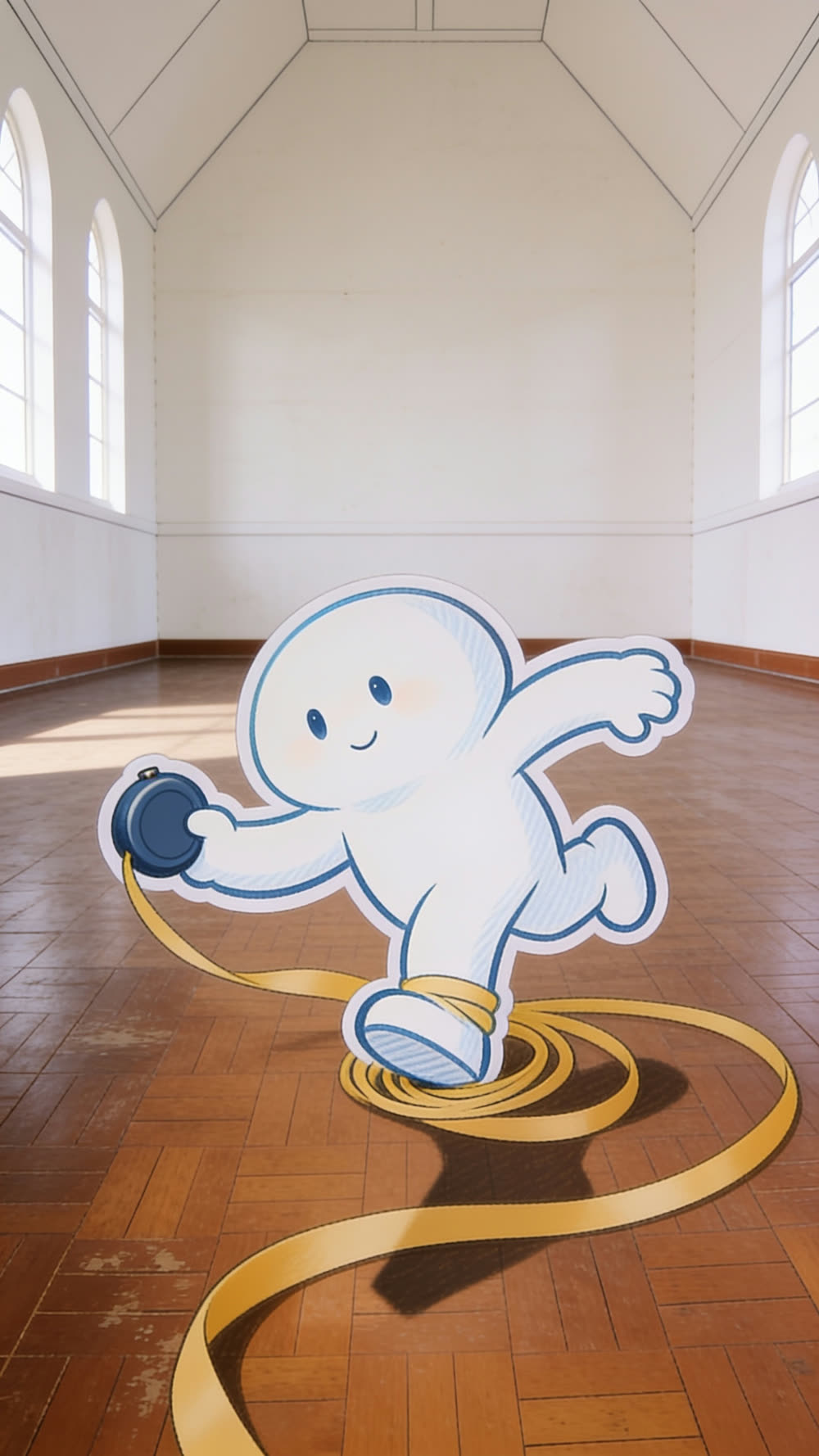
A tape measure that never goes back in on its own, one comparison at a time, until an ordinary step becomes a windmilling stumble.
Coming soon
Episode 22 has not posted yet. The short lands soon at @pundayschool on YouTube, TikTok, Instagram and Facebook, and the video will be embedded at the top of this page the day it posts. This study stands on its own, so feel free to start without it.
Coming to YouTube · TikTok · Instagram · Facebook
The premise · 2 min
Why a tape measure never goes back in on its own
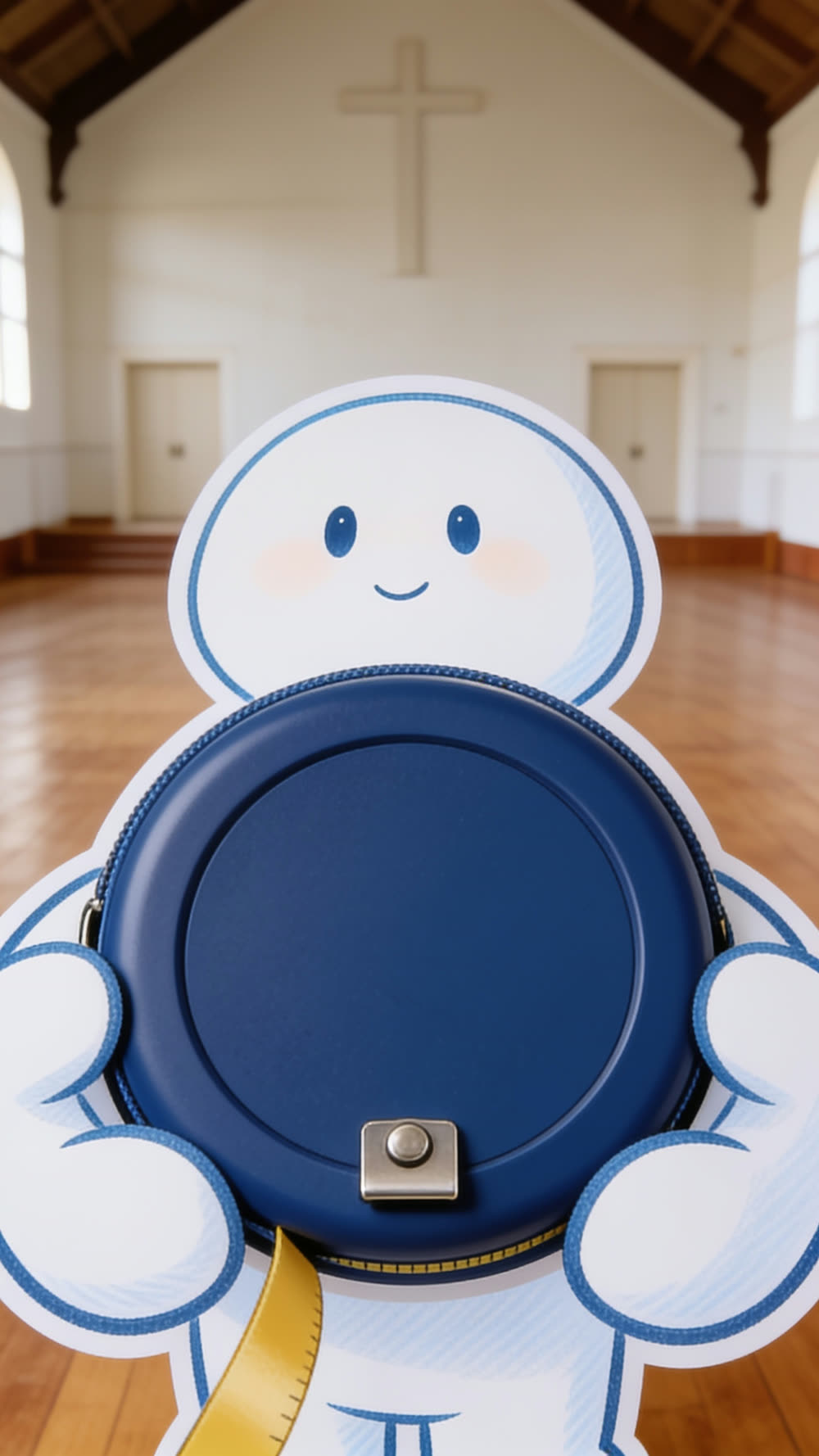
The short pictures a mascot who carries a tape measure everywhere through a church hall, not for wood, not for walls, for people. Somebody sings, and out comes the tape: how good, exactly? Somebody serves all morning without being asked, and that gets measured too. Somebody just seems sure of themselves, and that one gets measured twice. Every measurement feels harmless in the moment. It feels like paying attention.
Here is the flaw nobody plans for: the tape never goes back in on its own. Every length pulled out to size someone else up stays out, gathering in loops around the mascot's own feet, until an ordinary step becomes a windmilling stumble and a soft landing in a nest of its own yellow ribbon. "Comparison: now with built-in tripping hazard." The joke is never on the people being measured, they never even notice. It is entirely on the one holding the tape: "the tape never reached them. It only ever caught us." Then 2 Corinthians arrives and names the habit exactly, and hands the mascot a way out: a button on the side, and one kind, true thing said instead of a measurement taken.
Background · 5 min
Where this verse sits in 2 Corinthians
By the time Paul writes 2 Corinthians 10, his authority in the Corinthian church is under real attack. Rival teachers, whom Paul later calls "super-apostles" with heavy irony (2 Corinthians 11:5), have been judging by appearances, boasting about their own credentials, and dismissing Paul as unimpressive: "his letters are weighty and forceful, but in person he is unimpressive and his speaking amounts to nothing" (10:10). It is a real, personal insult, delivered by people confidently comparing themselves to him and finding themselves ahead.
Paul's response is not to out-boast them. It would be the easiest thing in the world to answer comparison with better comparison, to list his own credentials and win the contest on their terms. Instead, in verse 12, he refuses to enter the contest at all: "we do not dare to classify or compare ourselves with some who commend themselves." He then names exactly why their whole method fails: "when they measure themselves by themselves and compare themselves with themselves, they are not wise." A ruler measured against itself will always read the same length. The passage ends where the only safe measurement can end, outside ourselves entirely: "let the one who boasts boast in the Lord... it is not the one who commends himself who is approved, but the one whom the Lord commends" (10:17-18).
Read · 5 min
Read the passage: 2 Corinthians 10:7-18

Have one person read the whole passage aloud while everyone else just listens. Then use this map to walk back through it.
- v7Paul confronts a comparison based on appearances: anyone confident they belong to Christ should remember Paul belongs to Christ just as much as they do.
- v10The insult behind the whole passage: rivals dismissing Paul's in-person presence as unimpressive, weaker than his letters.
- v12The refusal: Paul will not classify or compare himself with people who commend themselves, because measuring yourself by yourself is not wise.
- v17-18The resolution: let the one who boasts, boast in the Lord, because it is not self-commendation that is approved, it is the Lord's commendation.
"When they measure themselves by themselves and compare themselves with themselves, they are not wise."
2 Corinthians 10:12, NIV
Discuss · 20 min
Discussion questions
Warm up
keep it light, five minutes- Tell the group about a time you caught yourself measuring another person, their singing, their parenting, their job, their confidence, anything at all. What triggered it?
- The short's mascot never means any harm by measuring, it genuinely feels like paying attention. Why is comparison often such an easy, invisible habit to fall into?
Into the text
give question 5 sixty seconds of quiet first- Read verse 10 together. Paul's rivals judged him by his in-person presence and found him unimpressive. What is it about being on the receiving end of comparison that makes the temptation to compare back so strong?
- Verse 12 says people who measure themselves by themselves are "not wise," not just unkind or petty. Why is comparison a wisdom problem and not only a manners problem?
- Paul ends the passage by refusing to be his own judge at all: "it is not the one who commends himself who is approved, but the one whom the Lord commends" (v18). What changes when the only opinion that finally counts about you is not your own, and not the room's?
The mirror
let the silence sit on question 8- The episode says the tape "never reached them. It only ever caught us." Who has actually been hurt by your comparisons, the other person, or you?
- Think of a "tape measure" you carry into a specific room, church, work, family, social media. What gets measured there without you even noticing?
- The episode's invitation is physical: halfway through your next comparison, press the button, and say one kind, true thing to the person you were measuring. What would that look like for you this week, specifically, and to whom?
Go deeper · 4 min
Where else the Bible says this
Galatians 6:4
"Each one should test their own actions. Then they can take pride in themselves alone, without comparing themselves to someone else." Paul gives the positive version of 2 Corinthians 10:12 here: test your own work against your own calling, not against your neighbor's, and you never need their tape measure at all.
Romans 12:3
"Do not think of yourself more highly than you ought, but rather think of yourself with sober judgment, in accordance with the faith God has distributed to each of you." Sober judgment, not comparison, is Paul's standing alternative: a measurement handed to you by God, not one you took yourself off of somebody else.
Luke 18:9-14
Jesus tells a parable to people "confident of their own righteousness" who "looked down on everyone else": a Pharisee prays by listing everything he is not like the tax collector praying beside him, while the tax collector simply asks God for mercy. Jesus' verdict: "for all those who exalt themselves will be humbled, and those who humble themselves will be exalted." The Pharisee's whole prayer is a tape measure, held up against the one person nearby he was sure he could out-measure.
Apply · 5 min
Put it into practice this week
The short ends with an instruction plain enough to carry into the week: press the button, mid-measure, and say one kind, true thing to the person you were measuring. Here is that instruction with legs on it.
1. Name your own "tape measure"
Where do you catch yourself measuring most, a room, a platform, a relationship? Write down one real, specific comparison you have made recently, not a hypothetical:
2. Notice what the tape is actually measuring
When you compare yourself to someone, are you measuring against their real strengths, or against your own fear of falling short? Be honest about which one is really driving the tape measure out of its case.
3. Do the physical version of "press the button"
This week, the next time you catch yourself mid-comparison, stop and say one specific, true, kind thing to the person you were measuring, out loud, on purpose. Let the measurement go unfinished.
4. A word for real, healthy noticing
This is not a call to stop noticing excellence in others. Paul himself names real gifts in other believers throughout his letters, and the episode protects genuine praise too: "say one kind true thing to the person you were measuring." The correction is not "stop noticing good things." It is "stop turning noticing into a private ranking."
To close
Father, thank you that I do not have to measure myself against anyone to be loved by you. Forgive us for the tape measures we carry without noticing, comparing our singing, our serving, our confidence against everyone around us. Teach us to press the button mid-measure, and say one kind, true thing instead of taking one more measurement. Thank you that the only commendation that has ever mattered is yours, not ours, and not the room's. Amen.
Reading taken
That's the guide
Print this, photocopy it, or read it again with a friend. Nothing to sign up for, nothing to remember. When the next episode drops, its study guide will sit right next to this one at pundayschool.com.
Extra time
Questions people ask about 2 Corinthians 10:12
What does 2 Corinthians 10:12 mean?
2 Corinthians 10:12 is Paul refusing to join a comparison contest some teachers in Corinth were running, commending themselves by measuring themselves against each other. Paul calls that not wise, because a measurement taken from yourself, using yourself as the ruler, can never be an honest measurement of anything.
What is the context of 2 Corinthians 10:7-18?
Paul is defending his ministry against rival teachers in Corinth (later called "super-apostles" in chapter 11) who judged by appearances, boasted about their own credentials, and dismissed Paul as unimpressive in person. Rather than out-boast them, Paul refuses their entire scoring system: he will not measure himself by them, and he ends the passage by saying the only commendation that counts is the Lord's, not our own.
How does The Comparison Tape Measure use 2 Corinthians 10:12?
The episode pictures comparison as a literal tape measure that never goes back in on its own: every length pulled out to size someone else up stays out, gathering around the mascot's own feet until it becomes a real tripping hazard. 2 Corinthians 10:12 lands as the diagnosis: measuring ourselves against other people, instead of by any real standard, is not wise, and it never actually reaches the person we aimed it at.
Is this passage against noticing good qualities in other people?
No. Paul freely acknowledges real gifts in others throughout his letters, and the episode's own invitation is to say a genuine kind thing out loud. The problem is not noticing something good. It is turning that noticing into a private ranking that measures our own worth against theirs.
Where can I watch The Comparison Tape Measure?
Episode 22 goes live soon at @pundayschool on YouTube, TikTok, Instagram, and Facebook, and the video will be embedded at the top of this page the day it posts. Bookmark this page or follow @pundayschool to catch it first.