Pundayschool episode 17 companion · The Grace Umbrella
By Grace You Have Been Saved: an Ephesians 2:8 study guide
The fuller meal behind our 80 second short. Built for a small group evening or a personal hour with a journal. About 40 minutes together, 20 on your own, no seminary required.
- Passage
- Ephesians 2:1-10, key verse 2:8
- Time
- About 40 minutes with a group, 20 solo
- You need
- A Bible, this page, something to write with
- Works for
- Small groups, youth groups, or one honest person and a journal
The short answer
Ephesians 2:8 teaches that salvation is a gift, not a wage: "For it is by grace you have been saved, through faith, and this is not from yourselves, it is the gift of God" (NIV). Verse 9 immediately rules out boasting, "not by works, so that no one can boast," and verse 10 explains what the gift is for: good works God prepared in advance for us to walk in. Because grace was never earned, nobody who receives it has the standing to ration how far it reaches other people.
Cold open · 1 min
First, the 80 second version
Pundayschool · EP 17 · 80 seconds
The Grace Umbrella
One huge umbrella called grace, and how fast it shrinks once somebody annoying wants under it too.
Coming soon
Episode 17 has not posted yet. The short lands soon at @pundayschool on YouTube, TikTok, Instagram and Facebook, and the video will be embedded at the top of this page the day it posts. This study stands on its own, so feel free to start without it.
Coming to YouTube · TikTok · Instagram · Facebook
The premise · 2 min
Why an umbrella

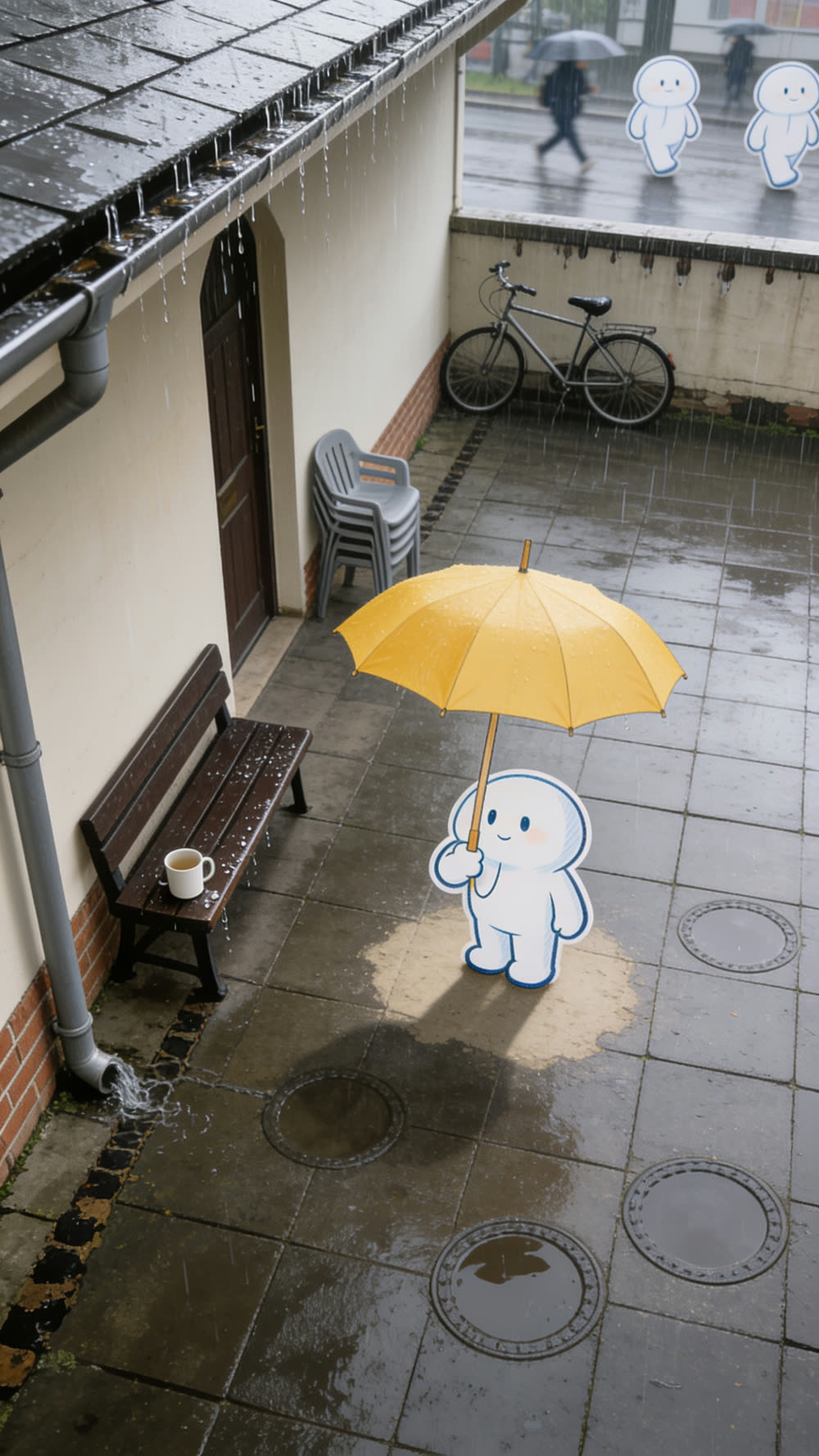
The short imagines an ordinary gray rainy day and one huge yellow umbrella, easily wide enough to shelter three or four people. The mascot stands under it, calls it grace, and it is lovely. Then somebody dripping, loud, and annoying steps toward the dry patch, and the mascot tightens its grip and tilts the canopy in, just a little. Someone else comes close. The tilt happens again.
By the end the mascot is hugging the pole with both arms, the whole enormous canopy dragged down into a steep cone around exactly one person: itself. "Grace is lovely until it starts covering them." The joke is the size of the umbrella against the size of the dry patch it is actually willing to share. The theology is not a joke at all: Ephesians 2:8 lands right on the detail the mascot forgot to check. Nobody bought this umbrella. It was a gift.
Background · 5 min
What was going on in Ephesus
Ephesus was a major port city in the Roman province of Asia, home to the temple of Artemis, one of the seven wonders of the ancient world, and a thriving trade in silver idols (see the riot in Acts 19). Paul spent roughly three years planting and strengthening the church there, longer than almost anywhere else in his ministry (Acts 20:31). By the time this letter was written, Paul was a prisoner, most likely under house arrest in Rome around AD 60 to 62, describing himself as "the prisoner of Christ Jesus" (3:1) and asking the church to pray that he would keep speaking boldly "in chains" (6:19-20).
Unlike letters such as Galatians or Corinthians, Ephesians was not written to put out a specific fire. Many of the oldest manuscripts do not even include the words "in Ephesus" in 1:1, which has led many scholars to think it was written as a circular letter, meant to be read aloud in several churches across the region, not just one congregation's private mail. That shapes how to read it: less firefighting, more foundation-laying, a big, unhurried tour of who God is and what grace has already done before it ever turns to how we should then live (chapters 4 to 6).
Chapter 2 sits right at that hinge. Verses 1 to 3 are blunt about the starting condition: "dead in your transgressions and sins," following the ways of the world. Verse 4 turns on two words, "But God," rich in mercy, and verses 8 to 10 land the whole argument: saved by grace, through faith, not by works, created for good works. The mascot's umbrella did not invent this pattern. It is just a funny, small-scale rerun of it.
Read · 5 min
Read the passage: Ephesians 2:1-10

Have one person read the whole passage aloud while everyone else just listens. Then use this map to walk back through it.
- v1-3You were dead in your transgressions and sins, following the ways of the world, gratifying the cravings of the flesh. The honest starting point: not sick, not struggling, dead.
- v4-5But God, rich in mercy, because of his great love, made us alive with Christ even when we were dead. The hinge of the whole passage: two words undoing verses 1 to 3.
- v6-7God raised us up and seated us with Christ, to show the incomparable riches of his grace in the ages to come. Not a rescue that just stops the bleeding: a permanent change of address.
- v8-9For it is by grace you have been saved, through faith, not from yourselves, the gift of God, not by works, so that no one can boast. The hinge verse: a gift, not a wage, with the boasting door welded shut.
- v10We are God's handiwork, created in Christ Jesus to do good works, which God prepared in advance for us to do. Grace is not the opposite of good works. It is what makes them possible in the first place.
"For it is by grace you have been saved, through faith, and this is not from yourselves, it is the gift of God."
Ephesians 2:8, NIV
Discuss · 20 min
Discussion questions
Warm up
keep it light, five minutes- Tell the group about something you were once given for free that you now, if you are honest, half act like you earned. What changes when you remember it was actually a gift?
- The short's umbrella never physically shrinks. Only the dry patch shrinks, one small tilt at a time. Why is "the umbrella did not change, only the grip did" a more accurate picture of how we actually exclude people than a dramatic slammed door?
Into the text
give question 4 sixty seconds of quiet first- Read verses 1 to 3 again. Paul does not say we were "struggling" or "far off," he says dead. Why does the strength of that word matter for how verse 8's grace lands right after it?
- Verse 8 says salvation is "not from yourselves." Verse 9 adds "so that no one can boast." What is the connection between those two ideas: why does a gift specifically rule out boasting in a way that a reward would not?
- Verse 10 says we are created for good works God "prepared in advance." How does that change the pressure of good works, from something we perform to earn grace, to something grace frees us to walk into?
The mirror
let the silence sit on question 8- If grace toward us was entirely a gift, on what basis do we ever act like it is ours to ration toward someone else?
- Who is the "somebody dripping and loud" in our own life: a person, or a whole category of person, we quietly tilt the canopy away from, without ever saying so out loud?
- The episode's turn is physical: "let your shoulder get wet." What would it actually look like this week to let inconvenience land on us instead of on the person we have been keeping out?
Go deeper · 4 min
Where else the Bible says this
Romans 3:23-24
"For all have sinned and fall short of the glory of God, and all are justified freely by his grace through the redemption that came by Christ Jesus" (NIV). Paul's other great grace passage, written to a different church, landing on the same word: freely.
Titus 3:5
"He saved us, not because of righteous things we had done, but because of his mercy" (NIV). A short, blunt companion verse to Ephesians 2:8-9, useful if a group wants a second witness in a different letter.
Matthew 18:23-35
The parable of the unforgiving servant: a man forgiven an enormous debt turns around and chokes a fellow servant over a small one. Jesus told this story specifically about people who receive grace and then refuse to extend it, the exact shape of the umbrella's tilt.
Apply · 5 min
Put it into practice this week
The short ends with an instruction, plain enough to carry into the week: loosen your grip, angle the canopy toward them, let your shoulder get wet. Here is that instruction with legs on it.
1. Name your version of the umbrella
Where in your life do you hold something good, generosity, attention, forgiveness, a seat at the table, and quietly decide who gets under it? Write down one real, specific example, not a hypothetical:
2. Name the person you have been tilting away from
Be honest and specific. It might be someone who annoys you, someone who is not like you, or someone it is simply easier to leave out. Verse 4's "But God" did not wait for that person to become easier to love.
3. Do the physical version of "let your shoulder get wet"
This week, find one moment where including that person costs you something real, comfort, convenience, a bit of your own dryness, and do it anyway. Do not perform it. The point is not an audience, it is obedience.
4. If generosity already comes easily to you
Then check verse 9's warning about boasting. Grace that gets remembered as "look how wide I held it open" has quietly turned back into a wage you are collecting credit for. Try one act of it this week that stays completely private.
To close
Father, thank you that we did not buy this umbrella, this grace, this whole rescued life. It was a gift before we ever deserved it and it still is. Forgive us for the small, constant tilts away from the people we decide are too dripping, too loud, too inconvenient. Loosen our grip. Let our own shoulder get wet, the way Christ's did for us first. Amen.
Umbrella lowered
That's the guide
Print this, photocopy it, or read it again with a friend. Nothing to sign up for, nothing to remember. When the next episode drops, its study guide will sit right next to this one at pundayschool.com.
Extra time
Questions people ask about Ephesians 2:8
What does Ephesians 2:8 mean?
Paul tells the church that salvation comes by grace, through faith, and that this is not from themselves, it is the gift of God. It sits right after a description of what we were before that grace, dead in transgressions and sins (2:1-3), and right before a warning against boasting (2:9) and a purpose statement about good works (2:10). In short: grace saved us, faith receives it, and none of it was ours to begin with.
Does Ephesians 2:8 mean good works do not matter?
No. Verse 9 rules out works as the basis of salvation, "not by works, so that no one can boast," but verse 10 immediately says we are created for good works, which God prepared in advance for us to do. Good works are not how we earn grace. They are what grace, once received, naturally produces.
Why does the episode connect this verse to an umbrella?
Because grace is easy to receive and hard to keep sharing once it costs us something. The umbrella never gets smaller in the short: it is always the same huge, plain, unlogoed umbrella, easily wide enough for several people. What shrinks is how much of it the mascot is willing to let anyone else stand under, one small selfish tilt at a time, which is exactly the instinct Ephesians 2:8 corrects by reminding us we did not buy it either.
What is the difference between grace and works in this passage?
Works are something earned, a wage owed for effort. Grace is something given, unearned and unowed. Ephesians 2:8-9 is emphatic that salvation is the second kind, specifically so nobody, including the person who received it, has grounds to boast about deserving it or to gatekeep who else gets access to it.
Where can I watch The Grace Umbrella?
Episode 17 goes live soon at @pundayschool on YouTube, TikTok, Instagram, and Facebook, and the video will be embedded at the top of this page the day it posts. Bookmark this page or follow @pundayschool to catch it first.