Pundayschool episode 8 companion · The Sermon Takeaway Menu
Hear It and Keep It: a Luke 11:28 study guide
The fuller meal behind our under-a-minute short. Built for a small group evening or a personal hour with a journal. About 40 minutes together, 20 on your own, no seminary required.
- Passage
- Luke 11:27-28, key verse 11:28
- Time
- About 40 minutes with a group, 20 solo
- You need
- A Bible, this page, something to write with
- Works for
- Small groups, youth groups, or one honest person and a journal

The short answer
Luke 11:28 teaches that hearing God's word is not the same as keeping it. When a woman in the crowd calls out a compliment about Jesus's mother, he redirects the blessing: "Blessed rather are those who hear the word of God and keep it" (ESV). The verse does not reward good listening on its own. It rewards obedience that follows the listening, so the real measure of a sermon is not how we rated it on the way out, but whether we are different because of it by the following Sunday.
Starter · 1 min
First, the under-a-minute version
Episode 8 is being plated up. The Sermon Takeaway Menu lands soon at @pundayschool on YouTube, TikTok, Instagram and Facebook. This study stands on its own, so feel free to start without it.
The premise · 2 min
Why a restaurant review

The short imagines a church service reviewed exactly like a restaurant meal. Worship gets four stars, a little loud on the drums. The sermon gets a solid rating, might have dragged in the middle. The coffee gets five stars, easily the best part. Every score feels fair, specific, even helpful. Then, right at the door, someone with a small clipboard stops the reviewer and asks one simple question: "Which part are you taking home?" Silence.
It is funny because it is recognizable. Most of us can rate a sermon on the way to the car far more easily than we can say what we are going to do with it by Wednesday. Luke tells a much older version of this exact moment, and it ends the same way: with a redirect from rating to keeping.
Background · 5 min
What's going on in Luke 11
Luke 11:27-28 is a short exchange, just two verses, but it lands in the middle of a tense scene. Jesus has just healed a man who could not speak, and the crowd's reaction splits: some are amazed, others accuse him of casting out demons by the power of Satan, and still others demand a sign from heaven (11:14-16). Jesus answers the accusation at length. Right in the middle of that charged moment, "a certain woman of the company lifted up her voice" and called out a blessing.
"Blessed is the womb that bare thee, and the paps which thou hast sucked" was a real compliment in that culture, a way of praising a remarkable person by praising the mother who raised him. It is warm, it is public, and it is not wrong exactly. It is also, in its own first century way, a five-star review: praise aimed at being near something impressive rather than at doing anything about it.
Jesus's reply does not scold her. "Yea rather" simply means something like "yes, and here is an even better blessing." He moves the blessing from proximity to practice: not being related to something good, not even being impressed by it, but hearing God's word and keeping it. The Greek behind "keep" carries the sense of guarding something carefully, the way you would guard something valuable, not just remembering it politely. This same pairing, hearing and keeping, echoes through the rest of Luke's Gospel, most clearly in the Parable of the Sower a few chapters earlier, where the good soil is described as those who "having heard the word, keep it, and bring forth fruit with patience" (Luke 8:15).
Read · 5 min
Read the passage: Luke 11:27-28

Have one person read both verses aloud while everyone else just listens. Then use this map to walk back through it.
- v27A woman in the crowd calls out a blessing on Jesus's mother, praising her for raising such a remarkable son. Sincere praise, aimed at proximity to greatness.
- v28aJesus's reply opens with "Yea rather," redirecting rather than rejecting: there is a better blessing than the one she offered.
- v28bThe better blessing: those who hear the word of God, and keep it. Hearing plus keeping, not hearing alone and not nearness alone.
"Blessed rather are those who hear the word of God and keep it!"
Luke 11:28, ESV
Discuss · 20 min
Discussion questions

Warm up
keep it light, five minutes- If church had a comment card at the door every week, what would we honestly be tempted to rate highest? Be specific: worship, sermon, coffee, parking, something else entirely.
- Talk about a time someone asked what we thought of a sermon and we genuinely did not know how to answer. What made that question hard?
Into the text
give question 4 sixty seconds of quiet first- Read verse 27 again. What is the woman actually praising, and why might that have felt like the obvious, generous thing to say in the moment?
- Jesus opens his reply with "Yea rather" instead of a flat correction. What is the difference between redirecting someone's praise and rejecting it? Why might that difference matter for how we hear this verse?
- Verse 28 pairs two verbs: hear and keep. What changes if a sermon is measured by only the first one?
- The word "keep" here means something closer to guard carefully than remember politely. What is one thing we have genuinely guarded, in that stronger sense, from something we heard at church?
The mirror
let the silence sit on question 7- Honestly, which comes more naturally to us most Sundays: forming an opinion about the sermon, or forming a plan to live it? What does that pattern cost us over a year of Sundays?
- If someone stopped us at the door today and asked which part we were taking home, what would we actually say? Sit with the silence before anyone answers out loud.
- What would have to change about how we listen on Sunday for "keeping it" to become as natural to us as rating it already is?
Go deeper · 4 min
Where else the Bible says this
Luke 8:15
The Parable of the Sower, told a few chapters earlier in the same Gospel. The seed on good soil is "those who, hearing the word, hold it fast in an honest and good heart, and bear fruit with patience." The same hear-and-keep pairing, with patience added: fruit is not instant, but it is expected.
James 1:22-25
"Be doers of the word, and not hearers only, deceiving yourselves." James compares a hearer-only to someone who checks a mirror, walks away, and immediately forgets what they look like. A sharp, practical companion to Luke 11:28's hear-and-keep.
Matthew 7:24-27
The wise and foolish builders. Both men hear the same words from Jesus. Only one builds his house on them. The storm does not test who listened best. It tests who kept it.
Apply · 5 min
Put it into practice this week
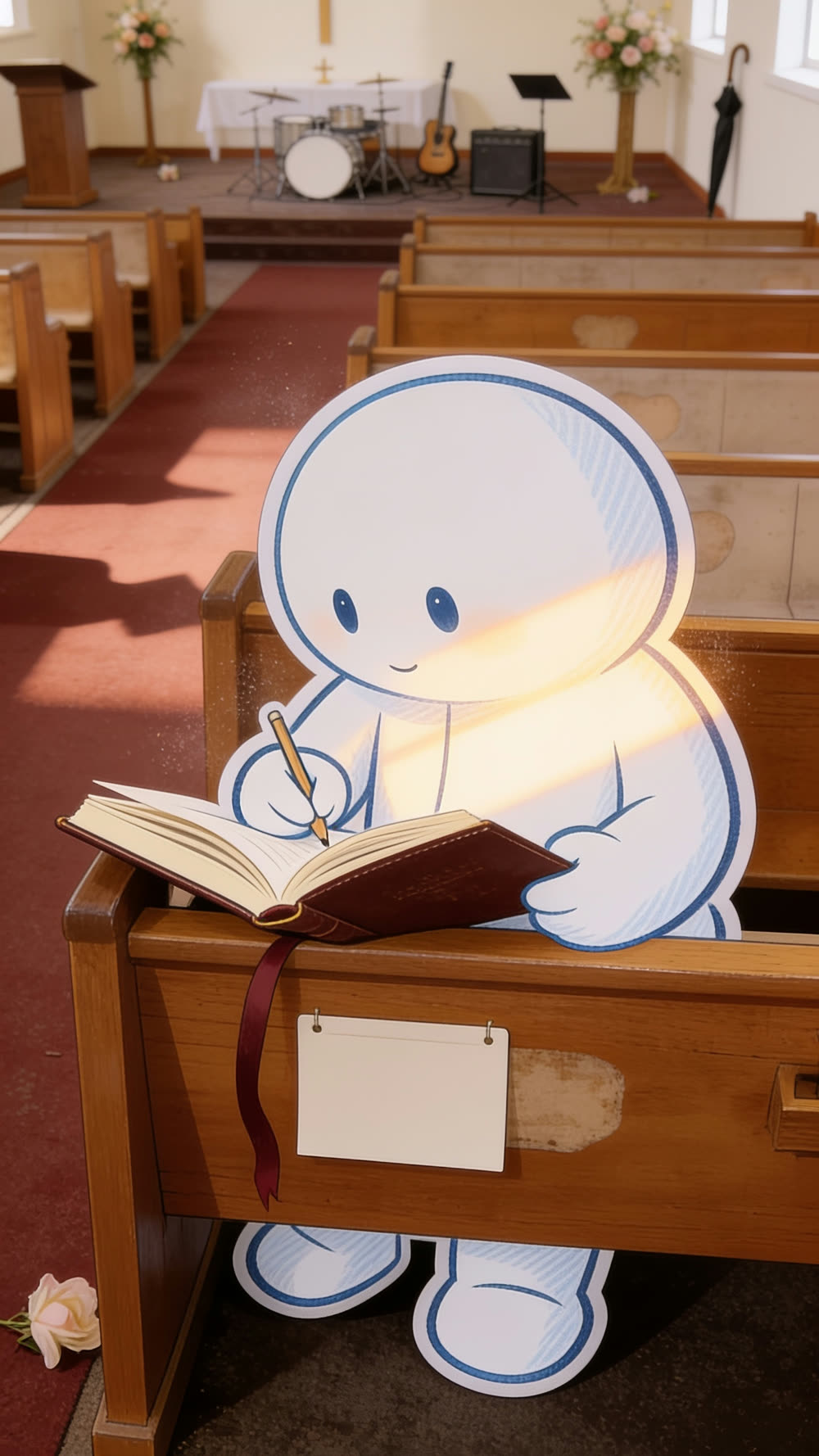
The short ends on a swap. This Sunday, do not only ask "How would I rate that?" Ask "What am I keeping?" Here is that question with legs on it.
1. Name the one line
Before you leave the building this week, or right after, write down one sentence from the sermon that actually landed. Not a summary of the whole thing. One line. Write it here, or somewhere you will see it again:
2. Put it somewhere you will see it
A note on the fridge, a phone reminder, the front of your Bible. Out of sight is out of kept. Hearing fades in a day. A visible line lasts a week.
3. Tell someone your one line
Say it out loud to one other person before next Sunday. Saying it does half the work of keeping it, and it gives someone else permission to ask how it went.
4. If you always forget by Wednesday
Then your application runs the same direction, just earlier. Do not wait for the drive home to decide what mattered. Write the one line down during the sermon itself, on anything, even the back of a comment card.
To close
Father, we know how to rate what we hear. Teach us how to keep it. Thank you for every sermon we have rated and forgotten, and for the grace to start again this week with just one line, truly kept. Amen.
Full time
That's the guide

Print this, photocopy it, or read it again with a friend. Nothing to sign up for, nothing to remember except the one line you already wrote down. When the next episode drops, its study guide will sit right next to this one at pundayschool.com.
Extra time
Questions people ask about Luke 11:28
What does Luke 11:28 mean?
A woman in the crowd praises Jesus's mother, and Jesus redirects that praise toward a different, better blessing: on anyone who hears the word of God and keeps it. The verse teaches that nearness to something good, even admiration for it, is not the same as being changed by it.
Who was the woman who blessed Jesus's mother?
Luke does not name her, only calling her "a certain woman of the company," meaning someone in the crowd following Jesus. Her exclamation was a known form of praise in that culture, honoring a remarkable person by honoring the mother who raised them.
What does "keep it" mean in Luke 11:28?
The underlying word carries the sense of guarding something carefully, not just remembering it politely. It is closer to "hold onto and act on" than "recall if asked." Luke uses the same pairing, hear and keep, in the Parable of the Sower's description of good soil (Luke 8:15).
Is it wrong to have an opinion about a sermon?
No. Discernment matters, and honest reactions are normal. The problem this passage names is stopping there: forming a rating and never forming a response. Luke 11:28 does not forbid an opinion, it just refuses to let an opinion count as the finish line.
Can I use this study guide on my own?
Yes. Read the background, read the passage slowly, and treat the discussion questions as journal prompts. On your own the study takes about 20 minutes, and the write-in lines in the application section are there for exactly that.