Pundayschool episode 20 companion · The Widow's Quiet Coin
Heaven's Own Measure: a Mark 12:43-44 study guide
The fuller meal behind our 79 second short. Built for a small group evening or a personal hour with a journal. About 40 minutes together, 20 on your own, no seminary required.
- Passage
- Mark 12:41-44, key verse 12:43-44
- Time
- About 40 minutes with a group, 20 solo
- You need
- A Bible, this page, something to write with
- Works for
- Small groups, youth groups, or one honest person and a journal
The short answer
Mark 12:43-44 says a poor widow's two small copper coins outweighed every larger gift given that day, because the rich gave out of their surplus, while she gave "everything, all she had to live on" (NIV). The scene sits between two hard sayings: just before it, Jesus warns about leaders who devour widows' houses while praying showily (12:38-40); just after it, He predicts the temple itself will fall (13:1-2). Heaven's measure was never the size of the gift or the size of the crowd watching it.
Cold open · 1 min
First, the 79 second version
Pundayschool · EP 20 · 79 seconds
The Widow's Quiet Coin
A whole jar of coins lands like a waterfall, and we are on our feet. Two small coins land without a sound, and nobody looks up.
Coming soon
Episode 20 has not posted yet. The short lands soon at @pundayschool on YouTube, TikTok, Instagram and Facebook, and the video will be embedded at the top of this page the day it posts. This study stands on its own, so feel free to start without it.
Coming to YouTube · TikTok · Instagram · Facebook
The premise · 2 min
Why one gift gets a standing ovation and the other gets silence

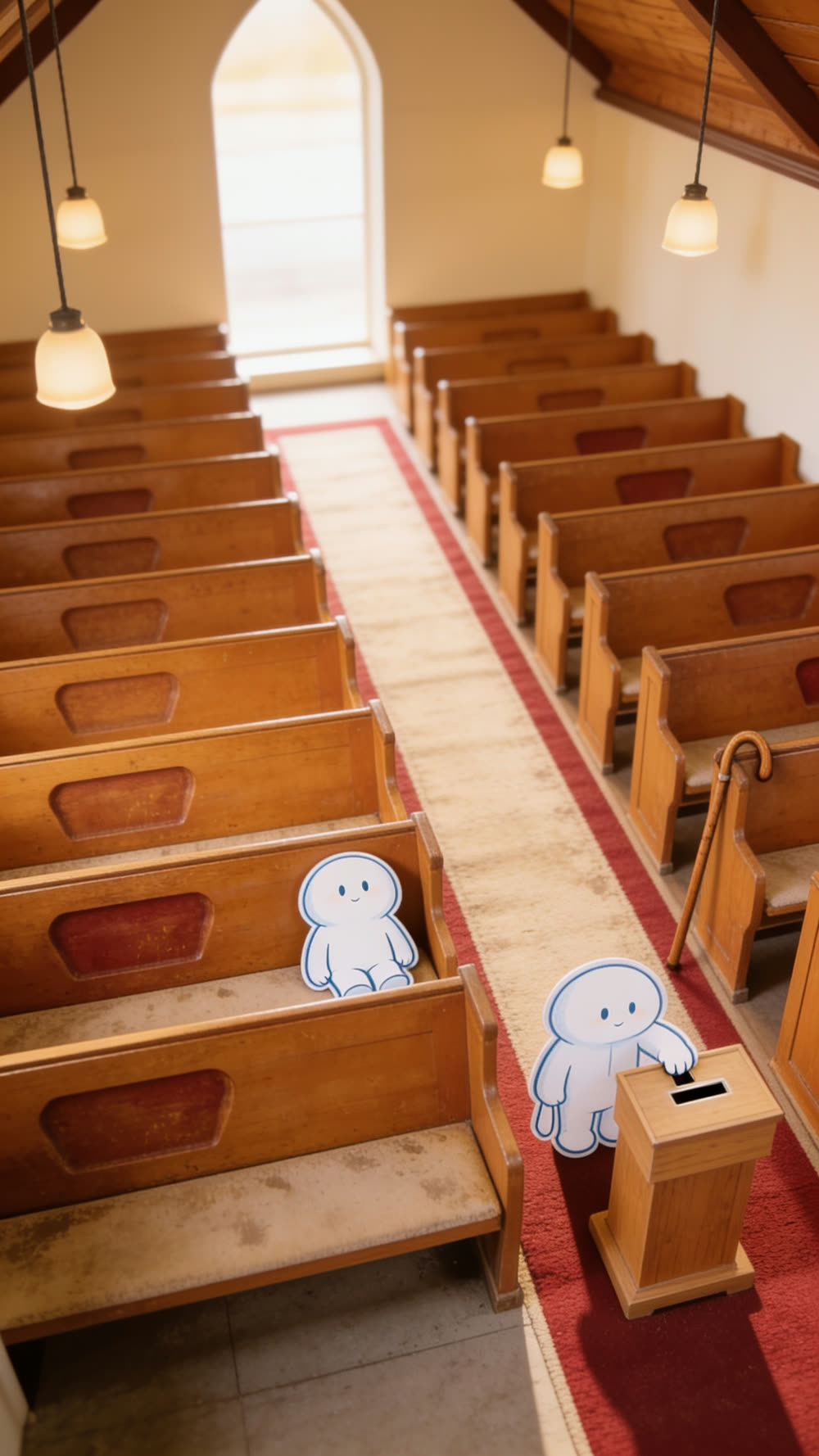
The short imagines a modern giving moment in a small church hall. Someone carries a whole clear jar of coins to the offering box and pours it in, a long bright cascade of money, and the room is glad, on its feet before the last coin lands. It is a real gift, and it will do real good. Then, after the room has settled back toward the front, someone else gets up slowly from the nearly empty back pew, takes the long way up the side of the room, and tips a small worn cloth pouch of two coins into the same box. They drop in without a sound. Nobody looks up. Not even the mascot watching the whole service.
"Standing ovation for the big gift. Silence for the last coin." The joke is entirely on how we notice, never on either giver: the loud gift is protected in the narration itself ("It is a real gift. It will do good"), and the quiet giver is never pitied, only missed. Then Mark 12 arrives and tells us what Jesus saw watching a giving line just like it, and why heaven weighed it so differently.
Background · 5 min
Where this scene sits in Mark's Gospel
Mark places this small, quiet scene between two hard, public ones. Just before it, in the temple courts, Jesus warns the crowd about the teachers of the law who "devour widows' houses and for a show make lengthy prayers" (Mark 12:38-40), religious leaders whose visible piety covered real harm done to the vulnerable. Just after it, in the very next verses, Jesus tells His disciples that the temple building itself, with all its impressive stones, will be torn down completely (Mark 13:1-2). The widow's two coins sit exactly between a warning about hollow appearances and a warning that even the most impressive structures do not last.
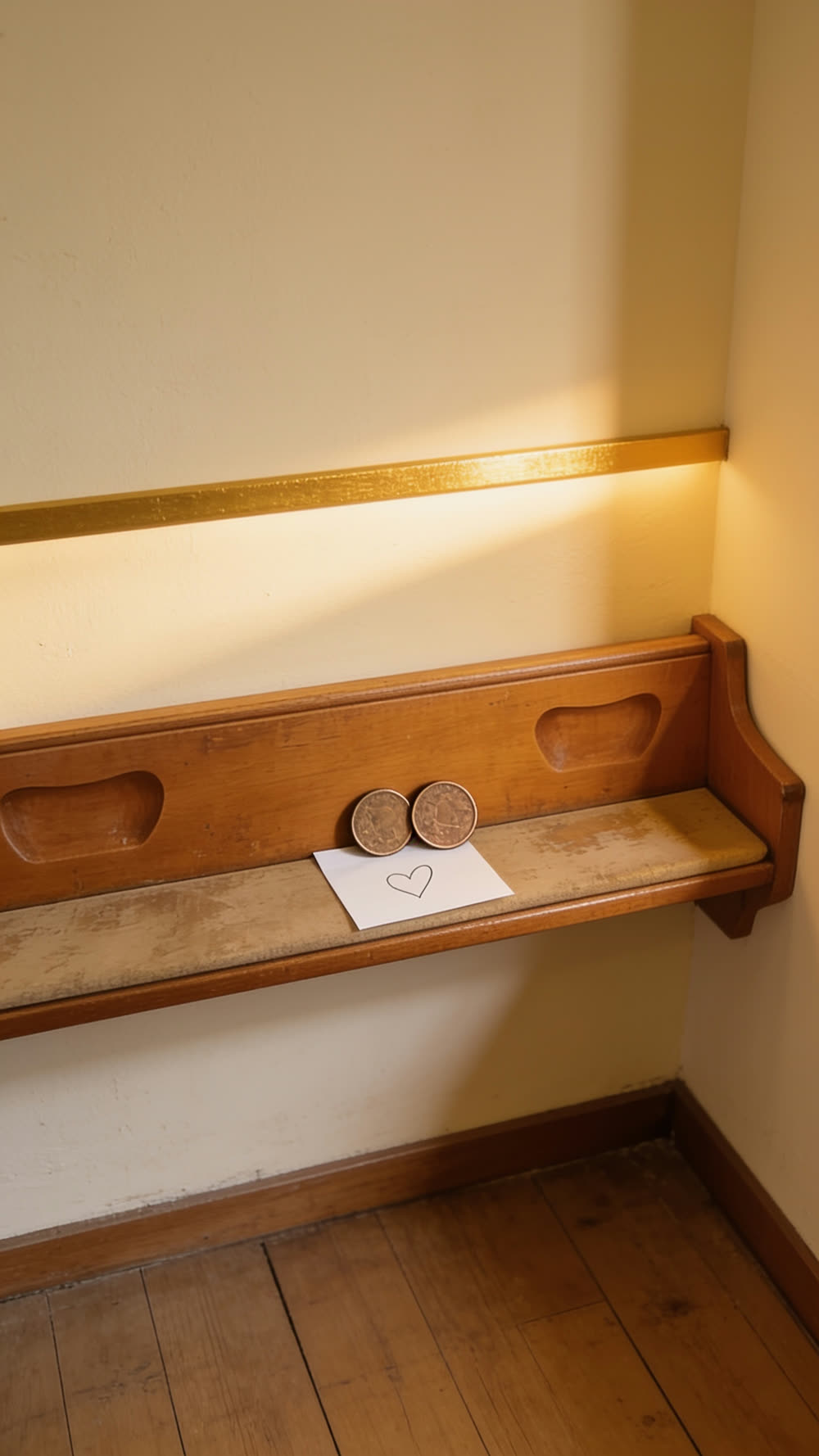
Jesus is "sitting down opposite the place where the offerings were put," deliberately watching the crowd, not walking past it. Many rich people give large amounts, publicly, in a way the whole court could see and hear. Then one poor widow puts in two very small copper coins, worth only a few cents; Mark is careful to name the exact, small amount, because the smallness is the entire point about to be made. Jesus does not call His disciples over to admire the large gifts. He calls them to see the small one.
Read · 5 min
Read the passage: Mark 12:41-44
Have one person read the whole scene aloud while everyone else just listens. Then use this map to walk back through it.
- v41Jesus sits down opposite the treasury, deliberately watching the crowd put their money in. Many rich people throw in large amounts, publicly.
- v42A poor widow comes and puts in two very small copper coins, worth only a few cents. Mark names the exact, small amount.
- v43Jesus calls His disciples to Him specifically to point this out: "this poor widow has put more into the treasury than all the others."
- v44The reason given: they gave out of their surplus wealth; she gave "everything, all she had to live on," out of her poverty.
"They all gave out of their wealth; but she, out of her poverty, put in everything, all she had to live on."
Mark 12:44, NIV
Discuss · 20 min
Discussion questions
Warm up
keep it light, five minutes- Tell the group about a gift, big or small, that got a lot of attention when it was given. What made it feel good to watch, or to give?
- The short's mascot cheers the loud gift and completely misses the quiet one, without ever meaning to be unkind. Why is "measuring by volume" often such an easy, invisible habit to fall into?
Into the text
give question 4 sixty seconds of quiet first- Read verses 41 and 42 together. Jesus deliberately sits down to watch the treasury; He is not passing by, He is paying attention on purpose. What does it change to know God is not glancing at our giving, but actually watching it?
- Verse 44 says the rich "gave out of their wealth," but the widow gave "out of her poverty." What is the real difference between those two phrases, and why does it change how the gift should be measured?
- This scene sits right after Jesus warns about leaders who "devour widows' houses" while praying showily (12:38-40), and right before He predicts the temple's fall (13:1-2). Why might Mark have placed the widow's quiet gift between those two warnings about appearances that do not last?
The mirror
let the silence sit on question 8- If heaven measures by sacrifice rather than size, what does it say about us when we only notice, or only celebrate, the giving we can see and hear?
- Think of a "loud gift" you have given or received applause for, and a "quiet coin," a costly, private act nobody clapped for. Which one actually cost you more?
- The episode's invitation is physical: "stay when the room empties, give one small thing that lands without a sound." What would that look like for you this week, specifically?
Go deeper · 4 min
Where else the Bible says this
Luke 21:1-4
Luke tells the same event from the same angle: Jesus watching the rich put their gifts into the treasury, then noticing "a poor widow put in two very small copper coins." The two-Gospel witness is not a coincidence; both writers thought this was one of the most important things Jesus ever pointed at.
2 Samuel 24:24
King David refuses a free threshing floor and free offerings, insisting on paying full price: "I will not sacrifice to the LORD my God burnt offerings that cost me nothing." Centuries before the widow, David already understood that a gift's value is measured by what it costs the giver, not by what it looks like to a watching crowd.
2 Corinthians 9:7
"Each of you should give what you have decided in your heart to give, not reluctantly or under compulsion, for God loves a cheerful giver." The widow's gift was never coerced or performed for anyone's approval, which is exactly why it could be given quietly, in full view of a God who was never grading the room's applause.
Apply · 5 min
Put it into practice this week
The short ends with an instruction plain enough to carry into the week: give one small thing that lands without a sound. Here is that instruction with legs on it.
1. Name your own "waterfall"
What is a gift, an act of service, or a kindness you have given (or want to give) that you secretly hoped people would notice? Write down one real, specific example, not a hypothetical:
2. Notice what you are actually measuring
When you look at your own giving, or someone else's, are you measuring the size of the gift or the size of the sacrifice behind it? Be honest about which one is easier to see, and which one God is actually watching.
3. Do the physical version of "the quiet coin"
This week, give one small, genuinely costly thing, money, time, or attention, in a way nobody will see, hear about, or thank you for. Let it land without a sound, on purpose.
4. A word for the big givers
This is not a call to feel guilty about visible generosity. Jesus never criticizes the rich givers in this passage, and the episode is careful to protect the loud gift too: "it is a real gift, it will do good." The correction is not "give less visibly." It is "remember the measure was never the volume."
To close
Father, thank you that you do not measure by volume. Forgive us for the times we have cheered the loud gift and missed the quiet one, counting the coins we could hear instead of the cost we could not see. Teach us to give the small thing that lands without a sound: no applause, no mention, nobody watching but you. Thank you that you noticed the widow when the whole court had turned away, and that you notice every quiet thing we have ever given for you alone. Amen.
Reading taken
That's the guide
Print this, photocopy it, or read it again with a friend. Nothing to sign up for, nothing to remember. When the next episode drops, its study guide will sit right next to this one at pundayschool.com.
Extra time
Questions people ask about Mark 12:43-44
What does Mark 12:43-44 mean?
Mark 12:43-44 records Jesus watching people give at the temple treasury. After a poor widow gives two very small copper coins, He tells His disciples she has given more than every wealthy giver before her, because they gave out of their surplus, while she gave everything she had to live on. The measure is not the size of the gift, it is the size of the sacrifice behind it.
What is the context of Mark 12:41-44?
The scene sits between two hard sayings. Just before it, Jesus warns about religious leaders who "devour widows' houses" while making a show of long, public prayers (Mark 12:38-40). Just after it, He predicts that the temple itself, the very building this treasury sits inside, will be torn down (Mark 13:1-2). The widow's two coins are framed on both sides by a warning about appearances that do not last.
How does The Widow's Quiet Coin use Mark 12:43-44?
The episode stages a modern giving moment: a big, loud gift gets a standing ovation, while a small, costly gift lands without a sound and nobody looks up, not even the mascot watching. Mark 12:43-44 lands as the correction: heaven does not measure by volume, it hears the quiet gift first.
Is this passage against giving generously in public?
No. Jesus does not criticize the rich givers in the passage, and the episode is careful to protect the big gift too. The point is not that visible generosity is wrong, it is that God's measure was never the size of the gift or the size of the crowd watching it.
Where can I watch The Widow's Quiet Coin?
Episode 20 goes live soon at @pundayschool on YouTube, TikTok, Instagram, and Facebook, and the video will be embedded at the top of this page the day it posts. Bookmark this page or follow @pundayschool to catch it first.