Pundayschool episode 12 companion · The Invisible Load
Come to Me, All Who Are Weary: a Matthew 11:28 study guide
The fuller meal behind our short. Built for a small group evening or a personal hour with a journal. About 40 minutes together, 20 on your own, no seminary required.
- Passage
- Matthew 11:25-30, key verse 11:28
- Time
- About 40 minutes with a group, 20 solo
- You need
- A Bible, this page, something to write with
- Works for
- Small groups, youth groups, or one honest person and a journal
The short answer
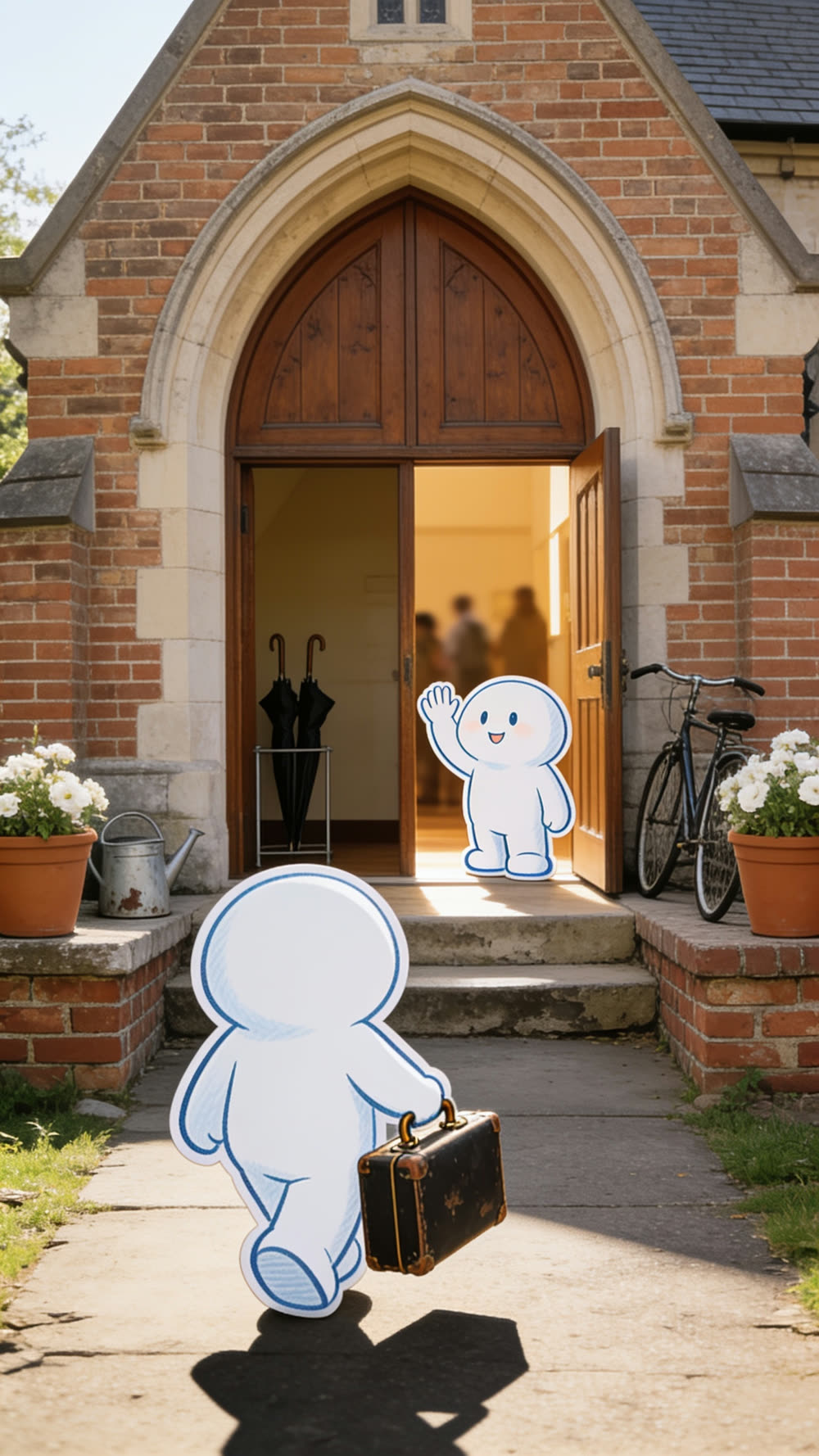
Matthew 11:28 is Jesus's direct invitation to anyone worn out by carrying too much: "Come to me, all you who are weary and burdened, and I will give you rest" (NIV). It comes right after Jesus criticizes towns too proud to respond to him, and right before he describes his own "yoke" as easy and his burden as light. The rest he offers is not a reward for finally getting it together. It is offered to the tired, exactly as they are, before anything gets sorted out.
First · 1 min
First, the short version
The Invisible Load
Coming soon
Episode 12 hasn't posted yet. The Invisible Load lands soon at @pundayschool on YouTube, TikTok, Instagram and Facebook. This study stands on its own, so feel free to start without it.
The premise · 2 min
Why suitcases
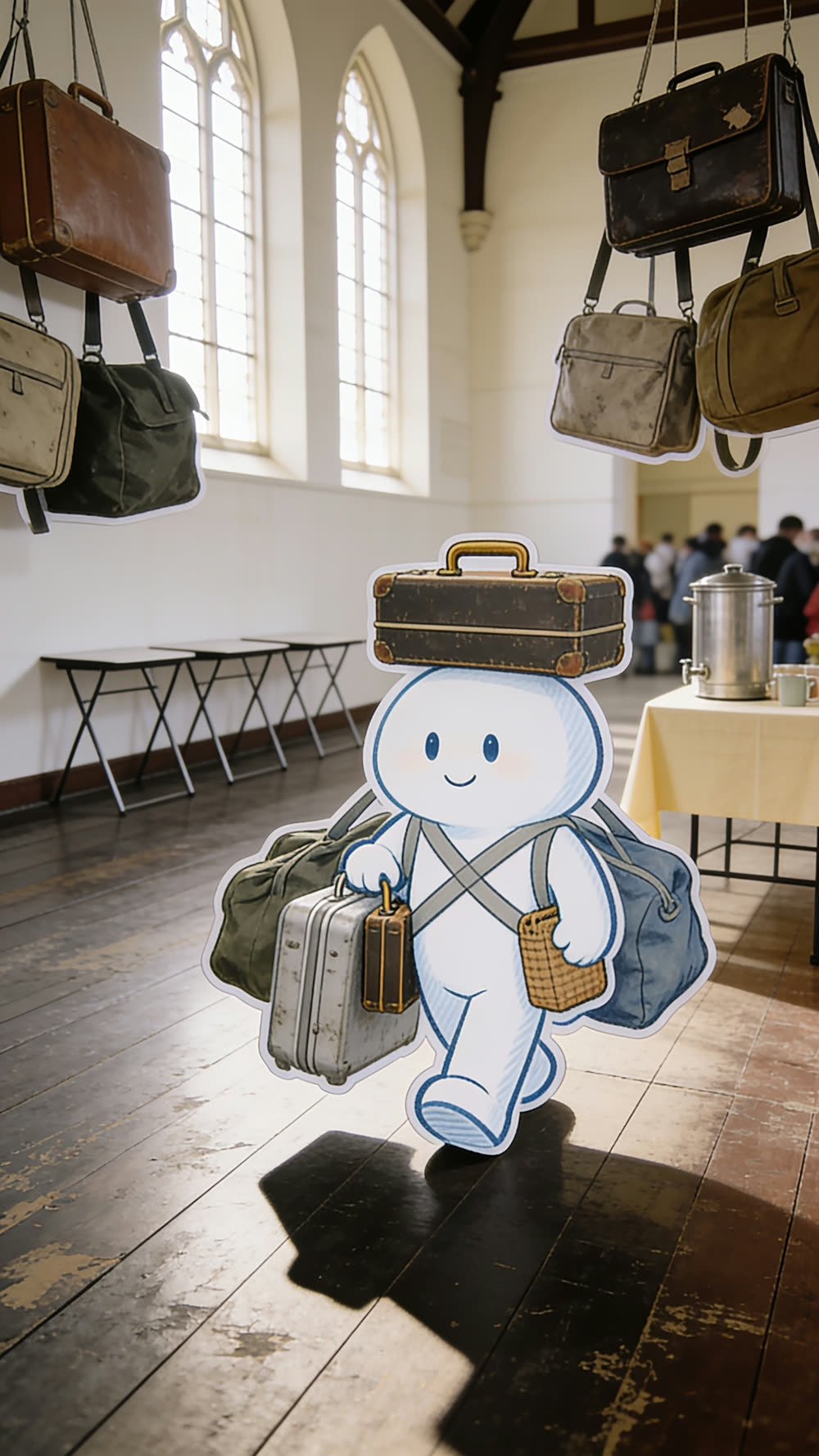
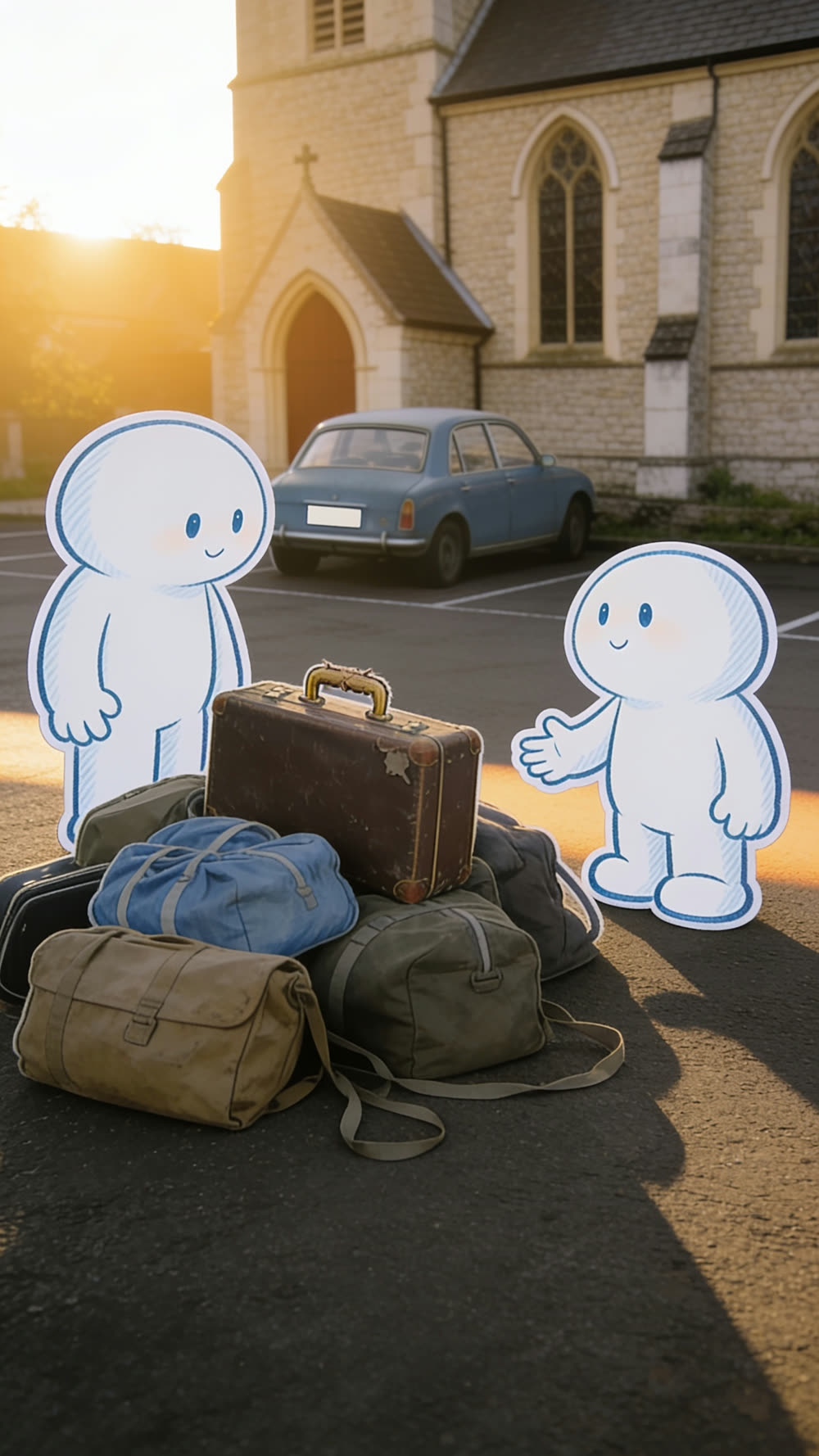
The short imagines every "fine" as an actual bag. Ask the mascot how it's doing, and it picks one up: work's chaos, fine, here's a duffel. The marriage feels heavy, fine, here's a suitcase. By the car park it's hauling a leaning tower of luggage nobody else can see, still smiling, still pouring the tea. "Blessed and highly compressed."
It's funny because it's accurate. Most of us have a version of this tower. And two thousand years before suitcases existed, Jesus was already naming exactly this condition, and offering something better than getting good at carrying it.
Background · 5 min
What's happening right before verse 28
Matthew 11 catches Jesus mid-ministry, and it isn't going smoothly. John the Baptist sends questions from prison (v2-6). Jesus notes that the crowds criticized John for fasting too much and criticized Jesus himself for eating and drinking too much, impossible to please either way (v16-19). Then he pronounces sober warnings over Chorazin, Bethsaida, and Capernaum, towns that saw his miracles firsthand and still didn't change course (v20-24).
Right after that heavy passage, without any change of scene, Jesus turns and says something startlingly tender: he thanks the Father for revealing truth to "little children" rather than the "wise and learned" (v25-27), then opens his arms to anyone weary and burdened (v28-30). The timing matters. This isn't an invitation issued from a place of ease. It comes directly after rejection, exhaustion, and impossible expectations, from someone who knew exactly what carrying too much felt like.
Here's the detail that sharpens the whole passage: a "yoke" was a rabbi's teaching, the specific way they interpreted the Law for their followers to live by. Some rabbis' yokes were notoriously heavy, piling extra rules onto ordinary life. When Jesus says "my yoke is easy, and my burden is light" (v30), he isn't offering no yoke at all. He's offering a specific, named alternative to religious performance that exhausts people, one built on rest rather than proving yourself.
Read · 5 min
Read the passage: Matthew 11:25-30
Have one person read the whole passage aloud while everyone else just listens. Then use this map to walk back through it.
- v25-26Jesus thanks the Father that truth was revealed to "little children" rather than the "wise and learned." Rest, like this truth, is received, not achieved by being impressive.
- v27Jesus claims a unique authority to reveal the Father. The invitation that follows isn't generic self-help, it comes from someone who knows exactly who he's inviting people to.
- v28The invitation itself: "Come to me, all you who are weary and burdened, and I will give you rest." Addressed to the tired, not the sorted-out.
- v29"Take my yoke... learn from me... I am gentle and humble in heart." The alternative isn't no yoke, it's a gentle one, modeled on Jesus's own character.
- v30"My yoke is easy and my burden is light." Not effortless, but genuinely lighter than the performance we've been carrying instead.
"Come to me, all you who are weary and burdened, and I will give you rest."
Matthew 11:28, NIV
Discuss · 20 min
Discussion questions

Warm up
keep it light, five minutes- What's your go-to answer when someone asks how you're doing, even when it isn't quite true? Where did that habit come from?
- In the short, every "fine" quietly adds a bag. What's the modern-day equivalent of an invisible bag we pick up without noticing?
Into the text
give question 3 sixty seconds of quiet first- Read verse 28 again slowly. Jesus doesn't say "come to me once you've sorted yourself out." Why does the order of that invitation matter?
- Verse 29 pairs "come to me" with "learn from me... I am gentle and humble in heart." What does it change to know the character behind the invitation, not just the offer of rest?
- The "yoke" in verse 29-30 was a rabbi's specific way of interpreting the Law, often adding heavy extra rules. What are the modern "heavy yokes" we sometimes carry in Jesus's name that he never actually asked for?
- Verse 30 says the burden is "light," not that there is no burden at all. What's the difference between no burden and a light one, in your own experience?
The mirror
let the silence sit on question 7- Honestly, what's the bag we're still carrying that we told ourselves, or told God, we'd already set down?
- Who in our life has never once heard an honest answer from us to "how are you"? What would it cost to change that with one person this week?
- If Jesus's invitation is genuinely "come as you are, weary and burdened," what would we need to believe about him for that to feel safe rather than risky?
Go deeper · 4 min
Where else the Bible says this
Psalm 55:22
"Cast your cares on the Lord and he will sustain you; he will never let the righteous be shaken." Written centuries before Matthew, the same movement: hand the weight over rather than carrying it alone. Useful next to question 8, since it's the same posture in a different era.
1 Peter 5:6-7
"Cast all your anxiety on him because he cares for you." Peter connects this directly to humility in the verse before it, the same "little children, not the wise and learned" logic from Matthew 11:25. Setting the bag down and admitting you were carrying it are often the same act.
Galatians 6:2
"Carry each other's burdens, and in this way you will fulfill the law of Christ." A correction for anyone tempted to hear Matthew 11:28 as purely private. Part of how Jesus lightens a burden is through the people he puts around us, if we let them see the bag at all.
Apply · 5 min
Put it into practice this week

The short ends with a swap. Next time someone asks how you're doing, you don't have to unload the whole suitcase. Just stop pretending it isn't there. Here's that question with legs on it.
1. Name one bag
Take ten quiet minutes this week with one question: what's the thing I keep saying is "fine" that genuinely isn't? Write it down, specifically, even if nobody else ever reads it.
2. Give one honest answer
Before next Sunday, when someone who'd actually listen asks how you're doing, try one true sentence instead of "fine." It doesn't have to be the whole suitcase. One bag is enough to start.
3. Ask, and then wait
Ask someone else how they're really doing, then let the silence sit instead of filling it. Most people need a few extra seconds before they'll set a bag down in front of you.
4. If you're already exhausted from carrying
Then your application runs the other way. Come to Jesus weary and burdened, on purpose, this week, rather than waiting until you feel presentable enough to pray. The invitation was never for the sorted-out.
To close
Lord, thank you that you invite the weary, not the impressive. Forgive us for the "fine"s that weren't true and for how good we've gotten at carrying things alone. Teach us your yoke, gentle and humble in heart, and give us the rest you promised. Amen.
Done
That's the guide
Print this, photocopy it, or read it again with a friend. Nothing to sign up for, nothing to remember. When the next episode drops, its study guide will sit right next to this one at pundayschool.com.
Extra
Questions people ask about Matthew 11:28
What does Matthew 11:28 mean?
It's Jesus's direct invitation to anyone worn out by carrying too much: "Come to me, all you who are weary and burdened, and I will give you rest." It follows a passage about religious performance that exhausts people, and offers rest as something received by coming to Jesus as you are, not earned by fixing yourself first.
What does "weary and burdened" mean in the Bible?
It describes anyone worn down by carrying more than they were built to carry alone, whether that's religious rule-keeping, daily labor, grief, or ordinary life weight. Jesus addresses the invitation directly to that condition, not to people who have already resolved it.
What is Jesus's "yoke" in Matthew 11:29-30?
In first-century Judaism, a rabbi's "yoke" was their specific way of interpreting and applying the Law. Some yokes piled on extra rules and were genuinely heavy. Jesus offers his own yoke, modeled on his gentle and humble character, as an easy alternative, not the absence of any yoke at all.
How is rest in Matthew 11:28 different from just resting?
It isn't primarily physical rest, though it can include that. It's relational rest, the relief of no longer having to perform, prove, or carry a load alone. That's why it's tied to coming to a person, Jesus, rather than to a nap or a vacation.
Where can I watch The Invisible Load?
Episode 12 goes live soon at @pundayschool on YouTube, TikTok, Instagram, and Facebook, and the video will be embedded near the top of this page the day it posts. Bookmark this page or follow @pundayschool to catch it first.