Pundayschool episode 35 companion · The Aesthetic Quiet Time
Not the Street Corner, Not the Window: a Matthew 6:5-6 study guide
The fuller meal behind our short. Built for a small group evening or a personal half hour with a journal. About 30 minutes together, 15 on your own, no seminary required.
- Passage
- Matthew 6:5-6, in context 6:1-6
- Time
- About 30 minutes with a group, 15 solo
- You need
- A Bible, this page, something to write with
- Works for
- Small groups, youth groups, or one honest hour with a journal
The short answer
Matthew 6:5-6 is Jesus teaching on prayer in the Sermon on the Mount. He contrasts people who pray "standing in the synagogues and on the street corners to be seen by others," who "have received their reward in full" (NIV), with prayer done privately: "go into your room, close the door and pray to your Father, who is unseen... your Father, who sees what is done in secret, will reward you." The passage does not forbid being seen. It names one specific motive, praying in order to be watched, and warns that watched prayer only ever pays out the reward of being watched.
Press play · 2 min
First, the short version
"The Aesthetic Quiet Time" is on its way. Once Episode 35 is posted, it will play right here. In the meantime, find Pundayschool on YouTube, TikTok, Instagram, and Facebook at @pundayschool.
The setup · 2 min
Why a whole photo shoot for a quiet time

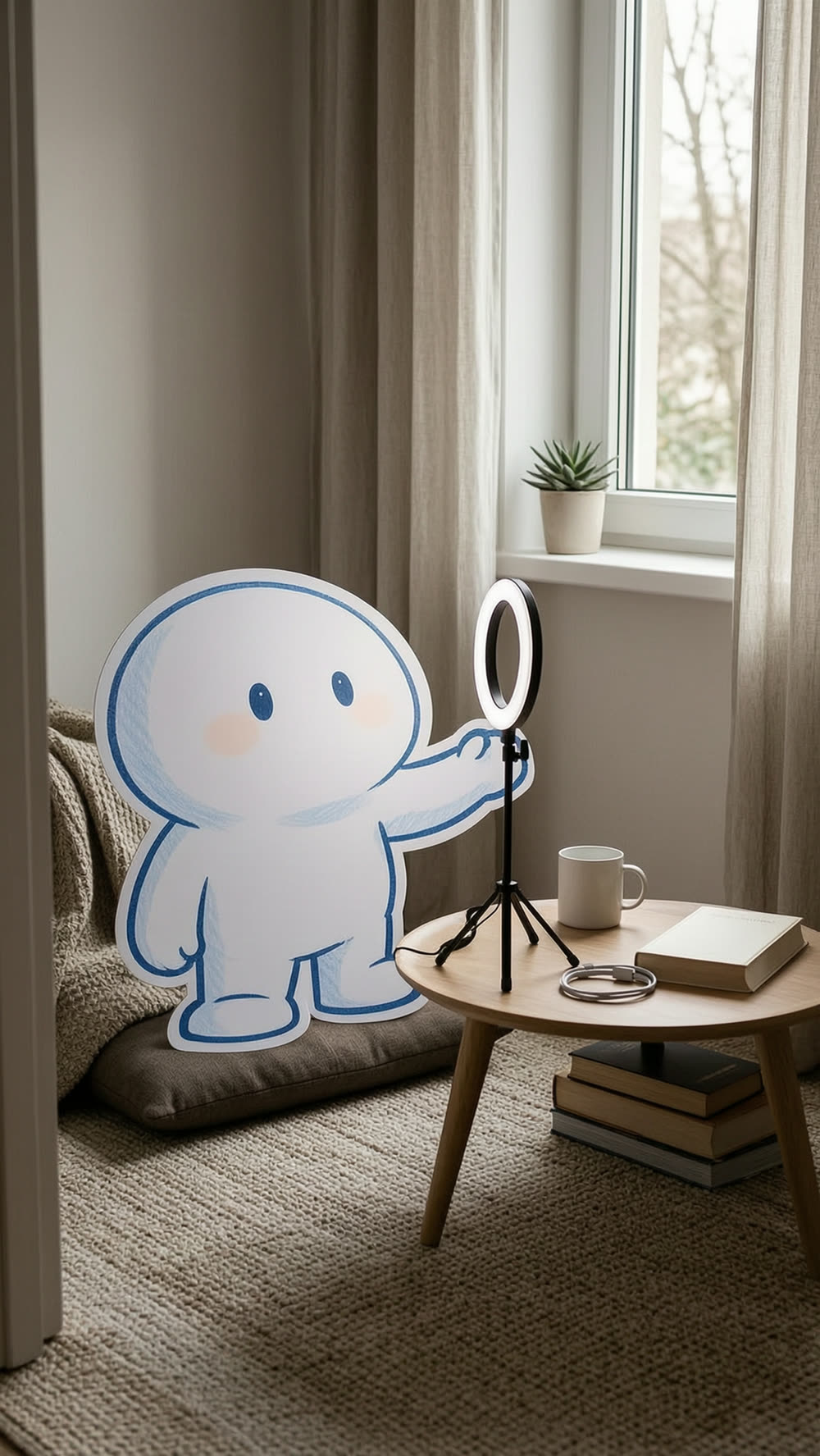
The short pictures a mascot building a full production around a two-minute Bible reading: coffee angled just right, the Bible turned to a verse that photographs well, even the highlighter color picked for the camera. Enough shots go by that reading it never actually happens. Then it gets posted, captioned, and the Bible closes.
Twenty minutes went into lighting. None of it went into actually reading. That gap between visible effort and an unseen God is the whole episode, and it is exactly the gap Jesus names in Matthew 6:5-6.
Background · 5 min
What Jesus is actually teaching
Matthew 6 sits inside the Sermon on the Mount, right after Jesus spends chapter 5 raising the bar on the law itself: not just do not murder, do not even nurse the anger; not just do not commit adultery, guard the eyes. Chapter 6 opens with one warning that governs three separate acts of righteousness in a row: giving (v.2-4), praying (v.5-6), and fasting (v.16-18). Each follows the identical shape: do it to be seen, and the applause is the whole reward, already paid in full. Do it in secret, and the Father who sees in secret rewards it himself.
Verses 5-6 are the prayer version of that pattern. They sit right before the Lord's Prayer itself (v.9-13), which Jesus offers immediately after as what honest, unwatched prayer actually sounds like once the audience is gone.
Read · 4 min
Read the passage: Matthew 6:1-6

Have one person read the passage aloud slowly. Then use this map to walk back through it.
- v1"Be careful not to practice your righteousness in front of others to be seen by them. If you do, you will have no reward from your Father in heaven" (NIV). The whole section's warning, stated once, up front.
- v2-4The giving version: do not announce it like the hypocrites do, "to be honored by others." Give so quietly your other hand does not know what the first one did.
- v5The prayer version begins. Praying "standing in the synagogues and on the street corners to be seen by others" earns exactly the reward it was aimed at: being seen. "They have received their reward in full" (NIV).
- v6"Go into your room, close the door and pray to your Father, who is unseen." The reward changes entirely once the audience does: "your Father, who sees what is done in secret, will reward you."
"But when you pray, go into your room, close the door and pray to your Father, who is unseen. Then your Father, who sees what is done in secret, will reward you."
Matthew 6:6, NIV
Discuss · 15 min
Discussion questions

Warm up
keep it light, five minutes- Talk about a time you put more visible effort into looking like you were doing something than into actually doing it. What was the "lighting" you were adjusting?
Into the text
read verses 5 and 6 together before question 3- Verse 5 says the people praying to be seen "have received their reward in full." Why is that phrased as something already finished, not a future loss?
- Jesus does not say "never pray with others" here, he prayed in public elsewhere in the Gospels. What is the actual line he is drawing, if not location?
- Verse 6 promises a Father "who sees what is done in secret." How is a reward from someone who already sees everything different from a reward you have to go collect from an audience?
The mirror
let the silence sit on the last question- Honestly, what is your version of the staged photo: something you have done partly, or entirely, because someone would see it?
- If you stripped the audience away completely today, what would actually change about how, or whether, you pray?
Go deeper · 4 min
Where else the Bible says this
Matthew 6:16-18
The fasting version, from the very same passage: "When you fast, do not look somber as the hypocrites do... but when you fast, put oil on your head and wash your face, so that it will not be obvious to others that you are fasting, but only to your Father, who is unseen" (NIV). Same three-part pattern as giving and praying, same closing line almost word for word.
Matthew 23:5-7
Jesus later describes the Pharisees in exactly these terms: "Everything they do is done for people to see... they love the place of honor at banquets and the most important seats in the synagogues" (NIV). The behavior Matthew 6 warns against in the abstract, Matthew 23 shows in practice.
Galatians 1:10
"Am I now trying to win the approval of human beings, or of God? ... If I were still trying to please people, I would not be a servant of Christ" (NIV). Paul names the same either/or Jesus draws here: an audience of people, or an audience of One, not both at once.
Apply · 5 min
Put it into practice this week
The short ends with the smallest possible action: no photo, just a door closing. Here is that same small step, with legs on it.
1. Name the photo
Write down the thing you have done, or almost done, at least partly because someone would see it: a post, a comment, a visible gesture. Use the space below:
2. Name the audience
Whose approval were you actually collecting in that moment: a friend's, a stranger's, a whole platform's? Be specific, not general.
3. Close the door
Before next Sunday, do one act of faith, prayer, generosity, or discipline that literally no one else will ever know about. Then do not tell anyone, not even here.
To close
Father, thank you that you were never waiting for a better photo, only an honest closed door. Forgive me for the reward I kept collecting from an audience instead of from you. Show me the door I keep leaving open for people to watch me pray, and give me the grace to actually close it. Thank you that you already see, and already love what you see. Amen.
The end
That's the guide
Print this, photocopy it, or read it again with a friend. Nothing to sign up for, nothing to remember. When the next episode drops, its study guide will sit right next to this one at pundayschool.com.
Extra time
Questions people ask about Matthew 6:5-6
What does Matthew 6:5-6 mean?
It is Jesus teaching on prayer in the Sermon on the Mount, right after his teaching on giving and just before the Lord's Prayer. He contrasts prayer performed for an audience, which he says already collects its full reward in being noticed, with prayer offered privately to God, who rewards it himself.
Why does the passage single out "the street corner" instead of condemning public prayer generally?
Because the problem Jesus names is motive, not location: praying "to be seen by others." He himself prayed with others elsewhere in the Gospels. The street corner is simply where a motive like that shows up most visibly, not the actual target of the warning.
Does talking about a "reward" here contradict grace?
This passage is not describing how to earn salvation, it is describing two different transactions available for the same act. Praying to be seen trades your prayer for people's attention, and that is exactly what you get, nothing more. Praying in secret trades nothing, and the Father responds anyway, out of relationship, not payment.
Can I use this study guide on my own?
Yes. Read the background, read the passage slowly, and treat the discussion questions as journal prompts. On your own the study takes about 15 minutes, and the write-in lines in the application section are there for exactly that.
Where can I watch The Aesthetic Quiet Time?
Right at the top of this page once it is live, or on YouTube, TikTok, Instagram, and Facebook at @pundayschool.