Pundayschool episode 16 companion · The Last Slice Test
Not Looking to Your Own Interests: a Philippians 2:4 study guide
The fuller meal behind our 78 second short. Built for a small group evening or a personal hour with a journal. About 40 minutes together, 20 on your own, no seminary required.
- Passage
- Philippians 2:1-11, key verse 2:4
- Time
- About 40 minutes with a group, 20 solo
- You need
- A Bible, this page, something to write with
- Works for
- Small groups, youth groups, or one honest person and a journal
The short answer
Philippians 2:4 teaches that a Christian's own interests are not the only thing worth looking to. Paul writes, "not looking to your own interests but each of you to the interests of the others" (NIV), and immediately grounds the instruction in Christ himself, who "made himself nothing" and took the nature of a servant (2:6-7). It is not a call to ignore your own needs. It is a call to stop treating them as the only needs in the room, especially in the small, unwatched moments nobody will ever grade.
Cold open · 1 min
First, the 78 second version
Pundayschool · EP 16 · 78 seconds
The Last Slice Test
One slice of cake. Nobody watching. The greatest theological test of the week.
Coming soon
Episode 16 has not posted yet. The short lands soon at @pundayschool on YouTube, TikTok, Instagram and Facebook, and the video will be embedded at the top of this page the day it posts. This study stands on its own, so feel free to start without it.
Coming to YouTube · TikTok · Instagram · Facebook
The premise · 2 min
Why a plate of cake

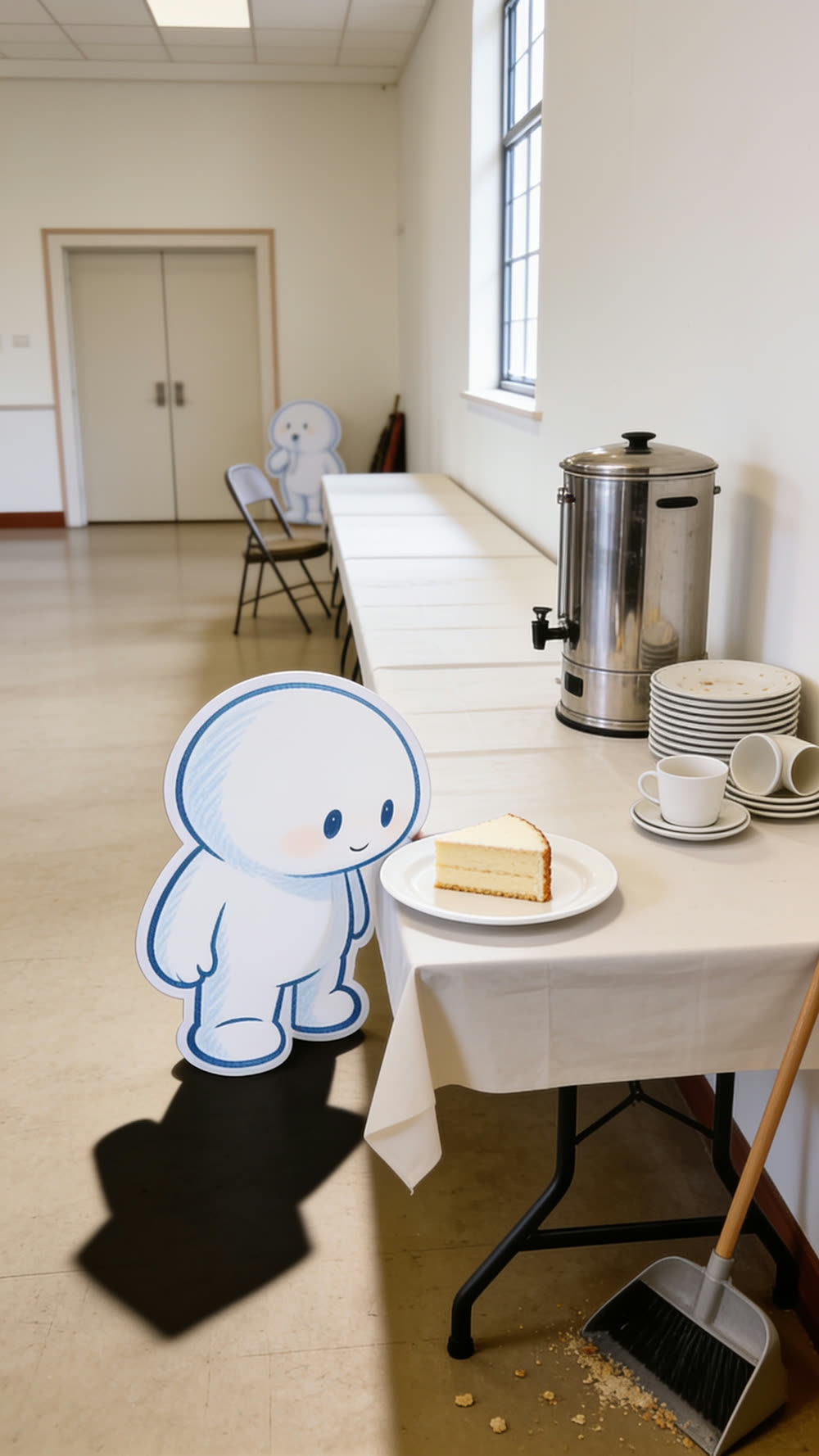
The short imagines the emptiest possible courtroom for a real test of character: a church fellowship hall a few minutes after an event has ended. The last guests are leaving. Cleanup has technically begun. And on the refreshments table sits one plain plate holding exactly one slice of cake, the last one. Nobody is watching. Nobody ever will.
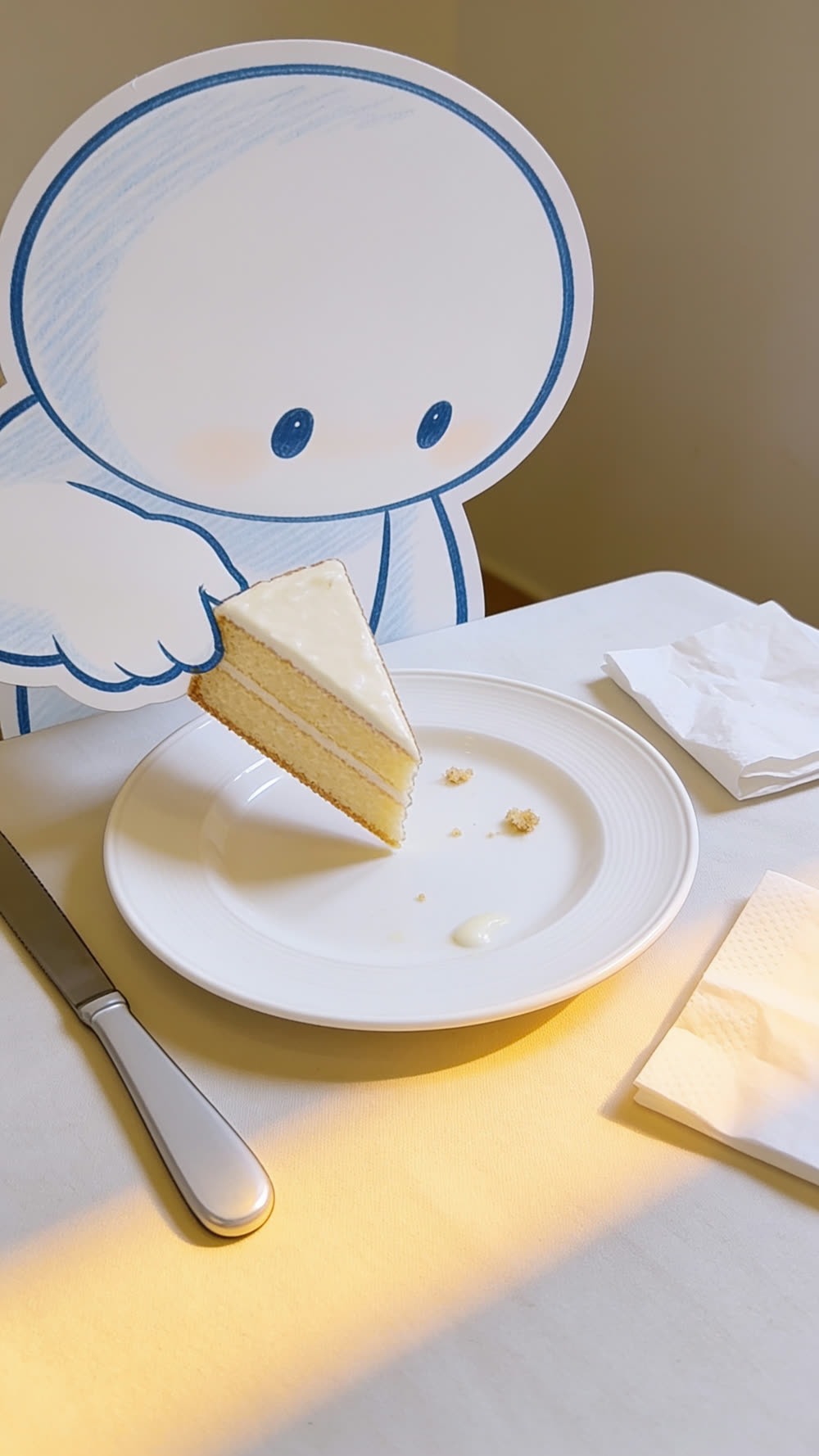
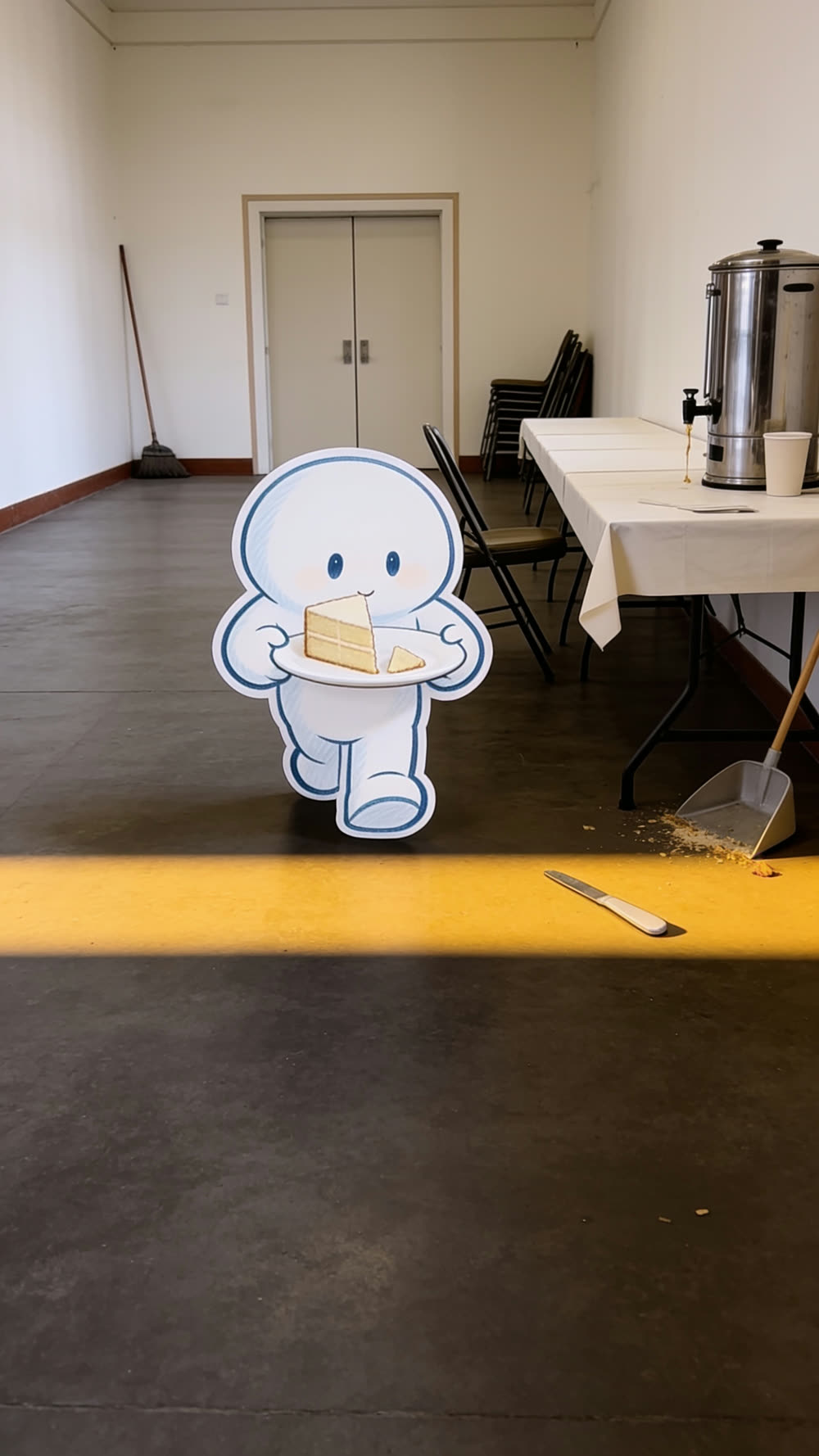
The mascot circles the plate like a scholar circling a hard text, considers the others briefly, considers itself at length, and then finds a third way: one careful cut off the very tip of the slice, leaving a sliver so thin it is basically a rumor. "Technically, I left some." The joke is the size of the stakes. The theology is not: Philippians 2:4 lands right on that tiny, unwitnessed cut, and this study lives there.
Background · 5 min
What was going on in Philippi
Philippi was Paul's first church on European soil (Acts 16), planted after a vision of a man from Macedonia begging him to come and help. By the time he wrote this letter, Paul was under house arrest, most likely in Rome, around AD 61, chained to a Roman guard and uncertain whether he would live or die (1:12-13, 1:20-24). Philippians is, against every expectation of that setting, the most joyful letter he ever wrote: some form of the word "joy" or "rejoice" appears well over a dozen times in four short chapters.
But the letter is not naive about the church itself. Philippi loved Paul and had partnered with him financially from the very start (1:5, 4:15-16), and Paul clearly loved them back. Still, something under the surface needed addressing: real disunity, sharpened enough by chapter 4 that Paul names two members by name, Euodia and Syntyche, and begs them to agree with each other in the Lord (4:2). Chapter 2 opens with the fix, before the specific conflict is ever named: "if you have any encouragement from being united with Christ... then make my joy complete by being like-minded" (2:1-2).
Here is the detail that sharpens the whole passage. Verse 4's "interests of the others" is not an abstract ideal about strangers. It is aimed at people who already knew each other, already served together, and were still finding it hard to put the other person's interests ahead of their own. That is exactly the kind of room a fellowship hall refreshments table sits in too.
Read · 5 min
Read the passage: Philippians 2:1-11
Have one person read the whole passage aloud while everyone else just listens. Then use this map to walk back through it.
- v1-2If there is any encouragement in Christ, any comfort, any fellowship of the Spirit: complete my joy by being like-minded, one in love. The appeal starts with what they already share.
- v3Do nothing out of selfish ambition or vain conceit. In humility value others above yourselves. The instruction before the instruction: check the motive first.
- v4Not looking to your own interests but each of you to the interests of the others. The hinge verse: not "instead of," but "also," a widened field of view.
- v5-8Have the same mindset as Christ Jesus, who made himself nothing, took the nature of a servant, and humbled himself to death on a cross. The example that makes verse 4 more than a nice suggestion.
- v9-11Therefore God exalted him to the highest place, and every knee will bow. The self-emptying is not the end of the story. Humility, in God's economy, is not the opposite of honor.
"Not looking to your own interests but each of you to the interests of the others."
Philippians 2:4, NIV
Discuss · 20 min
Discussion questions
Warm up
keep it light, five minutes- Tell the group about a time you were completely alone with the last of something, the last slice, the last parking spot, the last good seat, and nobody would have known either way. What did you actually do?
- In the short, the mascot narrates its own inner monologue out loud, considering the others "briefly" and itself "at length." Why is that ratio funny, and why is it also a little too accurate?
Into the text
give question 4 sixty seconds of quiet first- Read verse 3 again. Paul names the motive before the action: selfish ambition and vain conceit versus humility that values others above ourselves. Which of those two motives usually drives our own generosity?
- Verse 4 says "not looking to your own interests but each of you to the interests of the others." It does not say your interests do not matter. What changes if we read it as "also," not "instead of"?
- Verses 6 to 8 ground the instruction in Christ, who "made himself nothing." What is the difference between humility that erases a person and humility that simply widens what they are looking at?
The mirror
let the silence sit on question 8- Honestly, where in our week are we most often completely unsupervised with a decision like this: a portion, a piece of credit, a bit of time?
- Paul's original audience already knew and served each other, and the appeal was still needed. Who are the "others" closest to us that we have quietly stopped considering, precisely because we know them so well?
- The episode adds one more group to the list: "even the others who already went home," people who are not even present to notice. Who falls into that category for us: people out of sight, out of the room, or out of the conversation?
Go deeper · 4 min
Where else the Bible says this
1 Corinthians 10:24
"No one should seek their own good, but the good of others" (NIV). Written to a different church wrestling with a different argument, food offered to idols, but landing on the identical principle: personal liberty always has to make room for someone else's good.
Romans 12:10
"Be devoted to one another in love. Honor one another above yourselves" (NIV). A close cousin of Philippians 2:3, useful for question 4: honoring someone "above" ourselves is not the same as having no opinion of our own worth.
Ruth 2:15-16
Boaz instructs his workers to let Ruth glean among the sheaves and even to pull out some stalks from the bundles on purpose and leave them for her to pick up. An entire Old Testament story built on the same instinct as this episode: quietly leaving more than required, for someone who will never see it happen.
Apply · 5 min
Put it into practice this week
The short ends with an instruction, plain enough to carry into the week: when the last of anything is sitting there, leave the bigger half. Here is that instruction with legs on it.
1. Name your version of the last slice
Where in your week are you most often completely alone with a decision like this, a portion, a bit of time, a piece of credit? Write down one real, specific example, not a hypothetical:
2. Practice it once, on purpose, unwitnessed
This week, find one moment where you could take the bigger share and nobody would ever know, and take the smaller one instead. Do not tell anyone. The whole point is that grace, not an audience, is the only witness.
3. Widen the "others" list
Name one person who is currently out of sight, out of the room, or out of the conversation, someone it would be easy to stop considering simply because they are not present. Do one specific thing for their interest this week.
4. If generosity already comes easily to you
Then check the motive question from verse 3. Is it humility, or is some of it quiet performance, generosity that still needs to be seen to feel worth doing? Try one act of it this week that stays completely private.
To close
Father, thank you that Christ emptied himself for us before we ever emptied ourselves for anyone. Teach us to look, not only to our own interests, but also to the interests of others, even the ones who will never know we did. Let the size of what we leave behind say something true about the room we kept for them. Amen.
Plate cleared
That's the guide
Print this, photocopy it, or read it again with a friend. Nothing to sign up for, nothing to remember. When the next episode drops, its study guide will sit right next to this one at pundayschool.com.
Extra time
Questions people ask about Philippians 2:4
What does Philippians 2:4 mean?
Paul instructs the Philippian church not to look only to their own interests but also to the interests of others. It sits inside a wider appeal for unity (2:1-2) and a warning against selfish ambition (2:3), then leads straight into Christ's own example of self-emptying humility (2:5-8). In practice it means our own needs are real and legitimate, but they are never the only needs in the room.
Does Philippians 2:4 mean I should never think about my own interests?
No. The verse says "not looking to your own interests" in a context that assumes those interests exist and matter. The instruction is to also look to the interests of others, widening the field of view rather than erasing yourself from it. Verses 6 to 8 make the same point about Christ: he did not stop being who he was, he chose to also take on the form of a servant.
Why does the episode connect this verse to something nobody will ever see?
Because that is where a value is most honestly tested. Generosity performed in public proves we can be generous in public. What we do with the last slice, the extra hour, or the better option when there is genuinely no audience and no consequence either way reveals what we actually believe about other people's interests, not just what we are willing to be seen believing.
How does Philippians 2:4 connect to Christ's humility in verses 5-8?
Verse 4 is the instruction; verses 5 to 8 are the proof it is possible and the reason it matters. Paul does not just tell the Philippians to consider others' interests and leave them to figure out how. He points to Christ, who held equality with God yet made himself nothing and became a servant. The instruction in verse 4 is grounded in an example, not just a rule.
Where can I watch The Last Slice Test?
Episode 16 goes live soon at @pundayschool on YouTube, TikTok, Instagram, and Facebook, and the video will be embedded at the top of this page the day it posts. Bookmark this page or follow @pundayschool to catch it first.