Pundayschool episode 14 companion · The Sermon Dodgeball
Let It Land: a Proverbs 21:2 study guide
The fuller meal behind our under-90-second short. Built for a small group evening or a personal hour with a journal. About 35 minutes together, 15 on your own, no seminary required.
- Passage
- Proverbs 21:1-3, key verse 21:2
- Time
- About 35 minutes with a group, 15 solo
- You need
- A Bible, this page, something to write with
- Works for
- Small groups, youth groups, or one honest person and a journal
The short answer
Proverbs 21:2 teaches that we are the least reliable judges of our own hearts: "Every way of a man is right in his own eyes: but the LORD pondereth the hearts" (KJV), or in more modern words, "A person may think their own ways are right, but the LORD weighs the heart" (NIV). Because our own ways always look right to us, conviction tends to feel like it belongs to somebody else in the room. But it is the LORD who weighs hearts, not us, which means the point that lands close to home is rarely a mistake of aim.
Kickoff · 1 min
First, the short itself
Episode 14 is live. Watch it above, or on YouTube at @pundayschool. Coming soon to TikTok, Instagram and Facebook.
Watch on YouTube ↗The premise · 2 min
Why a dodgeball

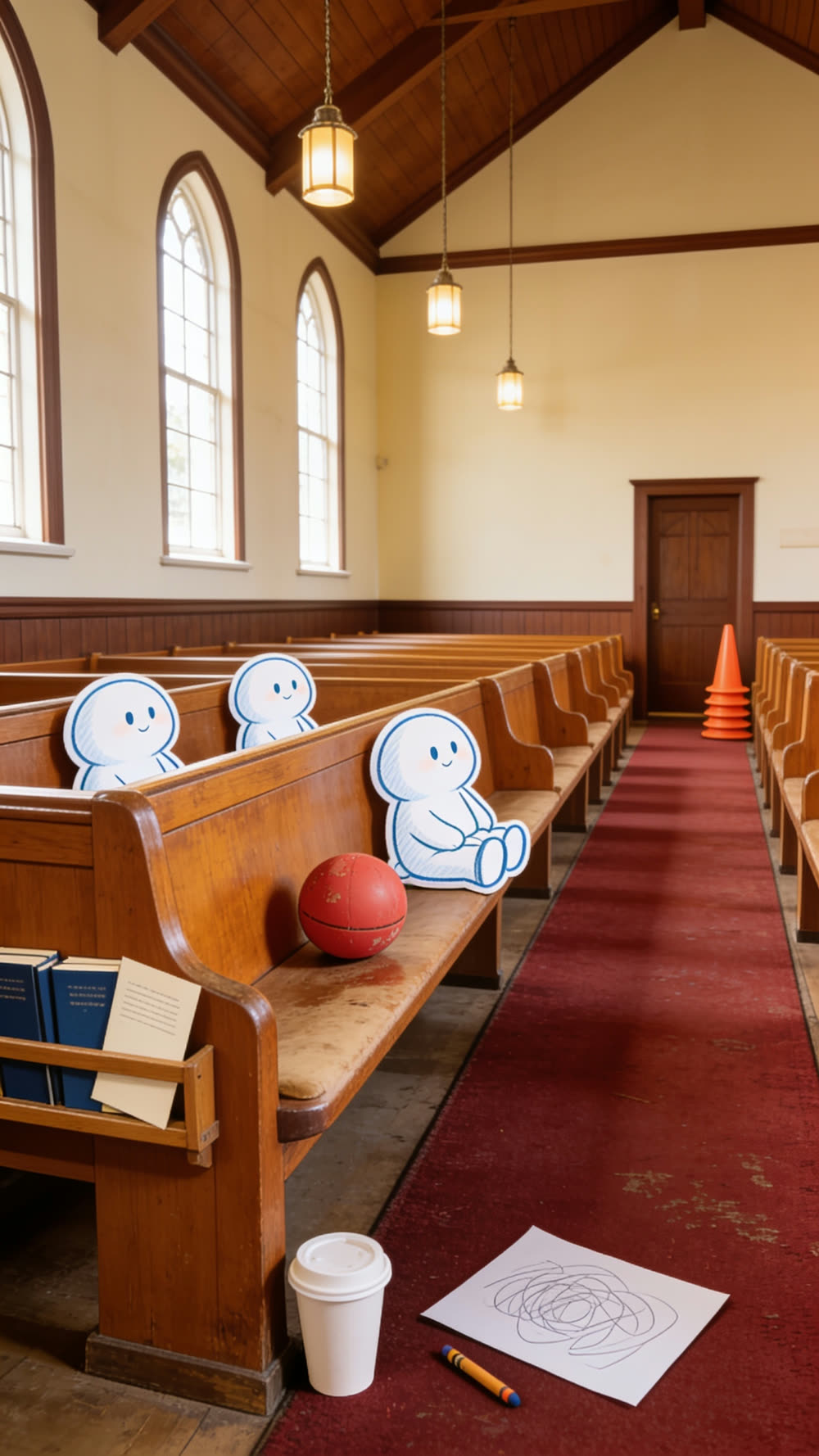
The short imagines an early service with just three people in the room, pews built for a crowd that has not arrived. Then the pastor makes a point: specific, with a name on it. Part of us hopes it is not ours. So we do the spiritual thing: we duck. We slide down the pew until only our eyes clear the wood, studying the grain like it is scripture. The point sails over our head into the row behind us, and we feel relieved instead of convicted. We even glance back. Pastorally. Here is the thing about dodging: you can spend the whole sermon deciding who the point was for, and walk out as the one person it was for.
It is funny because it is us. And Proverbs got to the reason why a very long time before we did: we are hopeless judges of our own hearts, so a specific point rarely feels like it has our name on it, even when it does.
Background · 5 min
What Proverbs 21 is doing

Proverbs 21 sits inside the long central collection traditionally attributed to Solomon, hundreds of short two-line sayings rather than one continuous argument. Verses 1 through 3 form a small cluster all pointed at the same target: the gap between how something looks from the inside and how it actually stands before God. Verse 1 says even a king's heart runs like water in the LORD's hand. Verse 2 says every one of us is convinced our own ways are right, but the LORD weighs the hearts. Verse 3 says doing right matters more to God than religious performance. Three verses, one thread: God is not grading us on how sure we feel. He is weighing what is actually there.
That is exactly the blind spot the short is joking about. Nobody sits in a pew thinking, my ways are wrong. If we did, dodging would not work. It works precisely because our own ways always look right to us from the inside, which is why the LORD, not our own sense of things, is the one doing the weighing.
Read · 5 min
Read the passage: Proverbs 21:1-3

Have one person read all three verses aloud, slowly, while everyone else just listens. Then use this map to walk back through it.
- v1"The king's heart is in the hand of the LORD, as the rivers of water: he turneth it whithersoever he will" (KJV). Even the most powerful heart in the room does not run itself.
- v2"Every way of a man is right in his own eyes: but the LORD pondereth the hearts" (KJV). The verse this whole episode leans on. Self-assessment and God's assessment are two different measurements.
- v3"To do justice and judgment is more acceptable to the LORD than sacrifice" (KJV). Right living outranks religious performance every time.
"A person may think their own ways are right, but the LORD weighs the heart."
Proverbs 21:2, NIV
The NIV renders verse 2 as "a person may think their own ways are right, but the LORD weighs the heart." The KJV puts it more bluntly: "every way of a man is right in his own eyes: but the LORD pondereth the hearts." Same warning, either way: we are not a reliable witness in our own defense.
Discuss · 20 min
Discussion questions
Warm up
keep it light, five minutes- Think of a sermon, a piece of feedback, or a hard conversation that landed close to home. What was our first instinct: to receive it, or to think of someone else who needed to hear it more?
- In the short, three people are in a room with nowhere to hide, and the dodge still works. Where do we find room to dodge even when the room is small?
Into the text
give question 4 sixty seconds of quiet first- Read verse 2 again slowly. "Every way of a man is right in his own eyes." What makes a person's own ways look right to them, even when they are not? Where have we seen that in ourselves?
- Verse 1 says even a king's heart runs like water in the LORD's hand. If the most powerful heart in the room is not exempt from that, what does that say about the rest of us?
- Verse 3 says doing justice matters more to God than sacrifice. How does that change what "letting a point land" should actually look like, beyond just feeling bad about it?
- The short's narration says, "God's word is not a dodgeball thrown to knock us down. It's aimed at the heart, because that's what it's trying to heal." What is the difference between conviction that knocks us down and conviction that heals?
The mirror
let the silence sit on question 7- Honestly, in this season, whose sermon points have we been quietly redirecting to somebody else in the room?
- If we stopped glancing at the row behind us and let the next specific point land on us instead, what would we actually have to do differently by tonight?
Go deeper · 4 min
Where else the Bible says this
Jeremiah 17:9-10
"The heart is deceitful above all things and beyond cure. Who can understand it? I the Lord search the heart and examine the mind, to reward each person according to their conduct, according to what their deeds deserve" (NIV). The same warning as Proverbs 21:2, sharpened: we cannot even fully diagnose our own hearts. Only God can.
1 Samuel 16:7
"But the Lord said to Samuel, 'Do not consider his appearance or his height, for I have rejected him. The Lord does not look at the things people look at. People look at the outward appearance, but the Lord looks at the heart'" (NIV). Told to a prophet picking a king, but the same principle: outward confidence is not the measurement God uses.
Psalm 139:23-24
"Search me, God, and know my heart; test me and know my anxious thoughts. See if there is any offensive way in me, and lead me in the way everlasting" (NIV). A prayer response to Proverbs 21:2's warning: inviting the weighing instead of assuming we already know the verdict.
Apply · 5 min
Put it into practice this week

The short ends with an instruction, not a scolding: no looking behind us, no duck, sit up. Here is that instruction with legs on it.
1. Name the dodge
Take ten quiet minutes this week. Think back over the last few weeks: any sermon point, any piece of feedback, any nudge from a friend that we mentally addressed to someone else. Write down what it actually was, honestly, in our own words.
2. Read it as ours
Go back over what we just wrote, this time without redirecting it to anyone else in the room. Let it be about us, at least for the length of one honest reading.
3. Sit up next time
The next time a point has our name on it, do not look behind us. No searching for who needs to hear it more. Just sit up, and let it land.
To close
Father, thank you that your word is aimed at healing, not at knocking us down. Show us our own hearts the way you weigh them, not the way we excuse them. Give us the honesty to stop ducking, and the courage to let a point land when it has our name on it. Amen.
Full time
That's the guide
Print this, photocopy it, or read it again with someone else. Nothing to sign up for, nothing to remember. When the next episode drops, its study guide will sit right next to this one at pundayschool.com.
Extra time
Questions people ask about Proverbs 21:2
What does Proverbs 21:2 mean?
Proverbs 21:2 warns that people are naturally convinced their own ways are right, even when they are not, so self-assessment alone is not reliable. The LORD, not our own sense of things, weighs the heart. It is a warning against trusting our own verdict on ourselves.
What is the "sermon dodgeball" this study guide references?
It is the picture from Pundayschool Episode 14: a sermon's point sails over one person's head into the row behind them, and they feel relieved instead of convicted, having quietly decided the point was for someone else. Proverbs 21:2 explains why that dodge is so easy to pull off: our own ways always look right to us from the inside.
Is Proverbs 21:2 saying we should never trust our own judgment?
Not in every area of life, but it is a real warning about our blind spot for our own hearts specifically. We are capable of clear thinking about plenty of things; self-justification is the one place Proverbs keeps saying we need outside help, which is exactly why verse 2 hands the weighing to the LORD instead of to us.
How is Proverbs 21:2 different in the KJV and the NIV?
The KJV reads, "Every way of a man is right in his own eyes: but the LORD pondereth the hearts." The NIV reads, "A person may think their own ways are right, but the LORD weighs the heart." Same warning, modernized. Pondereth and weighs both describe careful, deliberate evaluation, not a snap judgment.
Can I use this study guide on my own?
Yes. Read the background, read the passage slowly, and treat the discussion questions as journal prompts. On your own the study takes about 15 minutes, and the write-in lines in the apply section are there for exactly that.