Pundayschool episode 19 companion · The Map Folded Wrong
A Lamp for the Whole Path: a Psalm 119:105 study guide
The fuller meal behind our 76 second short. Built for a small group evening or a personal hour with a journal. About 40 minutes together, 20 on your own, no seminary required.
- Passage
- Psalm 119:105-112, key verse 119:105
- Time
- About 40 minutes with a group, 20 solo
- You need
- A Bible, this page, something to write with
- Works for
- Small groups, youth groups, or one honest person and a journal
The short answer
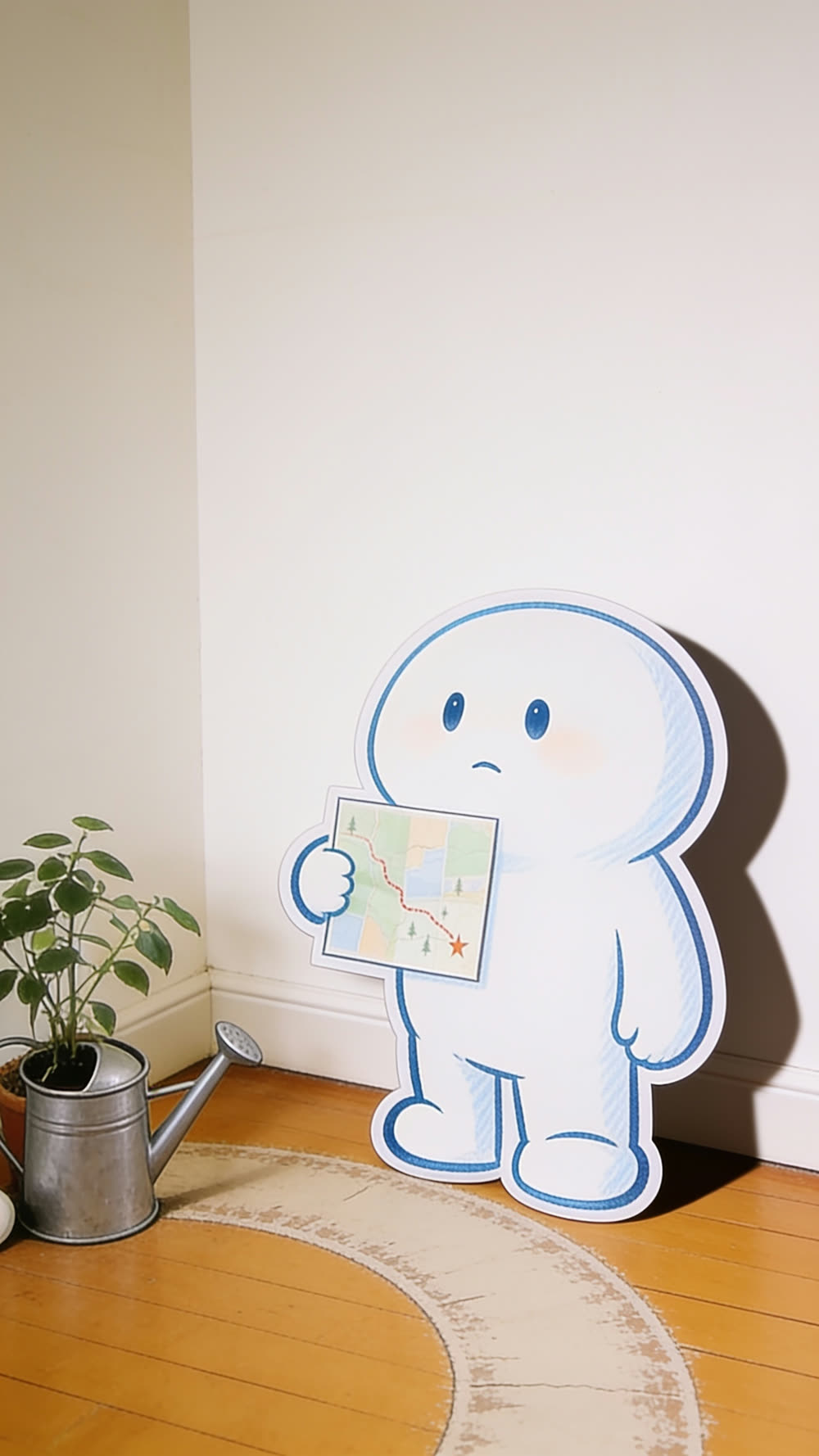
Psalm 119:105 says, "Your word is a lamp for my feet, a light on my path" (NIV): God's word gives enough light for the very next step, on the whole path, not just the stretch we already agree with. The verse sits at the start of an eight verse section (105-112) that immediately turns the lamp into a vow: "I have taken an oath and confirmed it, that I will follow your righteous laws" (106). Loving the lamp and obeying the whole path are the same act, not two separate ones.
Cold open · 1 min
First, the 76 second version
Pundayschool · EP 19 · 76 seconds
The Map Folded Wrong
One neat crease, and the map agrees with us completely. Then the corridor turns, and we do not.
Coming soon
Episode 19 has not posted yet. The short lands soon at @pundayschool on YouTube, TikTok, Instagram and Facebook, and the video will be embedded at the top of this page the day it posts. This study stands on its own, so feel free to start without it.
Coming to YouTube · TikTok · Instagram · Facebook
The premise · 2 min
Why a map that keeps getting smaller
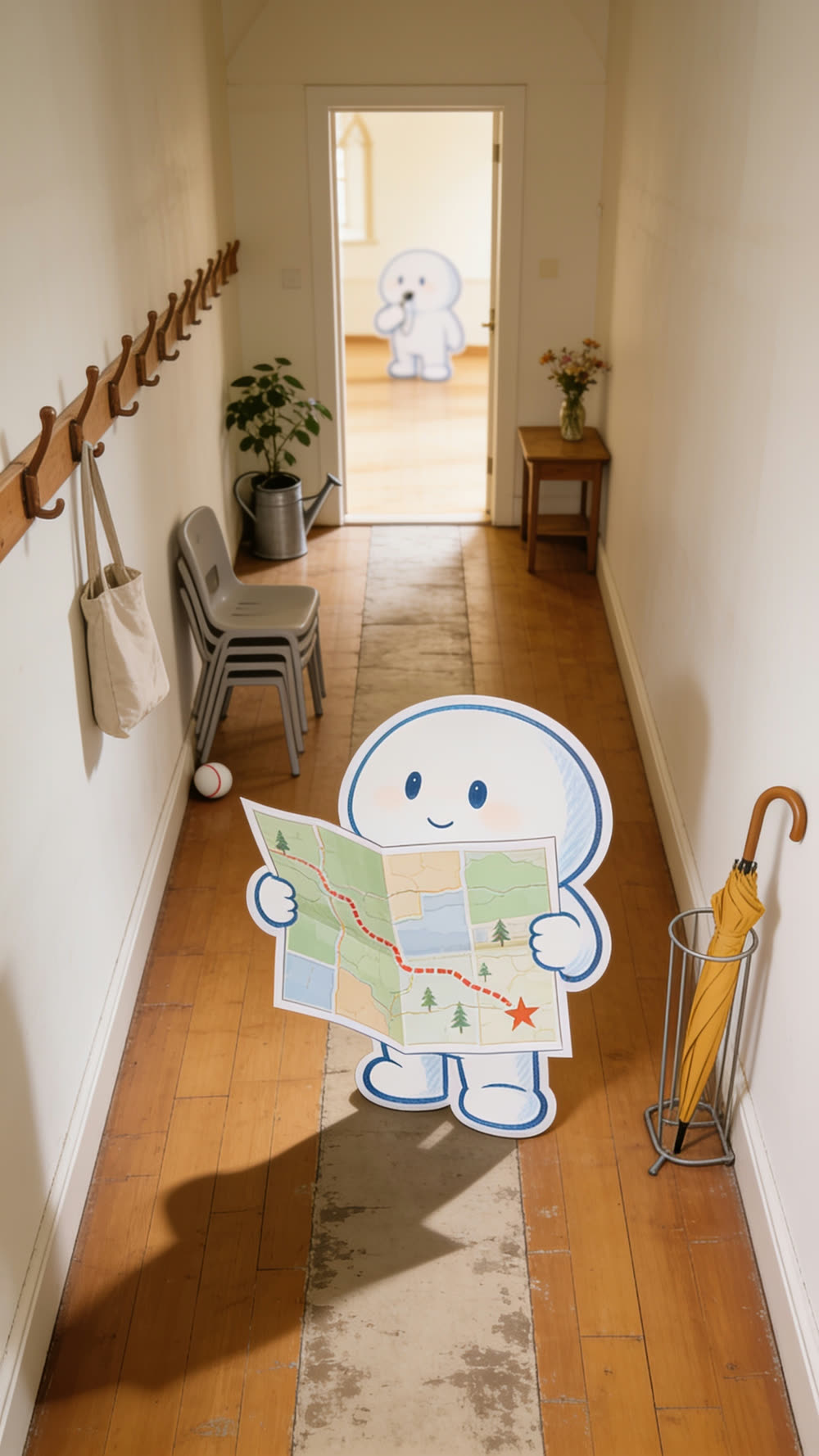
The short imagines one figure walking a church hall corridor with a paper map held open in both hands, following a route that makes one clean turn near a corner. That turn is the one part of the route it is not ready for, so it folds the map shut across exactly that crease: one neat pleat, a thumb run along it, "we are not cheating, we are tidying." The surer it feels, the smaller it folds, until the map shows only the straight stretch it already likes.
Confident and unhurried, it walks straight into the wall where the corridor actually turns. "Hm. A wall. That was not on our map." Deadpan, still holding the tiny folded square, it delivers the episode's own catalogue line: "The path is clearer when I stop editing the map." The joke is the precision of the self-deception. The theology is not a joke at all: Psalm 119:105 lands on the exact spot the fold covered.
Background · 5 min
What Psalm 119 actually is
Psalm 119 is the longest chapter in the Bible, 176 verses, and it is built as an acrostic: 22 stanzas of eight verses each, one stanza per letter of the Hebrew alphabet. In the original Hebrew, every verse inside a stanza begins with that stanza's letter, a structure so deliberate it is really a form of devotion in itself, a psalmist spending the effort of a whole alphabet to say one thing slowly and completely: I love your word. The psalm names that word by many titles across its length, law, statutes, precepts, commands, decrees, judgments, examining it from every angle rather than repeating itself.
It was not written from a place of easy comfort. The same stanza that contains our key verse also contains real danger: "I have suffered much" (107), "the wicked have set a snare for me" (110). The psalmist is not romanticizing Scripture from a safe armchair. He is choosing to keep walking by its light while people are actively trying to trip him off the path.
Our verse, 105, opens the "Nun" stanza (verses 105-112, the fourteenth of the psalm's twenty-two sections). Worth noticing before we even reach the passage: the very next verse after the famous lamp image is not another compliment to the lamp, it is a vow. Verse 106: "I have taken an oath and confirmed it, that I will follow your righteous laws." The psalmist does not stop at admiring the light. He commits to the whole path it shows him.
Read · 5 min
Read the passage: Psalm 119:105-112
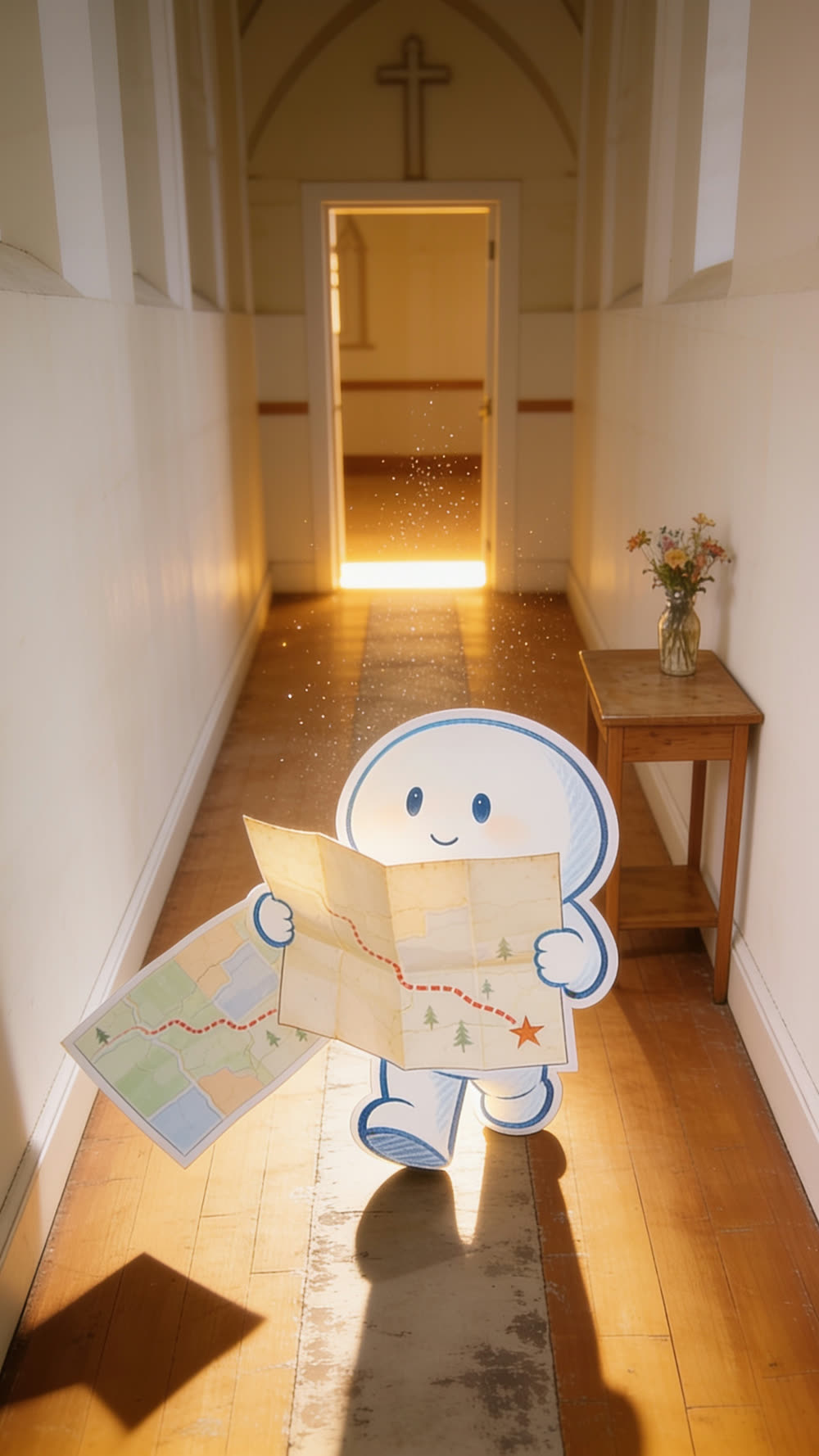
Have one person read the whole stanza aloud while everyone else just listens. Then use this map to walk back through it.
- v105Your word is a lamp for my feet, a light on my path: enough light for the next step, on the whole path, not a floodlight for the whole horizon.
- v106The lamp becomes a vow: an oath, confirmed, to follow God's righteous laws, not only the ones already comfortable.
- v107-108Real suffering, a plea to be kept alive according to God's word, and willing praise offered anyway.
- v109-110Constant danger and a set snare, and still: "I have not strayed from your precepts."
- v111-112God's statutes named a heritage and a joy, and the stanza closes with the heart set on keeping them "to the very end," the whole path, not just the start of it.
"Your word is a lamp for my feet, a light on my path."
Psalm 119:105, NIV
Discuss · 20 min
Discussion questions
Warm up
keep it light, five minutes- Tell the group about a rule, a warning, or a piece of advice you have quietly "filed for later" instead of actually following, even though you basically knew it was right.
- The short's mascot never stops to admit it is editing the map; it happens in the same breath as everything else looking fine. Why is a quiet habit like that often harder to catch in ourselves than a loud, obvious one?
Into the text
give question 4 sixty seconds of quiet first- Read verses 105 and 106 together. The psalmist does not stop at praising the lamp, he immediately vows to keep God's whole law. Why might verse 106 belong right next to verse 105, rather than as a separate thought?
- Verses 109 and 110 admit real danger, "I constantly take my life in my hands," "the wicked have set a snare for me," and yet the psalmist says he has not strayed. What is the difference between admiring the lamp from a safe distance and actually walking by it through the hard stretch?
- Verse 112 says, "my heart is set on keeping your decrees to the very end." What would it look like to let God's word light every step, including the ones we would rather skip?
The mirror
let the silence sit on question 8- If Psalm 119:105 says God's word lights the whole path, what does it say about us when we only let it light the parts we already agree with?
- Where in our own life is there a "map folded wrong," a verse, a conviction, or a piece of counsel we have quietly tucked away instead of simply obeying it or simply saying we will not?
- The episode's turn is physical: "open the map, all the way, creases and all." What would it look like this week to unfold the exact part of Scripture you have been avoiding?
Go deeper · 4 min
Where else the Bible says this
2 Timothy 3:16-17
"All Scripture is God-breathed and is useful for teaching, rebuking, correcting and training in righteousness" (NIV). All, the verse says, not the parts that happen to agree with us already. Rebuking and correcting are named right alongside teaching, which is exactly the stretch of the map we tend to fold away first.
Luke 6:46
Jesus asks His own crowd, "Why do you call me 'Lord, Lord,' and do not do what I say?" It is the same fold from the other direction: we can hold guidance in our hands, even call it good, and still quietly decline to actually walk where it points.
James 1:22
"Do not merely listen to the word, and so deceive yourselves. Do what it says." James names the self-deception directly: hearing the whole word without doing the whole word is not neutral, it is a specific way of lying to ourselves, one crease at a time.
Apply · 5 min
Put it into practice this week
The short ends with an instruction plain enough to carry into the week: open the map, all the way, creases and all. Here is that instruction with legs on it.
1. Name your own fold
What is the specific verse, chapter, or piece of counsel you have quietly filed "for later" instead of actually facing? Write down one real, specific example, not a hypothetical:
2. Notice why you folded it
Was it fear, comfort, or simply not wanting to be told what to do? Be honest rather than tidy about the reason. "We are not cheating, we are tidying" is the line the fold always tells itself.
3. Do the physical version of "open the map"
This week, actually read the part you have been skipping, out loud if you can. Let it sit there unfolded, even if it is the part with the turn in it, before you decide what to do about it.
4. A word for what you are still wrestling with
This is not a call to force certainty you do not have. Honest wrestling with a hard passage is not the same fold the episode is about; the fold is choosing not to look at all. Bring the unresolved part into the light too, with a pastor, a friend, or in prayer, rather than folding it away unseen.
To close
Father, thank you that your word is a lamp for the whole path, not just the stretch we already agree with. Forgive us for the creases we have folded into it, the verse that asks too much, the chapter we skip past, tucked away and called tidying instead of what it actually is. Teach us to open the map all the way, creases and all, trusting that the light you put on the path was never there to judge us. It is there to walk us home. Amen.
Reading taken
That's the guide
Print this, photocopy it, or read it again with a friend. Nothing to sign up for, nothing to remember. When the next episode drops, its study guide will sit right next to this one at pundayschool.com.
Extra time
Questions people ask about Psalm 119:105
What does Psalm 119:105 mean?
Psalm 119:105 says, "Your word is a lamp for my feet, a light on my path" (NIV). An ancient oil lamp lit only the next few steps, not the whole horizon, so the image is about God's word giving enough light for today's step, on the whole path, not just the comfortable stretch of it. The very next verse, 106, turns that lamp into a vow: the psalmist swears to keep God's whole law, not only the parts already lit up by his own preference.
What is Psalm 119 about?
Psalm 119 is the longest chapter in the Bible, 176 verses, and an acrostic: 22 eight-verse stanzas, one for each letter of the Hebrew alphabet. Its one subject, examined from every angle for 176 verses, is love for God's word, called by different names throughout: law, statutes, precepts, commands, decrees. It was written across real seasons of suffering and opposition (verse 107, "I have suffered much"; verse 110, "the wicked have set a snare for me"), not from a place of easy comfort.
How does The Map Folded Wrong use Psalm 119:105?
The episode pictures a mascot folding away the one turn on its paper map it is not ready for, keeping only the straight stretch it already likes, until it walks straight into the wall the turn would have warned it about. Psalm 119:105 lands as the correction: God's word is a lamp for the whole path, not just the part we like, and the episode's own line, "funny how everything we hit is on the part we folded away," is the psalm's warning turned into a joke with a real edge.
Is this only about reading the Bible?
Scripture is the specific picture, since the locked verse names God's word directly, but the same fold shows up anywhere we quietly edit guidance down to the parts we already agree with: a hard piece of counsel, a warning we would rather not hear, a conviction we already suspect is true. Psalm 119:105 is an invitation to open the whole map, not just our favorite corner of it.
Where can I watch The Map Folded Wrong?
Episode 19 goes live soon at @pundayschool on YouTube, TikTok, Instagram, and Facebook, and the video will be embedded at the top of this page the day it posts. Bookmark this page or follow @pundayschool to catch it first.