Pundayschool episode 38 companion · The Backpack Still On
Take Off the Backpack, Sit Down: a Psalm 23:5 study guide
The fuller meal behind our short. Built for a small group evening or a personal half hour with a journal. About 30 minutes together, 15 on your own, no seminary required.
- Passage
- Psalm 23:5
- Time
- About 30 minutes with a group, 15 solo
- You need
- A Bible, this page, something to write with
- Works for
- Small groups, youth groups, or one honest hour with a journal
The short answer
Psalm 23:5 pictures God as a generous host: "You prepare a table before me in the presence of my enemies. You anoint my head with oil; my cup overflows" (NIV). The table is already prepared, deliberately and generously, before we ever arrive. The obstacle to receiving it is rarely the table itself. It's that we keep walking past it, still carrying whatever we brought with us, telling ourselves we'll properly sit down later.
Press play · 2 min
First, the short version
"The Backpack Still On" is on its way. Once Episode 38 is posted, it will play right here. In the meantime, find Pundayschool on YouTube, TikTok, Instagram, and Facebook at @pundayschool.
The setup · 2 min
Why the table's already set, and why nobody's sitting
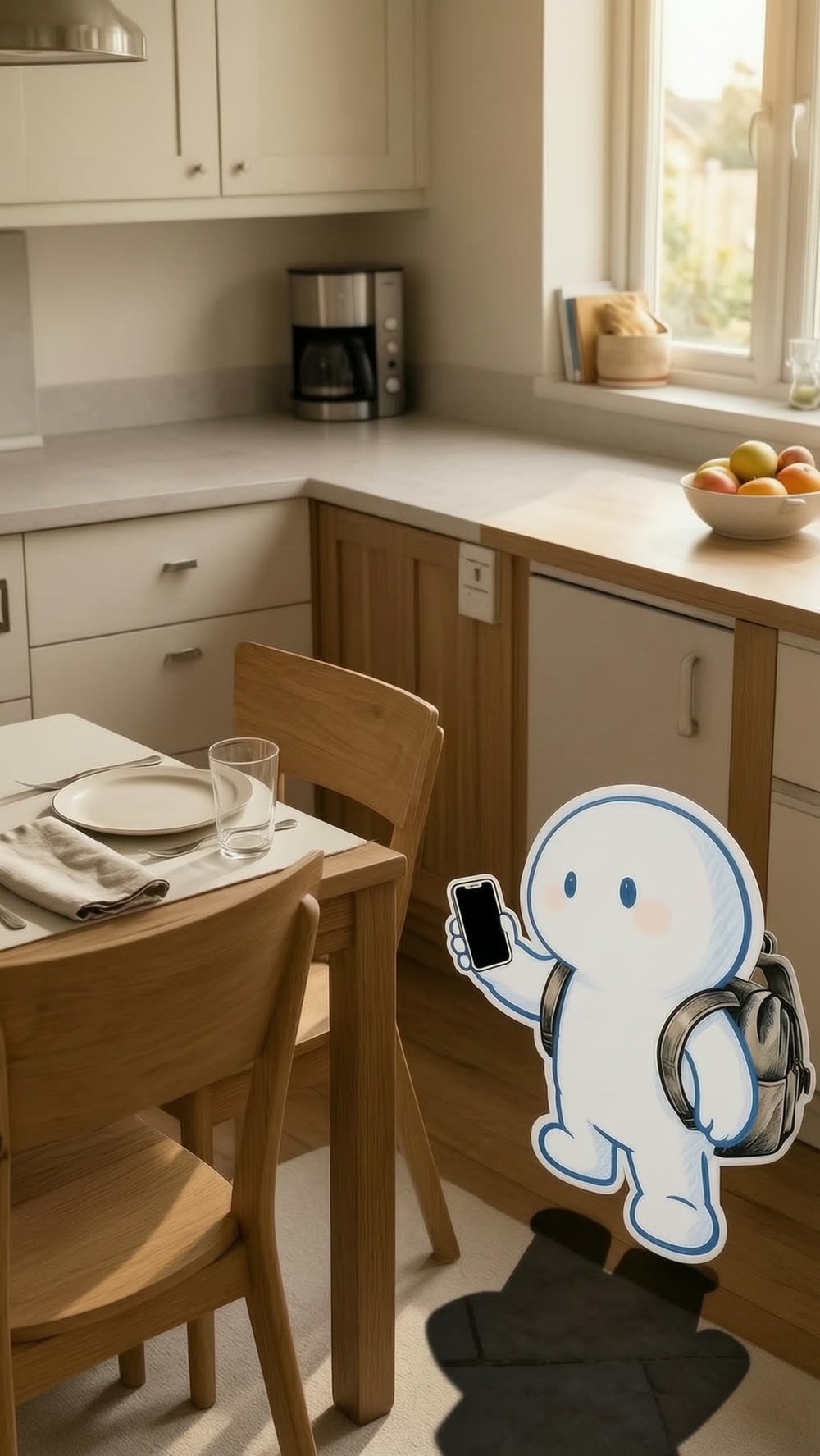
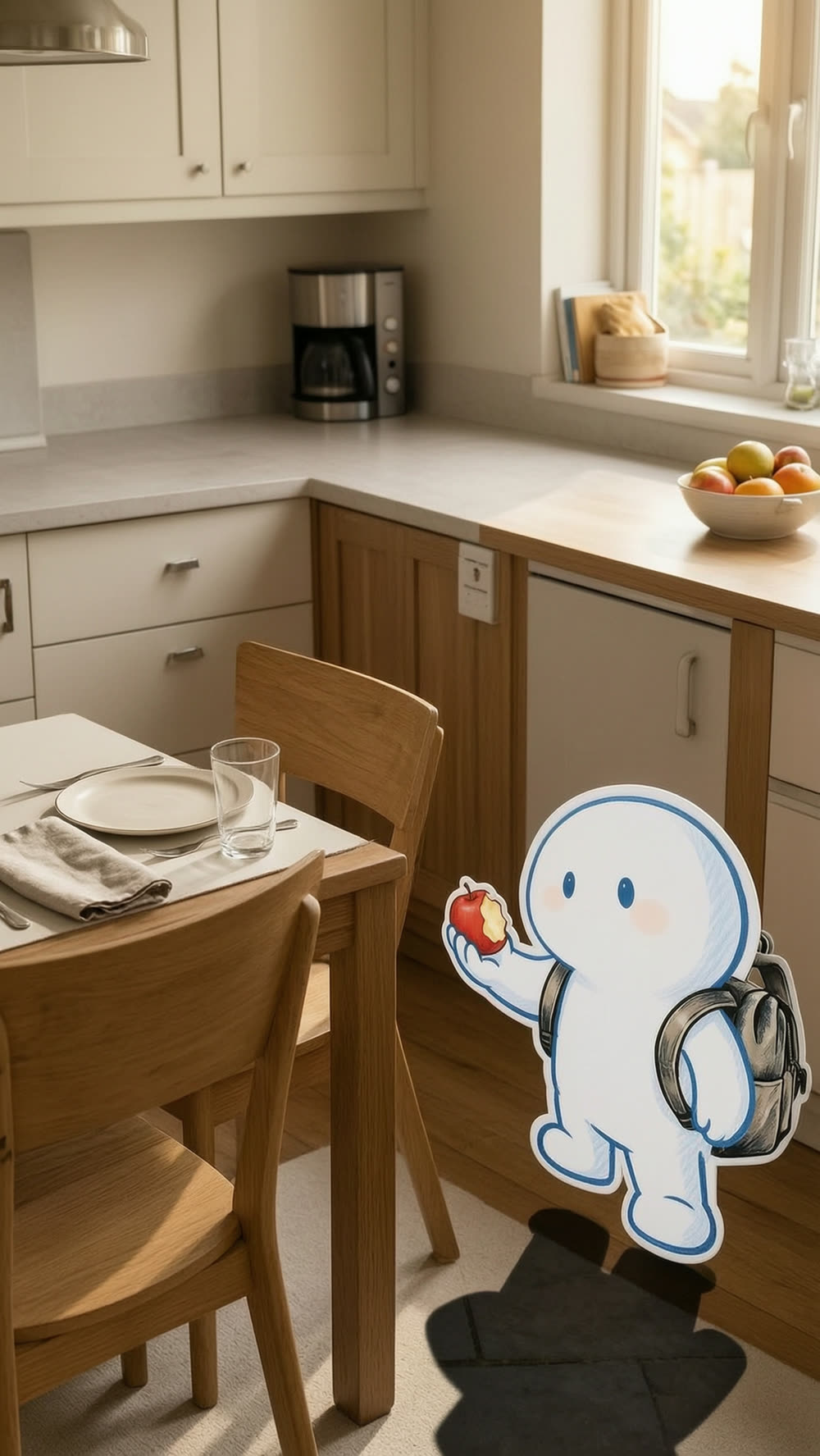
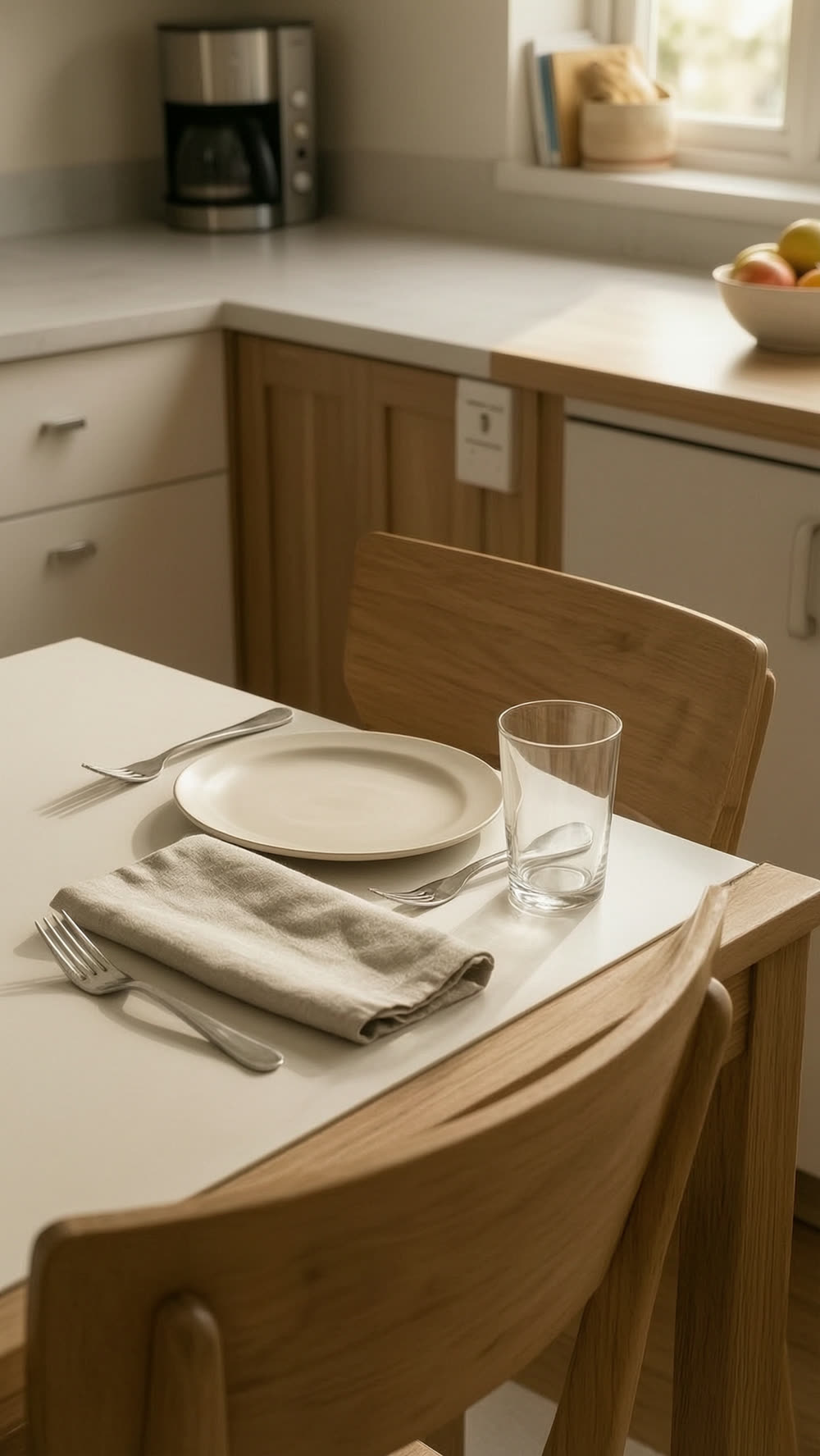
The short pictures a mascot walking into a kitchen where the table is already fully set, just for it: plate, glass, napkin, chair pulled out. And every night, the mascot walks past it anyway, backpack still on both shoulders, phone still in hand, eating an apple standing up at the counter instead. "I'll actually sit down properly tonight," it says. It's said that four nights running.
Nothing is stopping the mascot from sitting. The chair is right there. It just never quite believed anything was worth actually stopping for, not even a table someone deliberately prepared. That's the exact gap Psalm 23:5 speaks straight into.
Background · 5 min
A shepherd psalm that suddenly turns into a dinner host
Psalm 23 is traditionally attributed to David, and it's one of the most familiar passages in the whole Bible: "The Lord is my shepherd; I shall not want." For its first four verses, the image stays consistent - God as a shepherd, leading, restoring, guiding, protecting even through "the valley of the shadow of death."
Then, at verse 5, the picture changes without warning. The shepherd becomes a host. "You prepare a table before me in the presence of my enemies. You anoint my head with oil; my cup overflows." Anointing a guest's head with oil and setting a full table were both marks of a host's deliberate honor in the ancient Near East - not minimal hospitality, generous hospitality, offered on purpose, even with threats still nearby ("in the presence of my enemies").
The psalm doesn't say the table appears because the psalmist finally did something to deserve it. It's simply prepared - already there, already generous, by the time he arrives. The only thing the psalm asks of the reader at that point is to actually receive it: to sit at the table that's already set.
Read · 4 min
Read the verse: Psalm 23:5
Have one person read the verse aloud slowly, in more than one translation if you have them. Then use this map to walk back through its three short phrases.
- "You prepare a table before me"Deliberate, advance provision - not a snack grabbed in passing, a table, set on purpose, before the guest ever arrives.
- "In the presence of my enemies"The provision isn't conditional on safety or ease first. It's offered right in the middle of real threat, not after the threat is gone.
- "My cup overflows"The turn from enough to abundance. Not a careful, measured portion - more than what's needed, freely given.
- KJV wordingThe same verse in the King James Version: "Thou preparest a table before me... my cup runneth over" - slightly older language, identical picture.
"You prepare a table before me in the presence of my enemies. You anoint my head with oil; my cup overflows."
Psalm 23:5, NIV
Discuss · 15 min
Discussion questions
Warm up
keep it light, five minutes- Tell the group about a table someone prepared for you - literally or otherwise - that you almost didn't fully receive because you were too busy, distracted, or in a hurry.
Into the text
read the verse in two translations before question 3- Psalm 23 shifts from shepherd to host at verse 5, without any explanation. Why do you think the psalm needed both pictures rather than staying with just one?
- The table is prepared "in the presence of my enemies" - not after the danger has passed. What does that timing say about how God provides?
- The episode's mascot isn't refusing the table outright, it just keeps standing near it instead of sitting. What's the difference between rejecting something and simply never quite receiving it?
The mirror
let the silence sit on the last question- Honestly, what's the "backpack" you tend to keep on - the thing that keeps you half-ready to leave even when you're right next to what you say you want?
- What would actually change if you sat down today instead of tonight, or this week instead of "eventually"?
Go deeper · 4 min
Where else the Bible says this
Luke 10:38-42
Martha is "distracted by all the preparations that had to be made" while Mary simply sits at Jesus's feet. Jesus says Mary "has chosen what is better" (NIV) - a direct picture of the difference between staying busy near someone and actually sitting down with them.
Matthew 11:28
"Come to me, all you who are weary and burdened, and I will give you rest" (NIV). The invitation to set things down and actually receive rest, not just believe it's theoretically available.
Revelation 3:20
"Here I am! I stand at the door and knock. If anyone hears my voice and opens the door, I will come in and eat with that person, and they with me" (NIV). Another shared-meal picture of God, waiting on the very small act of actually opening the door.
Apply · 5 min
Put it into practice this week
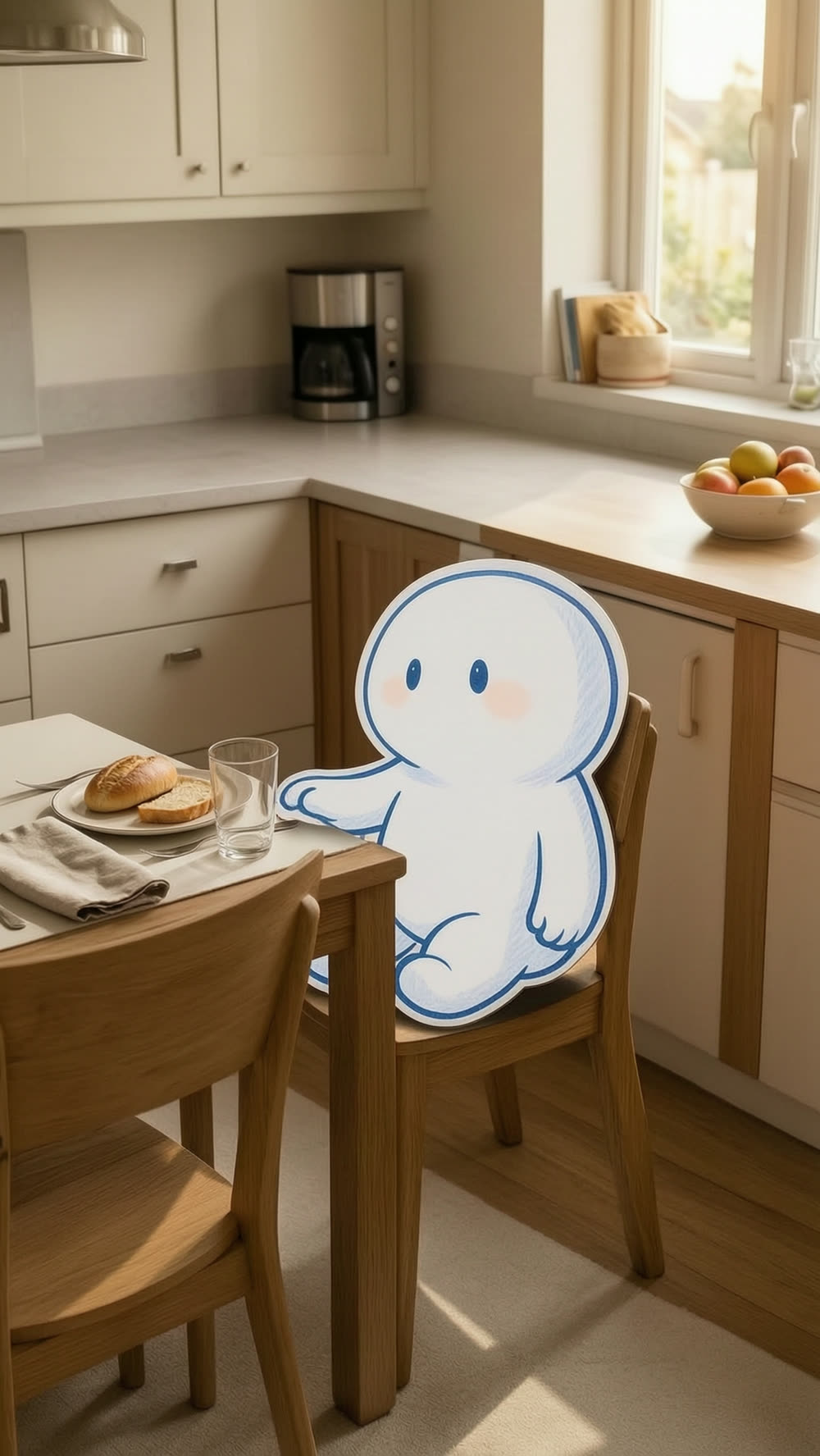
The short ends with the smallest possible action: the mascot takes off the backpack, sets the apple down, and sits. Here is that same small step, with legs on it.
1. Name the backpack
Write down the specific thing you tend to keep "on" - phone, schedule, worry, distraction - even during time you meant to give to God. Use the space below:
2. Name the table
Write the actual, specific time and place you could sit down this week - not a vague intention, a real slot on a real day.
3. Sit down
Before the week's out, take the backpack off, set the phone in another room, and sit in that chair for longer than feels efficient. Then tell one other person you did.
To close
Father, thank you for preparing a table before I ever thought to ask for one. Forgive me for the nights I ate standing up instead, backpack on, already halfway back out the door. Give me the small courage to take the bag off and sit down. Amen.
The end
That's the guide
Print this, photocopy it, or read it again with a friend. Nothing to sign up for, nothing to remember. When the next episode drops, its study guide will sit right next to this one at pundayschool.com.
Extra time
Questions people ask about Psalm 23:5
What does Psalm 23:5 mean?
It's the verse where Psalm 23 shifts from picturing God as a shepherd to picturing God as a generous host: preparing a table, anointing a guest's head with oil, and pouring a cup that overflows. It pictures deliberate, abundant provision, offered even in the middle of real difficulty ("in the presence of my enemies").
Why does the psalm suddenly switch from a shepherd to a table?
Both images make the same underlying point from different angles: God provides for and protects the psalmist, whether the picture is a shepherd guiding sheep or a host setting a table. The switch widens the picture rather than replacing it.
What does "my cup overflows" mean?
It marks the shift from enough to abundance - a full, careful portion versus one that spills over on purpose. In the psalm, overflow is the evidence of generosity, not a problem to manage or contain.
What if I keep meaning to have real time with God and never quite do it?
This study is for exactly that. The fix in the episode is small on purpose: not a whole new system, just sitting down once, today, in the chair that's already there. Small and actual beats big and someday.
Where can I watch The Backpack Still On?
Right at the top of this page once it is live, or on YouTube, TikTok, Instagram, and Facebook at @pundayschool.