Pundayschool episode 13 companion · The Lift Button
Be Still and Wait: a Psalm 37 study guide
The fuller meal behind our short about a mascot, a lift lobby, and a button that never once made the elevator arrive faster. Built for a small group evening or a personal hour with a journal. About 40 minutes together, 20 on your own, no seminary required.
- Passage
- Psalm 37:1-9, key verse 37:7
- Time
- About 40 minutes with a group, 20 solo
- You need
- A Bible, this page, something to write with
- Works for
- Small groups, youth groups, or one honest person and a journal
The short answer
Psalm 37:7 teaches that biblical waiting is stillness before God, not passivity, and not frantic activity dressed up as faith. Written by David to people unsettled by watching the wicked succeed, the verse says, "Be still before the LORD and wait patiently for him" (NIV). It is not a call to stop caring. It is a call to stop confusing our own restless effort with God's actual, already-moving work.
Kickoff · 1 min
First, the short version
Episode 13 is still in the lobby. The Lift Button lands soon at @pundayschool on YouTube, TikTok, Instagram and Facebook. This study stands on its own, so feel free to start without it.
The premise · 2 min
Why a lift button

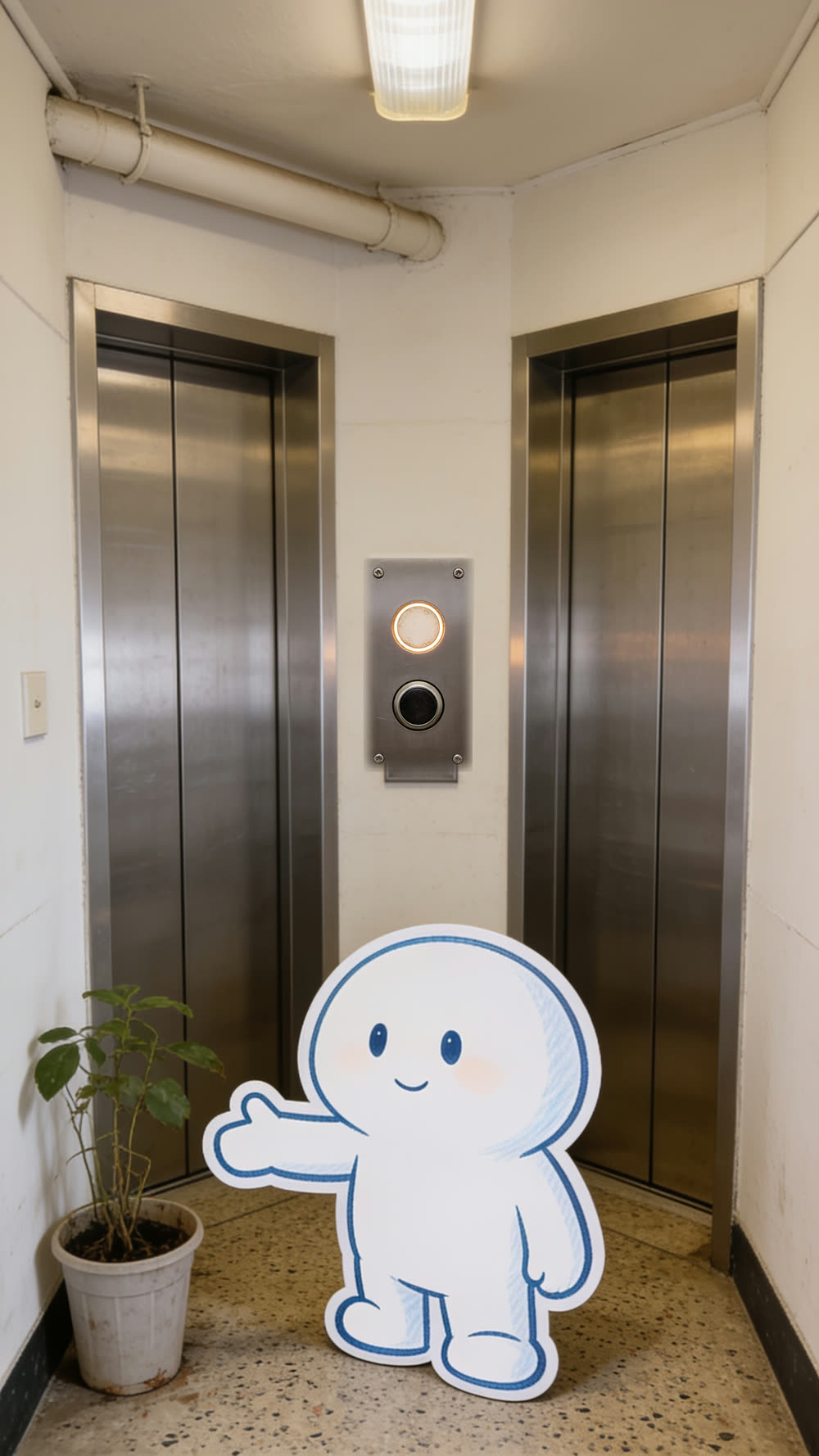
The short opens on a mascot in a small lift lobby, pressing the call button. The light comes on. The lift knows. Apparently it needs reminding, so the button gets pressed again, then harder, then the other button too, because at this point we are open to options. We stare at the floor number like our concentration is contributing. We check our phone. We know none of it does anything. We know. But waiting with empty hands feels irresponsible, so we pray the same prayer, slightly louder this time, the same way we keep pressing a button that was never the thing making the lift move.
Then the short quotes David: "Be still before the Lord and wait patiently for him." Inconvenient, because most of us were hoping for something more proactive. A button, perhaps. That line is where this study lives.
Background · 5 min
What was going on when David wrote this
Psalm 37 is a wisdom psalm, not a psalm of complaint or a psalm of praise. David is older when he writes it, looking back over a long life of watching how things actually turn out, and he is writing to people wrestling with a very old, very human frustration: the wicked seem to be doing fine. They scheme, they prosper, and it is tempting to either panic about it or start scheming ourselves.
The psalm's structure is mostly acrostic in the Hebrew, moving through the alphabet almost like a memory aid, which suggests it was meant to be learned and carried, not just read once. Verses 1 to 9 lay the foundation for everything that follows: do not fret because of evildoers (v1), trust in the Lord and do good (v3), delight yourself in the Lord (v4), commit your way to him (v5), and then the center of it all, be still before the Lord and wait patiently for him (v7).
Here is the detail that sharpens the whole passage. The Hebrew word behind "be still" carries a sense of stopping, of letting go of the grip, closer to "be silent" or "cease striving" than to a passive shrug. This is not a psalm telling us not to care. It is a psalm telling a busy, anxious, comparison-prone heart to stop treating its own effort as the thing that makes God move. Fretting, mentioned three times in these nine verses, is specifically the target: the restless, low-grade anxiety that looks like concern but functions like unbelief.
Read · 5 min
Read the passage: Psalm 37:1-9

Have one person read the whole passage aloud while everyone else just listens. Then use this map to walk back through it.
- v1-2Do not fret because of evildoers. They will wither like grass. The whole psalm opens by naming the exact temptation: anxious comparison with people who seem to be winning.
- v3-4Trust in the Lord and do good. Delight yourself in the Lord. The alternative to fretting is not indifference, it is redirected attention: toward trust, toward good, toward delight.
- v5-6Commit your way to the Lord, trust also in him, and he will act. He will bring forth your righteousness as the light. The acting is his, not ours.
- v7The center of the passage: be still before the Lord and wait patiently for him. Do not fret when people succeed in their ways or carry out their schemes.
- v8-9Refrain from anger, turn from wrath, do not fret, it leads only to evil. For evildoers will be cut off, but those who wait on the Lord will inherit the land.
"Be still before the LORD and wait patiently for him; do not fret when people succeed in their ways, when they carry out their wicked schemes."
Psalm 37:7, NIV
Discuss · 20 min
Discussion questions

Warm up
keep it light, five minutes- Talk about the most "lift button" thing you have ever caught yourself doing while waiting for something: refreshing a page, checking a phone, pressing a button that already lit up.
- In the short, the mascot presses the button again, then harder, then the other button. What does that escalation feel like from the inside? When have we done our own version of it?
Into the text
give question 3 sixty seconds of quiet first- Read verses 1 and 2 again. Fretting because of evildoers is the psalm's opening target. What does fretting actually look like in daily life, as opposed to ordinary concern or sadness?
- Verse 7 uses two verbs together: be still, and wait patiently. Why do we need both? What is missing if we only have one without the other?
- Verses 5 and 6 say God will act and will bring forth our righteousness as the light. What changes if we actually believe the acting is his and not primarily ours?
- The psalm names fretting three times in nine verses (v1, v7, v8). Why might repetition matter here? What does that suggest about how easily this particular temptation returns?
The mirror
let the silence sit on question 7- Honestly, in this season, where are we pressing the button again instead of trusting the light is already on? Name it if you can.
- What is the difference between genuinely committing our way to the Lord (v5) and just repeating a request out of anxiety? Have we felt both?
- Verse 9 ends with a promise: those who wait on the Lord will inherit the land. What would it look like to actually live like we believe that promise this week?
Go deeper · 4 min
Where else the Bible says this
Exodus 14:14
"The Lord will fight for you; you need only to be still." Spoken to Israel at the edge of the Red Sea, with an army behind them and a sea in front, this is stillness under real pressure, not stillness when nothing is at stake. Useful next to question 5, since it shows waiting is not the same as having no problem.
Lamentations 3:25-26
"The Lord is good to those whose hope is in him, to the one who seeks him; it is good to wait quietly for the salvation of the Lord." Written from the middle of genuine grief, this pairs waiting with hope rather than despair, and calls the waiting itself good, not just the outcome at the end of it.
Philippians 4:6-7
"Do not be anxious about anything, but in every situation, by prayer and petition, with thanksgiving, present your requests to God." Paul's answer to anxiety is not silence but a single, complete act of prayer, followed by peace that guards the heart. It is the New Testament's version of praying once, honestly, and then resting.
Apply · 5 min
Put it into practice this week
The short ends with the finger coming off the button. Here is that image with legs on it.
1. Name the button you keep pressing
Take ten quiet minutes this week with one honest question: what am I doing again, right now, not because it helps but because stopping feels like giving up? Write it down here.
2. Say it once, out loud
Take whatever you are waiting on and say it to God plainly, in full, one time. Not to end all future prayer about it, but to break the habit of pressing out of panic instead of praying out of trust.
3. Practice one still minute
Once this week, when the urge to check, ask, or press again shows up, set a timer for sixty seconds and do not act on it. Notice what the urge actually feels like when it is not obeyed.
4. If you are the one telling someone else to wait
Then your application runs the other way. Waiting well is not the same as waiting alone. Check in on someone who is in a long wait right now, not to fix it, just to sit with them in it.
To close
Father, thank you that you act even when we cannot see it. Forgive us for the times we mistake our own fretting for faith. Teach us to be still, to wait patiently, and to trust that you heard us the first time. Amen.
Full time
That's the guide
Print this, photocopy it, or read it again with a friend. Nothing to sign up for, nothing to remember. When the next episode drops, its study guide will sit right next to this one at pundayschool.com.
Extra time
Questions people ask about Psalm 37
What does Psalm 37:7 mean?
"Be still before the LORD and wait patiently for him" is David's answer to the anxiety of watching wrongdoing seem to prosper. The Hebrew behind "be still" carries a sense of ceasing to strive, not simply being quiet. It is an instruction to stop treating our own restless effort as the thing that makes God act, and to trust that he is already at work.
Why does the psalm mention fretting so many times?
Fretting appears in verses 1, 7, and 8, which suggests it is the psalm's central target, not a side note. Fretting is the low-grade, repeated anxiety that looks like concern but behaves like unbelief, the same instinct behind pressing a lit button a second and third time. Naming it repeatedly treats it as a real, recurring pull rather than a one-time lapse.
Is waiting on God passive?
No. The same passage that says "be still" also says "trust in the Lord and do good" (v3) and "commit your way to the Lord" (v5). Biblical waiting includes real, active trust and real, active obedience. What it excludes is anxious activity whose only real purpose is to make us feel less helpless, the way pressing a call button again does nothing but ease our own nerves.
Can I use this study guide on my own?
Yes. Read the background, read the passage slowly, and treat the discussion questions as journal prompts. On your own the study takes about 20 minutes, and the write-in lines in the application section are there for exactly that.
What is the difference between committing something to God once and giving up on it?
Committing it once, honestly, is trust. Giving up would mean stopping caring altogether. Psalm 37 asks for neither constant repetition nor indifference, it asks for a settled trust that God heard the request the first time and is already acting, even before we can see the result.